


What to Do When Legacy Systems Block Tech Integration?
For over two decades in operations management, I've witnessed countless businesses grapple with a silent, insidious saboteur: their own legacy systems. These aren't just old pieces of software or hardware; they're deeply ingrained operational habits, data silos, and a pervasive reluctance to change that can cripple even the most ambitious digital transformation initiatives. The promise of new technology – AI, IoT, advanced analytics – often collides head-on with the immovable object of outdated infrastructure, leaving leaders frustrated and investments stalled.
This isn't just about technical debt; it's about lost opportunities, declining competitiveness, and a growing chasm between what your business *could* be and what it *is*. The pain points are palpable: inefficient workflows, fragmented customer experiences, slow decision-making, and a workforce constantly battling clunky interfaces. Many leaders find themselves asking, 'What to do when legacy systems block tech integration?' – a question that strikes at the heart of modern operational agility.
In this definitive guide, I'll draw upon my extensive experience to provide a clear, actionable framework for navigating this complex challenge. We'll move beyond generic advice, diving into practical strategies, real-world analogies, and expert insights to help you dismantle the blockers, modernize your operations, and truly integrate the technology your business needs to thrive. You'll gain the confidence to lead your organization through a successful, sustainable transformation.
Understanding the Root Cause: Why Legacy Systems Persist
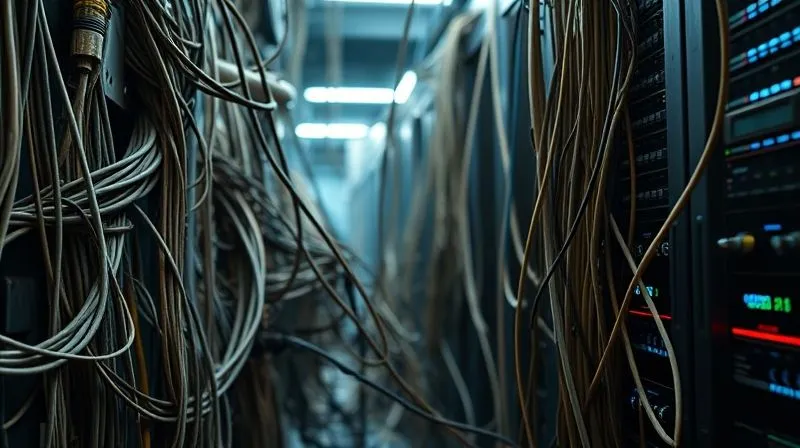
Before we can fix the problem, we must understand its origins. Legacy systems aren't typically born out of malice; they're often the result of past successes, incremental growth, and a focus on immediate needs over long-term architectural foresight. Over time, these systems become deeply embedded, like roots in an old tree, making extraction difficult and risky.
In my experience, the persistence of legacy systems boils down to several key factors. First, there's the sheer complexity and interdependence; a single change can trigger unforeseen failures across multiple connected processes. Second, the 'if it ain't broke, don't fix it' mentality often prevails, especially when the system still technically 'works,' albeit inefficiently. Third, the perceived cost and risk of replacement are often astronomical, leading to paralysis by analysis. And finally, a lack of institutional knowledge about how these older systems actually function can make any modernization effort feel like defusing a bomb in the dark.
"The true cost of legacy IT isn't just maintenance; it's the opportunity cost of innovation that never happens." – Harvard Business Review
Understanding these underlying reasons is crucial because it informs your strategy. It's not just a technical problem; it's a strategic, financial, and organizational challenge that requires a multi-faceted approach.
Phase 1: Comprehensive Assessment and Strategic Planning
The first step in any successful integration journey is a thorough and honest assessment. You can't chart a course without knowing your starting point and understanding the terrain. This phase is about gathering intelligence, building a compelling business case, and securing executive buy-in.
Step-by-Step Assessment Framework:
- Inventory All Systems and Dependencies: Document every application, database, and piece of infrastructure. Crucially, map out their interdependencies. What data flows where? Which systems are mission-critical? Use tools for application dependency mapping if available.
- Evaluate Business Impact and Risk: For each legacy system, assess its current business value, the cost of maintenance, the risk of failure, and its impact on innovation. How much does it cost to keep running? What's the business impact if it goes down?
- Identify Integration Blockers: Pinpoint specific technical limitations (e.g., proprietary data formats, lack of APIs, outdated programming languages) and organizational hurdles (e.g., resistance to change, skill gaps).
- Quantify Technical Debt: Estimate the cost to replace or modernize each critical component. This provides a tangible number for your business case.
- Define Future State Vision: Work collaboratively across departments to articulate what a modernized, integrated technology landscape would look like and what business capabilities it would unlock.
This phase is not just about IT; it's a cross-functional effort. In my experience, engaging finance, operations, sales, and marketing leaders from the outset ensures that the proposed solutions align with overarching business objectives.
| Assessment Criterion | Current Score (1-5) | Impact on Operations |
|---|---|---|
| System Business Value | 2 | High dependency, low flexibility |
| Maintenance Cost (% OpEx) | 4 | Significant drain on budget |
| Risk of Failure (Downtime/Security) | 5 | Critical business disruption potential |
| Integration Difficulty (APIs/Data) | 4 | Blocks innovation, manual workarounds |
| Talent Availability (Support) | 3 | Knowledge silos, high attrition risk |
Phase 2: Modernization Approaches – From Incremental to Revolutionary
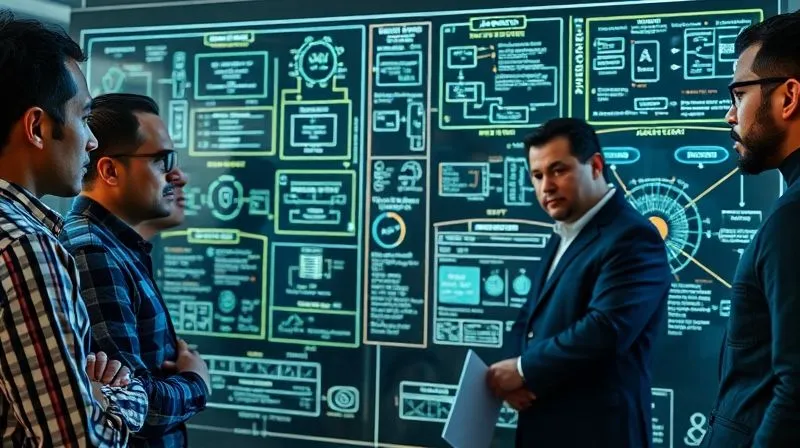
Once you have a clear understanding of your legacy landscape, the next step is to choose the right modernization strategy. There isn't a one-size-fits-all solution; the best approach depends on the system's criticality, complexity, and your organization's risk appetite and budget.
Common Modernization Strategies:
- Encapsulation (API-fication): This involves wrapping legacy systems with APIs (Application Programming Interfaces) to expose their functionality and data to new applications without altering the core system. It's often the quickest and least risky way to integrate, buying time for a more comprehensive overhaul.
- Re-platforming: Moving an application to a new cloud platform with minimal changes to its code. This can improve scalability, performance, and reduce infrastructure costs, without a full rewrite.
- Re-factoring/Re-architecting: Modifying or rewriting parts of the code to improve its structure, performance, and maintainability, often breaking down monolithic applications into microservices. This is more involved but yields greater long-term benefits.
- Re-hosting (Lift-and-Shift): Migrating an application and its data to a cloud environment as-is. It's fast but doesn't solve underlying architectural issues.
- Replace: Discarding the legacy system entirely and implementing a new commercial off-the-shelf (COTS) solution or a custom-built application. This is the most disruptive but often offers the greatest potential for innovation.
- Retire: Decommissioning systems that are no longer needed, reducing complexity and costs.
As a specialist in operations, I advocate for a pragmatic, phased approach. Rarely is a full 'rip and replace' the best initial move. Often, a combination of encapsulation for immediate integration needs, followed by a strategic re-platforming or re-factoring of critical components, proves most effective. According to a Deloitte study, organizations that adopt a hybrid approach to modernization often see faster time-to-value.
Case Study: How Apex Logistics Streamlined Operations
Apex Logistics, a regional shipping giant, relied on a 20-year-old mainframe system for core dispatch and tracking. It was robust but lacked modern API capabilities, blocking integration with new IoT sensors and customer-facing mobile apps. Instead of a costly, risky full replacement, they opted for an encapsulation strategy. They built a thin API layer around the mainframe, allowing their new cloud-based route optimization software and customer portal to access real-time dispatch data. This incremental approach enabled them to launch new services within 9 months, significantly improving delivery times and customer satisfaction, while deferring the full mainframe replacement to a later, less disruptive phase.
Phase 3: Navigating Data Migration and Integration Challenges
Data is the lifeblood of any organization, and migrating it from legacy systems to new platforms is arguably the most critical and riskiest part of tech integration. Errors here can have catastrophic consequences, from data loss to compliance breaches.
Key Considerations for Data Migration:
- Data Discovery and Profiling: Understand your data's structure, quality, and location in the legacy system. Identify redundant, obsolete, or trivial data (ROT).
- Data Cleansing and Transformation: Legacy data is often inconsistent, incomplete, or formatted differently. This phase involves standardizing, de-duplicating, and enriching the data to fit the new system's requirements.
- Migration Strategy: Decide between 'big bang' (all at once) or 'phased' migration. For most complex legacy systems, a phased approach, perhaps migrating by module or business unit, is less risky.
- Validation and Testing: Rigorous testing is non-negotiable. Validate data integrity, completeness, and accuracy post-migration. Reconcile data between old and new systems.
- Rollback Plan: Always have a contingency plan. What happens if the migration fails? How can you revert to the old system quickly?
Beyond migration, continuous integration of data between systems is vital. This often involves robust ETL (Extract, Transform, Load) processes, message queues, and integration platforms (iPaaS) to ensure data consistency across your hybrid environment. As Gartner emphasizes, iPaaS solutions are becoming indispensable for managing complex, multi-cloud, and hybrid integration needs.

The Human Element: Leading Change Management and Skill Development
Technology integration isn't just about code and servers; it's fundamentally about people. The most technically brilliant solution can fail if your workforce isn't prepared, trained, or willing to adopt it. This is where effective change management becomes paramount.
Strategies for Successful Change Management:
- Communicate Early and Often: Explain *why* the change is happening, the benefits it will bring (to the business and individual employees), and what to expect. Transparency builds trust.
- Engage Stakeholders: Involve key users and managers in the planning and testing phases. Their input makes them advocates, not resistors.
- Provide Comprehensive Training: Don't just offer a single training session. Provide ongoing support, varied training formats (online, in-person, job aids), and opportunities for practice.
- Identify and Empower Champions: Find early adopters and influential employees who can champion the new technology and help their peers.
- Address Resistance Proactively: Acknowledge concerns, listen to feedback, and address specific pain points. Sometimes, simply being heard can diffuse resistance.
From an operational perspective, I've seen organizations invest heavily in technology but neglect the 'upskilling' of their teams. This leads to underutilized features, workarounds, and ultimately, a failure to realize the full ROI. Training isn't a cost; it's an investment in your most valuable asset: your people. Consider cross-training existing IT staff on modern platforms and agile methodologies. It's often more effective than trying to hire entirely new teams in a competitive market.
Cost-Benefit Analysis and Measuring ROI for Modernization
Justifying the significant investment required for legacy system modernization demands a robust cost-benefit analysis and a clear plan for measuring Return on Investment (ROI). This is where you translate technical needs into business value.
Key Metrics to Consider:
- Reduced Operational Costs: Lower maintenance fees for legacy systems, reduced manual effort, improved energy efficiency (especially with cloud migration).
- Increased Efficiency and Productivity: Faster processing times, automated workflows, reduced errors, quicker data access for decision-making.
- Enhanced Customer Experience: Faster service, personalized interactions, new digital channels.
- Improved Agility and Innovation: Ability to launch new products/services faster, adapt to market changes, integrate emerging technologies.
- Reduced Risk: Lower security vulnerabilities, improved compliance, reduced downtime.
- Talent Attraction and Retention: Modern tools make your organization a more attractive place to work.
When presenting to leadership, focus on the tangible business outcomes. Instead of saying, 'We need to migrate to a new database,' say, 'Migrating to a new database will reduce our data processing time by 40%, enabling real-time analytics for sales teams, which we project will increase lead conversion by 15%.' This frames the investment as a growth driver, not just a cost center. Regularly track these metrics post-implementation to demonstrate value and refine your strategy.
Building a Future-Proof Architecture: Beyond Just Fixing the Problem
The goal isn't just to replace old systems; it's to build an agile, resilient, and scalable architecture that can adapt to future business needs and technological shifts. This requires a forward-thinking approach to enterprise architecture.
Principles of Future-Proof Architecture:
- Modular Design (Microservices): Break down large, monolithic applications into smaller, independent services that can be developed, deployed, and scaled independently. This reduces complexity and increases flexibility.
- API-First Approach: Design all new systems and services with well-documented APIs to facilitate seamless integration with internal and external applications.
- Cloud-Native Principles: Leverage cloud services (IaaS, PaaS, SaaS) for scalability, reliability, and cost-effectiveness. Design applications to take full advantage of cloud capabilities.
- Data Mesh/Fabric: Move towards decentralized data ownership and access, where data is treated as a product, making it easier for different teams to access and utilize.
- Security by Design: Integrate security considerations from the very beginning of the design process, not as an afterthought.
As an operations specialist, I emphasize that a future-proof architecture isn't just about technology; it's about enabling organizational agility. It allows your business to pivot quickly, experiment with new ideas, and respond to market demands without being constrained by rigid IT infrastructure. This strategic foresight is what truly differentiates a successful digital transformation.

Avoiding Common Pitfalls in Legacy System Transformation
Even with the best intentions and strategies, legacy system modernization projects are fraught with challenges. Being aware of common pitfalls can help you steer clear of costly mistakes.
Beware of These Traps:
- Underestimating Complexity: Legacy systems often have undocumented features, hidden dependencies, and 'tribal knowledge' that can surface as major blockers. Always budget for the unexpected.
- Lack of Executive Sponsorship: Without consistent, visible support from the top, transformation efforts can lose momentum, get bogged down in internal politics, or be deprioritized.
- 'Boiling the Ocean': Trying to do too much at once. Large, monolithic projects are far more likely to fail. Break down the transformation into smaller, manageable phases with clear deliverables.
- Ignoring Data Quality: Migrating dirty data to a new system simply creates a new system with dirty data. Invest in thorough data cleansing.
- Neglecting User Adoption: As discussed, technology alone isn't enough. If users don't embrace the new systems, the investment is wasted.
- Lack of Clear KPIs: Without defined metrics for success, it's impossible to track progress, justify investment, or celebrate wins.
- Vendor Lock-in: Be wary of solutions that tie you exclusively to a single vendor, limiting your future flexibility. Prioritize open standards and interoperability.
A final pitfall I've observed is the failure to celebrate small wins. Large-scale transformations are marathons, not sprints. Acknowledging progress, even incremental, keeps morale high and reinforces the value of the effort. This is crucial for sustained momentum when you're tackling the question of what to do when legacy systems block tech integration.
Frequently Asked Questions (FAQ)
What's the difference between technical debt and legacy systems? Technical debt refers to the implied cost of additional rework caused by choosing an easy (limited) solution now instead of using a better approach that would take longer. Legacy systems are simply older systems that may or may not have technical debt, but often do due to their age and accumulated workarounds. A legacy system can generate technical debt, and technical debt can make a system 'legacy' faster.
How do I convince my CFO to invest in legacy system modernization? Focus on the business value, not just the technical need. Frame it in terms of ROI: reduced operational costs, increased efficiency, improved customer experience leading to revenue growth, and mitigated risks (security breaches, downtime). Use a detailed cost-benefit analysis, highlight opportunity costs, and present a phased approach with measurable milestones.
Is it always better to replace a legacy system than to integrate around it? Not necessarily. Replacing a legacy system is often the most expensive, riskiest, and disruptive option. Encapsulation (API-fication) or re-platforming can provide immediate benefits, allowing new tech integration without a full rip-and-replace. The best approach depends on the system's criticality, complexity, and your organization's specific needs and risk tolerance. It's a strategic decision.
What role does cloud computing play in legacy system integration? Cloud computing is a powerful enabler. It offers scalable infrastructure for new applications, platforms for re-hosting or re-platforming legacy systems, and robust integration services (iPaaS, serverless functions) to connect disparate systems. Moving to the cloud can reduce infrastructure costs, improve agility, and provide a more modern foundation for your entire technology landscape.
How do I handle institutional knowledge loss when decommissioning old systems? This is a critical concern. Document everything. Conduct extensive knowledge transfer sessions with current legacy system experts. Consider having some of these experts involved in the migration and testing phases of the new systems. Archive historical data and documentation in an accessible format. It's also an opportunity to centralize and formalize knowledge that was previously siloed.
Key Takeaways and Final Thoughts
Navigating the complexities of legacy systems blocking tech integration is a defining challenge for modern businesses. It demands a strategic, patient, and people-centric approach, not just a technical fix.
- Assess Thoroughly: Understand the true cost and impact of your legacy systems before making any moves.
- Strategize Wisely: Choose the right modernization approach – from encapsulation to replacement – based on your unique context.
- Prioritize Data: Treat data migration and ongoing integration with the utmost care and rigor.
- Lead with Empathy: Invest in change management and skill development; your people are your greatest asset.
- Build for Tomorrow: Aim for a modular, API-first architecture that fosters agility and innovation.
Remember, the journey to overcome legacy system blockers is an evolution, not a revolution. It requires persistence, clear communication, and a steadfast focus on delivering tangible business value at each step. By embracing these principles, you can transform your operational landscape from a source of frustration into a powerful engine for growth and innovation. Don't let your past dictate your future; take control and build the agile, integrated enterprise you envision.
Recommended Reading
- 7 Proven Strategies: Boost Online Store Customer Retention by 40% Today!
- 8 Steps: When Your JV Partner Fails to Perform, What to Do?
- Unlock Your Niche: How to Validate a Consulting Business Idea Successfully
- Unlock Your Potential: How to Improve Delegation Skills at Work?
- 7 Proven Ways: What to Do When Channel Partners Consistently Miss Sales Targets?



Comments
Leave a comment below. Your email will not be published. Required fields marked with *