


What to do when union contract negotiations reach impasse?
For over two decades in human resources and labor relations, I've witnessed firsthand the immense pressure and frustration that arises when collective bargaining efforts stall. It's a critical juncture where the stakes are incredibly high, impacting not just the profitability and operational continuity of a business, but also the livelihoods and morale of its workforce. The path forward often feels obscured, fraught with legal complexities and emotional intensity.
The pain point is palpable: reaching an impasse means a failure to agree on fundamental terms, leading to uncertainty, potential industrial action, and a breakdown of trust. It can derail strategic objectives, tarnish reputations, and create long-lasting animosity between management and labor. Many leaders, even seasoned ones, find themselves asking: 'What now? What are our options when all seems lost?'
In this comprehensive guide, I will share my accumulated wisdom and practical frameworks to navigate the treacherous waters of a union contract negotiations impasse. You'll learn not just the theoretical steps, but actionable strategies, real-world insights, and critical considerations to move beyond deadlock, protect your organization's interests, and ultimately, foster a more stable labor environment. We'll explore everything from re-evaluating your position to leveraging third-party interventions and managing potential industrial action.
Understanding the Anatomy of an Impasse: More Than Just a Disagreement
Before diving into solutions, it's crucial to understand what constitutes a genuine impasse and why it occurs. It’s not simply a heated argument or a temporary disagreement; it's a legal and practical determination that further good-faith bargaining would be futile.
Defining a True Impasse
From a legal standpoint, an impasse is reached when parties in collective bargaining have bargained in good faith on mandatory subjects of bargaining to the point where they are unable to reach an agreement. The National Labor Relations Board (NLRB) outlines specific criteria, emphasizing that an impasse is a question of fact, judged by the totality of the circumstances. This includes the bargaining history, the importance of the issues over which the parties disagree, and the contemporaneous understanding of the parties as to the state of negotiations. I've seen many companies mistakenly declare an impasse too early, leading to unfair labor practice charges.
Common Causes of Deadlock
In my experience, impasses typically stem from a few core issues. Firstly, significant gaps in economic expectations, such as wages, benefits, or pension contributions, often prove intractable. Secondly, fundamental disagreements over non-economic issues like management rights, grievance procedures, or subcontracting clauses can be equally divisive. Thirdly, a lack of trust or poor communication history between the parties can exacerbate even minor disagreements, turning them into major roadblocks. Finally, external pressures, such as economic downturns or industry-specific challenges, can harden positions, making compromise incredibly difficult.
Step 1: Re-evaluating Your Position and Strategy
When negotiations hit a wall, the immediate temptation might be to dig in deeper. However, my first piece of advice is always to step back and conduct a thorough, objective re-evaluation of your own position. This isn't about conceding; it's about strategic introspection.
- Review Your Demands and Concessions: Scrutinize every proposal you've put on the table. Are they truly non-negotiable? Have you exhausted all possible alternatives? Sometimes, a fresh perspective reveals a creative solution that was overlooked in the heat of the moment.
- Analyze the Union's Core Interests: Move beyond their stated positions to understand the underlying interests. What are their members truly concerned about? Is it job security, fair compensation, respect, or working conditions? Addressing the root interest, rather than just the surface demand, can unlock new avenues for compromise.
- Conduct a Cost-Benefit Analysis: Quantify the financial implications of maintaining your current position versus making further concessions. Also, consider the non-financial costs of an impasse, such as damaged employee morale, reputational harm, or potential industrial action. As a seasoned professional, I've seen organizations incur far greater costs by refusing a reasonable compromise than by making one.
- Assess Internal Alignment: Ensure your own bargaining team, senior leadership, and board are fully aligned on the strategy moving forward. Internal dissent can weaken your position and send mixed signals to the union.
- Prepare for Contingencies: Even as you seek resolution, begin planning for various scenarios, including mediation, arbitration, or potential strikes/lockouts. This preparedness isn't defeatist; it's prudent risk management.
“True strength in negotiation isn't about unwavering rigidity; it's about strategic flexibility and the wisdom to know when and how to adapt your approach to achieve your ultimate objectives.”
Step 2: The Power of Effective Communication (Even When It's Hard)
In the throes of an impasse, communication often breaks down, becoming adversarial and unproductive. Re-establishing constructive dialogue is paramount, even if it means altering the traditional bargaining dynamic.
Re-establishing Dialogue
Sometimes, simply changing the venue or the format of discussions can help. I've found success in suggesting informal, off-the-record conversations between key decision-makers, away from the formal bargaining table. The goal here is to de-escalate tension and explore common ground without the pressure of making binding commitments. This can lead to a 'cooling-off' period, allowing both sides to reconsider their stances.
Active Listening and Empathy
This might sound basic, but it's astonishing how often active listening is neglected during tense negotiations. It means truly hearing and acknowledging the other side's concerns, even if you don't agree with them. Expressing empathy – understanding their perspective, even if you can't satisfy all their demands – can humanize the process. It's not about weakness; it's about building a foundation for future problem-solving. Acknowledging their members' anxieties about job security, for instance, can open doors for discussions on training or new work assignments.

Step 3: Exploring Mediation – A Neutral Third Party Intervention
When direct negotiations fail, bringing in a neutral third party is often the most effective next step. Mediation is a voluntary process where a neutral facilitator helps the parties reach a mutually acceptable agreement.
- When to Call a Mediator: Don't wait until all hope is lost. I advocate for introducing a mediator when communication is strained, positions are entrenched, but both sides still genuinely want to reach an agreement. The Federal Mediation and Conciliation Service (FMCS) is a fantastic resource for this, offering experienced mediators at no cost. You can learn more about their services and request assistance at fmcs.gov.
- Selecting the Right Mediator: Choose someone with a strong reputation for neutrality, experience in labor relations, and excellent facilitative skills. A good mediator doesn't impose solutions but helps parties explore options, clarify misunderstandings, and bridge gaps.
- Preparing for Mediation: Both sides should come prepared with a clear understanding of their bottom lines, their priorities, and alternative solutions. Be ready to present your case concisely and listen intently to the mediator's suggestions and the union's renewed arguments. The mediator will often meet with each side separately (caucusing) to understand their true positions and explore potential compromises confidentially.
Case Study: How Apex Manufacturing Broke the Impasse
Apex Manufacturing, a mid-sized automotive parts supplier, found itself at an impasse over healthcare benefits and wage increases after months of negotiations. Both management and the union felt they had reached their limits. Rather than risk a strike, the HR Director, drawing on my past advice, proactively engaged the FMCS. The mediator, a veteran of numerous industrial disputes, spent days in caucuses, identifying that the union's core concern wasn't just higher wages, but a sense of job insecurity due to recent automation. The mediator helped Apex propose a creative solution: a slightly smaller wage increase but a commitment to a joint labor-management committee focused on retraining programs for employees impacted by automation, along with a 'no-layoff' clause for a specified period. This addressed the union's underlying interest and allowed both parties to save face, ultimately leading to a ratified contract and improved long-term relations. This demonstrates how a skilled mediator can uncover deeper issues and facilitate innovative solutions.
| Feature | Mediation | Arbitration |
|---|---|---|
| Control over outcome | Parties retain control | Third-party decides |
| Cost | Generally lower | Can be high (fees, legal) |
| Formality | Informal, flexible | Formal, quasi-judicial |
| Relationship impact | Often improves relations | Can strain relations |
| Binding nature | Non-binding (until agreement) | Binding (usually) |
Step 4: Considering Arbitration – Binding Resolution, High Stakes
If mediation fails or is deemed unsuitable, arbitration becomes a powerful, albeit high-stakes, option. Arbitration involves submitting the dispute to a neutral third party (the arbitrator) who hears evidence and arguments from both sides and then issues a binding decision.
Voluntary vs. Compulsory Arbitration
Most collective bargaining agreements that include arbitration provisions specify it for grievance disputes, not for interest arbitration (contract negotiations). However, parties can voluntarily agree to interest arbitration to resolve an impasse. This is a significant decision, as it cedes control over the final terms of the contract to a third party. Compulsory arbitration, typically mandated by law for certain public sector employees (e.g., police, firefighters), is rare in the private sector. When considering voluntary arbitration, I always advise clients to weigh the risks carefully: are you comfortable with an outsider making decisions on core economic and operational issues?
Preparing for Arbitration
If you proceed to arbitration, preparation is key. It's a quasi-judicial process. You'll need to develop a strong case, supported by data, industry comparisons, and legal arguments. This often involves legal counsel, economists, and expert witnesses. You must present why your final offer or position is reasonable and why the union's is not. Conversely, the union will do the same. The arbitrator will then issue an award that becomes the new contract or a portion of it. This process can be costly and time-consuming, but it does offer a definitive resolution.

Step 5: Unilateral Implementation and Its Legal Ramifications
Under specific and stringent conditions, an employer might have the right to unilaterally implement its last, best, and final offer after a genuine impasse has been reached. This is a highly sensitive and legally perilous step.
Conditions for Unilateral Action
The NLRB allows unilateral implementation only if a true impasse has been reached, the employer has bargained in good faith, and the implemented terms are 'reasonably comprehended' within the employer's pre-impasse proposals. This means you cannot implement terms that were never offered or discussed during negotiations. Furthermore, the subjects must be mandatory subjects of bargaining. This is not a decision to be taken lightly, and it absolutely requires the advice of experienced labor counsel. I've seen organizations face severe penalties for premature or improper unilateral implementation.
The Perils and Pitfalls
The primary peril is the risk of an unfair labor practice charge if the NLRB determines that no genuine impasse existed or that the employer failed to bargain in good faith. If found guilty, the employer could be ordered to rescind the implemented terms, bargain further, and potentially provide back pay or other remedies. Beyond the legal risks, unilateral implementation can severely damage labor relations, leading to increased animosity, grievances, and a higher likelihood of industrial action. It can poison the well for years to come, making future negotiations even more difficult.
“Unilateral implementation is a powerful tool, but it's akin to handling a loaded weapon. Understand the precise legal conditions and be prepared for the significant relationship fallout before considering this option.”
Step 6: Managing Potential Industrial Action: Strikes and Lockouts
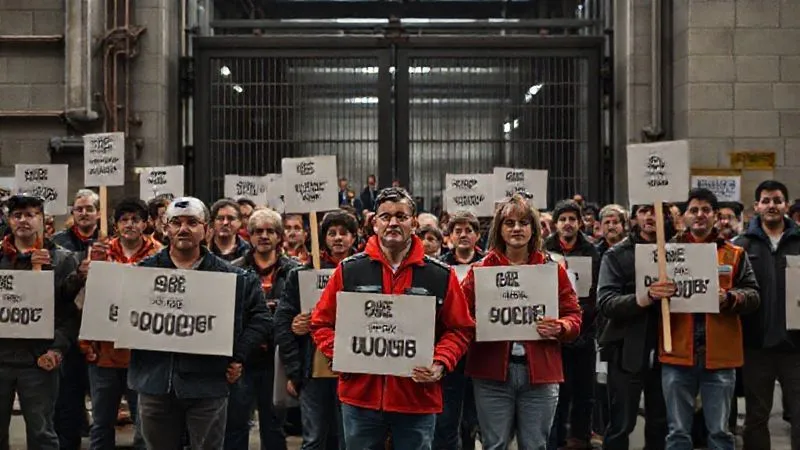
When an impasse persists, the possibility of industrial action – a strike by the union or a lockout by management – becomes very real. Preparedness is not about provocation, but about operational continuity and legal compliance.
Understanding Strike Dynamics
A strike is a powerful economic weapon for a union, aiming to pressure the employer by halting production or services. Employers must understand the different types of strikes (economic, unfair labor practice) and the legal protections afforded to striking employees. Developing a comprehensive strike contingency plan is crucial. This includes identifying essential operations, training replacement workers (if legally permissible and strategically advisable), ensuring physical security, and maintaining communication with employees and the public. During my career, I've advised numerous companies through strikes, emphasizing the need for a calm, strategic, and legally compliant approach.
Employer Lockout Strategies
A lockout is an employer's economic weapon, where the employer temporarily withholds work from employees to pressure the union into accepting its bargaining terms. Like strikes, lockouts are subject to strict legal regulations under the National Labor Relations Act. An employer cannot use a lockout as a punitive measure or for discriminatory reasons. If considering a lockout, it must be for a legitimate bargaining purpose, after a genuine impasse, and must be carefully planned to minimize legal exposure and operational disruption. Both strikes and lockouts are extreme measures that signal a profound breakdown in relations, and their impact reverberates far beyond the immediate dispute.
Step 7: The Long Game: Building Future Trust and Relationships
Even after an impasse is resolved, whether through agreement, mediation, arbitration, or industrial action, the work isn't over. The true measure of success lies in the ability to rebuild trust and foster a more constructive relationship moving forward.
Post-Impasse Relationship Repair
Regardless of the outcome, the period following an impasse is critical for healing wounds. I strongly advocate for proactive steps to repair the relationship. This could involve joint labor-management committees focused on specific operational improvements or employee engagement initiatives. Regular, informal meetings between key union and management representatives can help maintain open lines of communication. It's about demonstrating a genuine commitment to working together, even when disagreements arise. As Seth Godin often says, "People do not buy goods and services. They buy relations, stories, and magic." In labor relations, trust is the magic ingredient.
Continuous Dialogue and Adaptability
Labor relations is not a static field; it's a dynamic, ongoing relationship. Companies that thrive are those that embed continuous dialogue into their operational fabric. This means not waiting for the next contract negotiation to address issues. Regular feedback mechanisms, transparent communication about business challenges, and a willingness to adapt to changing circumstances can prevent future impasses. Investing in training for both management and union representatives on collaborative bargaining techniques can also pay dividends in the long run. The goal is to shift from an adversarial mindset to one of mutual problem-solving.

| Action Area | Specific Step | Outcome |
|---|---|---|
| Communication | Establish regular, informal check-ins between labor and management leaders. | Prevents small issues from escalating; builds rapport. |
| Problem Solving | Form joint labor-management committees for specific operational challenges (e.g., safety, productivity). | Shared ownership of solutions; demonstrates mutual respect. |
| Training & Development | Invest in joint training on collaborative negotiation and conflict resolution skills. | Equips both sides with tools for constructive dialogue. |
| Transparency | Share business performance updates and challenges with union leadership proactively. | Fosters understanding of business realities; builds trust. |
| Review & Adapt | Conduct post-negotiation reviews to identify lessons learned and improve future processes. | Continuous improvement in labor relations practices. |
Frequently Asked Questions (FAQ)
Q: What are the key differences between a bargaining impasse and a breakdown in negotiations? A: A bargaining impasse is a legal determination that further good-faith bargaining on mandatory subjects would be futile, allowing an employer to take certain actions like unilateral implementation. A breakdown in negotiations, while often leading to an impasse, is a broader term that simply means talks have stopped or become unproductive, but doesn't necessarily carry the same legal implications or justify unilateral action without an official impasse declaration. The NLRB looks at the 'totality of the circumstances' to determine if an impasse truly exists.
Q: Can an employer legally replace striking workers, and what are the implications? A: Yes, generally, in an economic strike, an employer can permanently replace striking workers to continue operations. However, this comes with significant legal and practical implications. Replaced strikers are entitled to reinstatement if and when positions become available, and the employer must be careful not to engage in unfair labor practices. The decision to permanently replace strikers can also severely damage long-term labor relations and can be a public relations nightmare, often exacerbating the dispute.
Q: How long can an impasse last, and are there legal time limits? A: There are no specific legal time limits for how long an impasse can last. It can persist for weeks, months, or even years, depending on the parties' willingness to move, external pressures, and the nature of the disagreement. However, an impasse is not necessarily permanent; circumstances can change, prompting a return to the bargaining table. Either party can break an impasse by demonstrating a willingness to modify its position, which then obligates the other party to return to negotiations.
Q: What role does 'good faith bargaining' play in an impasse, and what does it entail? A: 'Good faith bargaining' is a legal obligation under the National Labor Relations Act. It means both parties must approach negotiations with a sincere desire to reach an agreement, engage in serious discussion, and make a reasonable effort to compromise. It does not require either party to agree to a proposal or make concessions, but it prohibits surface bargaining, refusing to meet, or making unilateral changes without an impasse. Failure to bargain in good faith can lead to unfair labor practice charges, regardless of whether an impasse is declared.
Q: When should an employer consider a lockout instead of waiting for a strike? A: An employer might consider a lockout as a defensive measure or an offensive bargaining tool, but only under specific legal conditions. It can be used defensively to prevent economic loss if a strike is imminent or to prevent a 'whipsaw strike' (a strike against one employer in a multi-employer unit). Offensively, after a genuine impasse, an employer can use a lockout to pressure the union to accept its final offer. However, the legal risks are high, and the decision should always be made with expert legal counsel, considering the potential for significant damage to employee relations and public perception.
Key Takeaways and Final Thoughts
Navigating an impasse in union contract negotiations is undoubtedly one of the most challenging aspects of labor relations. It demands a blend of legal acumen, strategic thinking, and profound empathy. My experience has shown that success in these situations rarely comes from brute force; it stems from intelligent, adaptable, and human-centered approaches.
- Proactive Preparation is Paramount: Understand your positions, the union's interests, and your legal obligations long before an impasse looms.
- Communication is Your Lifeline: Even when difficult, maintain open, respectful, and strategic dialogue.
- Leverage Third-Party Neutrals: Mediators and arbitrators offer invaluable pathways to resolution, but understand their roles and implications.
- Understand Legal Boundaries: Actions like unilateral implementation or lockouts are high-risk and require expert legal guidance.
- Prioritize Relationship Building: The resolution of an impasse is not the end; it's a new beginning for your labor-management relationship.
Remember, an impasse is a moment of truth, but it doesn't have to be a dead end. By approaching it with a clear strategy, a willingness to explore all options, and a steadfast commitment to both your organizational goals and the well-being of your workforce, you can not only resolve the immediate deadlock but also lay the groundwork for a more resilient and collaborative future in your labor relations. The path may be arduous, but with the right guidance, it is navigable.
Recommended Reading
- 5 Proven Strategies: Unblock Entrepreneurial Creative Thinking for New Products
- Conflicting Goals? 7 Steps to Align Strategic Alliance Partners
- Fast Fixes: 7 Steps to Amend Small Business Registration Errors
- Solving Complex Earn-Out Disputes: 7 Legal Strategies Post-Acquisition
- Stop Greenwashing: 7 Steps to Robust CSR Governance





Comments
Leave a comment below. Your email will not be published. Required fields marked with *