


Why are my B2B client acquisition pitches consistently failing?
For over 15 years in the trenches of B2B business development, I've witnessed countless promising solutions fall flat, not because they lacked merit, but because their pitches missed the mark. It's a frustrating, often disheartening experience to invest time, energy, and resources into crafting what you believe is a compelling offer, only to be met with silence or a polite "no." I've been there, and I've helped many others navigate this exact challenge.
The sting of a consistently failing B2B client acquisition pitch isn't just about lost revenue; it erodes confidence, wastes valuable sales cycles, and can even stifle innovation within your own team. You're left asking yourself: Is it my product? Is it my team? Or is there something fundamentally broken in how we're presenting our value?
In this definitive guide, I'll pull back the curtain on the seven most common, yet often overlooked, reasons why B2B pitches fail. More importantly, I'll provide you with actionable frameworks, real-world insights, and practical strategies—honed over decades—to diagnose your current approach, fix the leaks, and transform your client acquisition efforts into a predictable, high-conversion engine. Let's stop guessing and start winning.
The Foundation Flaw: Misunderstanding Your Client's True Pain
In my experience, the single biggest culprit behind a failing B2B pitch is a fundamental misunderstanding of the client's actual pain points. Many sales teams walk into a meeting armed with a product brochure, ready to rattle off features, instead of truly listening and diagnosing. This isn't just about surface-level problems; it's about the underlying strategic, operational, or financial pressures that keep your prospective client's leadership awake at night.
The "Spray and Pray" Fallacy
Too often, B2B pitches are generic, designed to appeal to a broad audience rather than a specific one. This "spray and pray" approach is inefficient and ineffective. Your prospects are inundated with information; they don't need another generic pitch. They need a tailored solution that speaks directly to their unique challenges and aspirations. If you can't articulate their problem better than they can, you haven't earned the right to present a solution.
To truly understand your client's pain, you need to go beyond the initial discovery call. It requires deep research, perceptive questioning, and a genuine desire to be a strategic partner, not just a vendor. According to a Harvard Business Review article on sales enablement, top-performing sales organizations spend significantly more time on pre-call planning and understanding customer context.
- Conduct Pre-Pitch Intelligence: Before any meeting, dive deep into the company's annual reports, press releases, social media, and industry news. Understand their market position, recent challenges, and strategic priorities.
- Ask Diagnostic, Not Leading, Questions: During discovery, ask open-ended questions like, "What are the biggest bottlenecks impacting your team's productivity right now?" or "How do these challenges affect your long-term growth objectives?" Avoid questions that can be answered with a simple 'yes' or 'no'.
- Listen Actively and Empathize: Don't just wait for your turn to speak. Listen for underlying emotions, unstated needs, and priorities. Reflect back what you hear to ensure understanding: "So, if I'm understanding correctly, the core issue isn't just slow data processing, but the downstream impact on your ability to make timely strategic decisions, correct?"
- Quantify the Pain: Work with the client to put numbers to their problem. What's the cost of inaction? What's the potential revenue loss or efficiency gain? This transforms an abstract problem into a tangible business case.

Your Value Proposition is Vague, Not Value-Driven
Once you understand their pain, the next common pitfall is failing to articulate your solution's value in a way that resonates directly with that pain. Many pitches focus on "what" their product does, rather than "why" it matters to the client. A vague value proposition leaves your prospect confused about the tangible benefits and return on investment (ROI) they can expect.
Beyond Features: Selling Transformation
Your B2B clients aren't buying software; they're buying better outcomes. They're not acquiring a service; they're investing in transformation—increased revenue, reduced costs, mitigated risk, or enhanced competitive advantage. Your pitch must clearly connect your solution's unique capabilities to these desired outcomes, using language that speaks to their specific business context.
"Clients don't care about your product's features; they care about their own problems. Your job isn't to sell a product, it's to sell a better version of their future." - Industry Specialist Insight
A powerful value proposition is concise, compelling, and client-centric. It answers the question: "Why should I choose YOU over any other option (including doing nothing)?" It highlights your differentiation and quantifies the impact. As marketing guru Seth Godin often says, the best way to stand out is to be truly remarkable, and that starts with a clear, valuable promise.
Case Study: How Innovate Solutions Transformed Their Pitch
Innovate Solutions, a mid-sized IT consulting firm, struggled with a 15% pitch success rate. Their initial pitches were feature-heavy, detailing their technical prowess in cloud migration. After a deep dive into their client feedback, they realized prospects weren't concerned with the technical 'how' but the business 'why'—reducing operational costs and accelerating digital transformation. By reframing their pitches around quantifiable ROI (e.g., "reduce your cloud spend by 20% within 6 months" instead of "we offer advanced cloud optimization features") and focusing on tangible business outcomes, they boosted their pitch success rate to over 40% in just two quarters. This transformation was driven by shifting from a feature-centric to a value-centric narrative.
To refine your value proposition, consider these points:
- Clarity: Is it easy to understand, free of jargon, and concise?
- Relevance: Does it directly address the client's most pressing pain points and aspirations?
- Differentiation: How does it uniquely position you against competitors or alternative solutions?
- Quantification: Can you back up your claims with data, metrics, or potential ROI?
Ignoring the Stakeholder Ecosystem: Who Really Matters?
B2B sales are rarely a one-person show. Unlike B2C, where a single individual often makes the purchasing decision, B2B deals involve multiple stakeholders, each with their own priorities, concerns, and influence. A common reason for pitches failing is neglecting to identify and engage with the entire Decision-Making Unit (DMU).
Mapping the Decision-Making Unit (DMU)
The DMU can include economic buyers (CFO, CEO), technical buyers (IT Director), user buyers (end-users, team leads), and coaches (internal champions). Each plays a distinct role, and a pitch that resonates with the CEO might fall flat with an IT director, and vice-versa. Failing to tailor your message to the specific concerns of each key stakeholder is a recipe for disaster.
I've seen many promising deals stall because the sales team focused solely on the "champion" without understanding the political landscape or the unspoken objections from other departments. It's crucial to perform a thorough stakeholder analysis early in the sales process. This isn't just about knowing their job titles; it's about understanding their individual motivations, potential objections, and how your solution impacts their specific role.
- Identify All Key Roles: Beyond your primary contact, ask about others who will be involved in the decision, funding, implementation, or daily use of the solution.
- Understand Individual Motivations: For the CFO, it's ROI and cost savings. For the IT Director, it's integration, security, and scalability. For the end-user, it's ease of use and efficiency. Tailor your message to each.
- Map Influence and Power: Who holds the budget? Who has veto power? Who is the internal champion? Understanding the power dynamics is critical for navigating complex organizations.
- Engage Appropriately: Don't assume your champion will relay all the necessary information. Seek opportunities for direct engagement with key stakeholders, even if it's just a brief introductory call or a customized follow-up.
| Stakeholder Role | Key Concern | Pitch Focus |
|---|---|---|
| CEO/President | Strategic Growth, Market Share, Innovation | Vision, Competitive Advantage, Long-term Impact |
| CFO/Finance Director | ROI, Cost Savings, Budget Allocation, Risk Mitigation | Financial Benefits, TCO, Measurable ROI |
| IT Director/CTO | Integration, Security, Scalability, Technical Feasibility | Compatibility, Data Security, System Architecture |
| Department Head/User Manager | Team Productivity, Operational Efficiency, Ease of Use | Workflow Improvement, User Adoption, Training Support |
By systematically mapping and addressing the concerns of each stakeholder, you build consensus and significantly increase your chances of success. A unified message, customized for different ears, is far more powerful than a generic one.
Your Pitch Lacks Storytelling and Emotional Resonance
Even in the logical world of B2B, emotions play a significant role. A pitch that is purely data-driven and devoid of narrative often fails to capture attention or inspire action. People remember stories far more vividly than they remember bullet points or statistics. If your pitches are consistently failing, it might be because they're not connecting on a human level.
The Power of Narrative in B2B Sales
Storytelling in B2B isn't about fabricating tales; it's about framing your client's journey, highlighting their current struggles, and painting a clear picture of a better future with your solution. It involves using customer success stories, relatable analogies, and a narrative arc that demonstrates empathy and understanding. As author and speaker Simon Sinek often emphasizes, people don't buy what you do; they buy why you do it, and stories are the most powerful way to convey that 'why'.
Think about the classic hero's journey. Your client is the hero, facing a formidable challenge (their pain point). Your company is the wise mentor, providing the tool or guidance (your solution) that helps them overcome the challenge and achieve a desired outcome. This framework makes your pitch engaging and memorable.
- Start with a Problem Story: Begin by vividly describing a common problem your target audience faces, making it relatable to their situation. "Many of our clients come to us feeling overwhelmed by..."
- Introduce the Solution as a Catalyst: Explain how your solution helped others overcome that exact problem, focusing on the transformation, not just the features.
- Show, Don't Just Tell: Use concrete examples, mini-case studies (as I did earlier), or even a compelling demonstration that tells a story of impact.
- End with a Vision of the Future: Paint a picture of what success looks like for the client if they adopt your solution. What will their business be like? How will their team feel?
By weaving a compelling narrative, you move beyond just presenting facts and figures to creating an emotional connection that fosters trust and inspires belief in your solution's ability to deliver real change.

Poor Presentation Skills and Lack of Adaptability
Even with the best content, a poorly delivered pitch is destined to fail. Many B2B professionals underestimate the importance of their presentation skills, treating the pitch as a mere recitation of facts. Furthermore, rigid adherence to a script without adapting to the client's real-time feedback or questions is a critical error. If your B2B client acquisition pitches are consistently failing, examine your delivery.
Beyond the Slides: Engaging Your Audience
A great pitch is a conversation, not a monologue. It requires energy, confidence, clarity, and the ability to read the room. Are you making eye contact? Are you modulating your voice? Are you pausing for questions and actively soliciting feedback? These soft skills are often the difference between a forgettable presentation and one that leads to a next step.
Moreover, the ability to adapt your pitch on the fly is paramount. No two clients are exactly alike, and their priorities can shift. If you sense a particular area resonates more, or a specific concern arises, be prepared to pivot. Don't just plow through your pre-planned agenda if it's clear the audience has different needs. This adaptability demonstrates genuine interest and expertise.
- Practice, Practice, Practice: Rehearse your pitch until it feels natural, not memorized. Focus on your delivery, timing, and transitions. Record yourself and critically review.
- Master Non-Verbal Communication: Maintain strong eye contact, use open body language, and control your gestures. Your presence speaks volumes.
- Engage Through Questions: Pepper your presentation with rhetorical questions or direct questions to the audience to keep them involved. "Does this challenge resonate with your team's experience?"
- Be Ready to Deviate: Prepare for tangents. Have supplementary slides or information ready for common questions or areas of deeper interest. If the conversation shifts, embrace it.
- Use Visuals, Not Text-Heavy Slides: Your slides are a visual aid, not a teleprompter. Use compelling images, minimal text, and clear data visualizations to support your narrative.
Remember, your pitch is a performance. While the content is king, the delivery is queen. Both must work in harmony to captivate and convince your B2B audience.
Inadequate Follow-Up Strategy: The Silent Killer of Deals
One of the most disheartening reasons for B2B client acquisition pitches consistently failing isn't the pitch itself, but what happens (or doesn't happen) afterward. Many sales professionals deliver a solid pitch, only to fall short on follow-up, leaving promising opportunities to wither on the vine. The reality is, most B2B deals are not closed in the initial meeting; they are won or lost in the follow-up.
Crafting a Multi-Touchpoint Nurturing Sequence
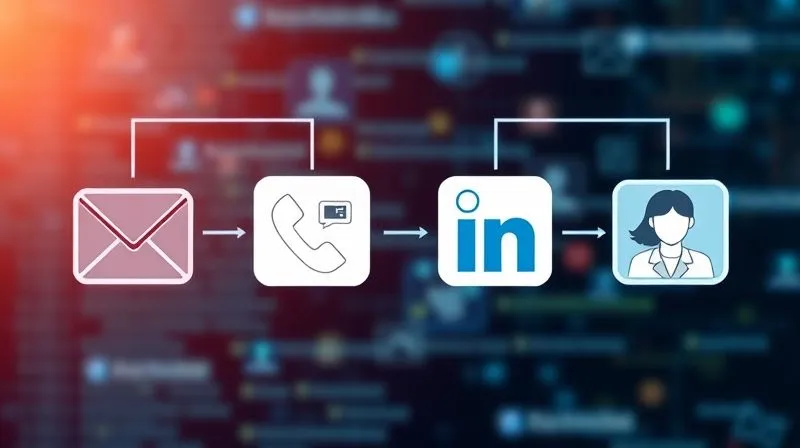
Effective follow-up isn't about badgering your prospects. It's about providing continued value, reinforcing your message, addressing new questions, and guiding them through their internal decision-making process. A well-structured follow-up strategy is multi-channel, personalized, and persistent without being annoying. According to a study by Salesforce, it takes an average of 8 touches to get a meeting, and even more to close a complex B2B deal.
Your follow-up sequence should be a strategic extension of your pitch, not just a reminder. It should anticipate the client's needs at each stage of their buying journey, providing relevant content, insights, or further clarification. This builds trust and demonstrates your commitment as a partner.
| Follow-Up Touchpoint | Timing | Content Focus |
|---|---|---|
| Email 1 (Post-Pitch Summary) | Within 24 hours | Recap key agreements, next steps, value proposition reinforced |
| LinkedIn Connection/Message | Day 2-3 | Personalized connection, share relevant industry article (not salesy) |
| Value-Add Email 2 | Day 5-7 | Address potential objection, share case study or relevant data, offer a resource |
| Phone Call/Voicemail | Day 8-10 | Check-in, inquire about internal discussions, offer further support |
| Re-engagement Email (if no response) | Day 14-20 | Politely ask if priorities have shifted, offer to close the loop if not a fit |
Crucially, every follow-up should have a clear purpose and a call to action, even if it's just to confirm receipt or suggest a brief check-in. Don't leave the ball in their court indefinitely; take ownership of moving the conversation forward.
Failing to Handle Objections Proactively and Effectively
Objections are a natural, even healthy, part of the B2B sales process. They indicate engagement and that the prospect is thinking critically about your offer. However, if your B2B client acquisition pitches are consistently failing, it might be due to a lack of preparedness or skill in handling these objections. Many sales professionals either fear objections or dismiss them, rather than viewing them as opportunities to clarify, reassure, and build trust.
Anticipate, Acknowledge, Address: The 3 A's of Objection Handling
The most effective way to handle objections is to anticipate them. Based on your experience and understanding of the client, you should have a good idea of the common concerns that might arise (e.g., price, implementation complexity, lack of resources, "we're happy with our current solution"). Preparing for these allows you to address them confidently and persuasively.
When an objection arises, the worst thing you can do is argue or become defensive. Instead, employ the '3 A's' framework:
- Anticipate: Before the pitch, list the top 3-5 objections you expect and prepare concise, data-backed responses.
- Acknowledge: Show empathy. "I understand your concern about [objection]. Many of our clients initially felt the same way." This validates their feeling and builds rapport.
- Address: Provide a clear, concise, and value-driven response. This might involve sharing a relevant case study, offering a demonstration, providing data, or reframing the value. For example, if the objection is "it's too expensive," you might respond, "I appreciate your focus on budget. When clients look at the upfront cost, they sometimes overlook the significant long-term savings and ROI our solution delivers, which typically offsets the investment within 12 months. Let me walk you through that calculation."
Remember, an objection is often a request for more information or reassurance, not a definitive "no." By skillfully navigating these conversations, you can turn potential deal-breakers into opportunities to strengthen your value proposition and deepen client trust. As sales expert Jeb Blount often advises, "Embrace the 'no' as a step closer to 'yes'."

Neglecting Post-Pitch Analysis and Continuous Improvement
Finally, a critical, yet often overlooked, reason why B2B client acquisition pitches consistently failing is the failure to learn from each experience. Many sales teams move from one pitch to the next without pausing to analyze what went well, what didn't, and why. Without this crucial feedback loop, you're doomed to repeat the same mistakes.
Learning from Every "No": The Feedback Loop
Every pitch, whether successful or not, is a valuable data point. Establishing a systematic process for post-pitch analysis is paramount for continuous improvement. This isn't about assigning blame; it's about objective evaluation and identifying areas for growth, both individually and as a team. According to research from HubSpot, sales teams that regularly review their performance metrics and conduct post-mortem analyses significantly outperform those that don't.
- Debrief Immediately: After each pitch, gather your team (if applicable) for a quick debrief. What were the key takeaways? What questions were challenging? What objections arose?
- Solicit Internal Feedback: Encourage honest self-assessment and peer feedback. What could have been done differently? What did the client's body language suggest?
- Track Key Metrics: Beyond just 'won' or 'lost,' track metrics like 'next steps agreed,' 'level of engagement,' 'objections encountered,' and 'time spent on discovery.'
- Seek External Feedback (When Possible): If a deal is lost, politely ask the client for constructive feedback. What were the deciding factors? What could you have improved? This can be invaluable.
- Iterate and Refine: Use the insights gained to refine your pitch deck, your messaging, your discovery questions, and your objection handling strategies. Make continuous, small improvements.
Embrace a culture of learning. View every failed pitch not as a defeat, but as a lesson. This commitment to continuous improvement is what separates average sales teams from elite client acquisition specialists.
Frequently Asked Questions (FAQ)
Q: How much customization is too much for a B2B pitch? A: While deep customization is key, there's a balance. Focus on tailoring the core value proposition and problem-solution fit to the client's specific context, rather than reinventing the entire presentation each time. Use a modular approach where you can swap in relevant case studies, data, and language. The goal is relevance, not complete overhaul.
Q: Should I always include pricing in the first pitch? A: Generally, no. The first pitch should focus on value and understanding. Introducing pricing too early, before the client fully grasps the ROI and your solution's impact, can lead to premature objections. It's better to establish value first, then discuss pricing in context, usually in a subsequent conversation or proposal. However, be prepared to discuss budget ranges if the client explicitly asks.
Q: What's the best way to handle a "we're happy with our current solution" objection? A: This is a common one. Acknowledge their satisfaction, then pivot to future-oriented questions. "That's great to hear! Many of our clients felt the same way before discovering how our solution could help them achieve [specific future benefit, e.g., 'even greater efficiencies' or 'stay ahead of emerging market trends']. How are you currently addressing [emerging challenge]? Or, "What innovations are you considering for [specific area] in the next 12-18 months?" The goal is to introduce a potential gap or future opportunity they haven't considered.
Q: How important is it to build rapport before diving into the pitch? A: Extremely important. Rapport builds trust, and trust is the bedrock of any successful B2B relationship. A few minutes of genuine conversation, finding common ground, or simply showing interest in their business beyond your solution can significantly open doors. People buy from those they know, like, and trust. Don't rush this vital step.
Q: My client contact is an internal champion, but I can't get access to their senior leadership. What should I do? A: Empower your champion. Provide them with executive-level summaries, talking points, and data that resonate with senior leadership's concerns (ROI, strategic impact, risk mitigation). Offer to create a custom presentation for them to use internally. If possible, suggest a brief, high-level introductory call with you and a senior leader, emphasizing that it's to ensure alignment and offer strategic support, not a hard sell. Sometimes, a well-crafted email from you to the champion, requesting an introduction, can also work, highlighting the value you bring to the leadership discussion.
Key Takeaways and Final Thoughts
The question, "Why are my B2B client acquisition pitches consistently failing?" is a powerful one, signaling a readiness to evolve and improve. As we've explored, the answers rarely lie in a single flaw but rather in a combination of missteps that can be systematically identified and corrected. From misunderstanding your client's deepest pains to neglecting the vital follow-up, each area presents a distinct opportunity for growth.
- Deep Dive into Client Pain: Go beyond the surface; understand their strategic and emotional needs.
- Craft Value-Driven Propositions: Sell outcomes and transformation, not just features.
- Map the DMU: Tailor your message to every key stakeholder's unique concerns.
- Embrace Storytelling: Create emotional resonance and make your pitch memorable.
- Master Your Delivery: Practice, adapt, and engage your audience actively.
- Strategize Your Follow-Up: Nurture relationships with consistent, value-add touches.
- Anticipate Objections: View concerns as opportunities to clarify and build trust.
- Analyze and Iterate: Learn from every pitch to foster continuous improvement.
Transforming your B2B client acquisition pitches isn't an overnight fix; it's a journey of continuous learning, empathy, and strategic refinement. By committing to these principles, you won't just improve your conversion rates; you'll build stronger, more meaningful relationships with your prospective clients, positioning yourself as a trusted advisor rather than just another vendor. Take these insights, apply them diligently, and watch your success rates soar. The future of your B2B client acquisition starts now.
Recommended Reading
- Unlock Growth: Low Budget Brand Awareness Strategies for Startups Revealed
- Unlock Profit: How to Structure Pricing for Lead Generation Services Effectively
- 7 Proven Strategies: Fostering Camaraderie in 100% Remote Teams
- 7 Urgent Strategies: Slash Corporate Tax Before Year-End Now
- Mastering Task Estimates: 7 Steps for Tight Project Deadlines





Comments
Leave a comment below. Your email will not be published. Required fields marked with *