


Why isn't our value proposition winning us new business deals?
For over two decades in the trenches of business development and strategic consulting, I've observed a recurring, almost heartbreaking pattern: companies with genuinely innovative products or services often struggle to land new business. They invest heavily in R&D, marketing campaigns, and sales teams, yet their pipeline remains stubbornly stagnant. It's a frustrating paradox for founders and sales leaders alike.
You're not alone if you're asking, 'Why isn't our value proposition winning us new business deals?' The core problem often isn't the quality of your offering, but rather how you articulate its value to potential clients. Many businesses unwittingly fall into common traps that dilute their message, making it indistinguishable from competitors or irrelevant to the buyer's true needs.
In this definitive guide, I'll pull back the curtain on the fundamental reasons your value proposition might be falling flat. More importantly, I'll provide you with actionable frameworks, real-world examples, and expert insights to diagnose these issues and transform your value proposition into an irresistible magnet for new business. Prepare to redefine how you communicate your worth.
The Fundamental Misconception: Selling Features, Not Solutions
One of the most pervasive mistakes I've witnessed is the tendency to lead with features rather than benefits. Businesses often get so engrossed in the technical brilliance or innovative aspects of their product that they forget the core reason a customer buys anything: to solve a problem or achieve a desired outcome.
The Buyer-Centric Shift: Focusing on Their World, Not Yours
Customers don't care about your product's advanced algorithms or its sleek design unless those elements directly address a pain point they're experiencing or help them reach an aspiration. Your value proposition must pivot from an internal monologue about your offering to an external dialogue about their needs.
"Customers don't care about your product; they care about their problems. Speak to their struggles, and you'll capture their attention." - Seth Godin, marketing guru.
To make this shift, you must deeply understand your target audience. This isn't just about demographics; it's about psychographics, daily challenges, and strategic objectives.
- Conduct In-depth Customer Interviews: Go beyond surface-level questions. Ask about their biggest frustrations, what keeps them up at night, and their unmet needs.
- Analyze Competitor Offerings: Understand how others are addressing similar problems, and identify gaps or areas where your solution genuinely excels.
- Map the Customer Journey: Pinpoint where your customers encounter friction or opportunities for improvement that your solution can address.
- Develop Buyer Personas: Create detailed profiles of your ideal customers, including their goals, challenges, and decision-making criteria.
Your Value Proposition Lacks Clarity and Specificity
A vague value proposition is a forgotten value proposition. If your message is generic or uses buzzwords without concrete meaning, it will simply blend into the background noise of a crowded market. Phrases like "we offer innovative solutions" or "we provide excellent customer service" are so common they're virtually meaningless without specific context or proof.
Crafting a Crystal-Clear, Quantifiable Message
Specificity sells. Your value proposition needs to be precise, concise, and ideally, quantifiable. It should clearly state: who you help, what problem you solve, how you solve it uniquely, and what tangible benefits or outcomes your customers can expect.
Think about how your solution translates into measurable improvements for the client. Does it save them money? By how much? Does it increase efficiency? By what percentage? Does it reduce risk? How?

- Vague: "We help businesses grow."
- Specific: "We empower B2B SaaS companies to increase their qualified lead generation by 30% within six months through AI-driven content personalization."
- Vague: "Our software is easy to use."
- Specific: "Our intuitive project management platform reduces onboarding time for new users by 50% compared to industry averages, allowing teams to be productive from day one."
The more specific you are, the easier it is for a potential client to envision the direct impact on their business.
Failing to Differentiate in a Crowded Market
In today's competitive landscape, simply having a good product isn't enough. If your value proposition sounds identical to your competitors', you're effectively positioning yourself as a commodity. Buyers will then default to price, which is a race to the bottom you rarely want to win.
Unearthing Your Unique Selling Proposition (USP)
Your value proposition must highlight what makes you uniquely better or different from the alternatives. This isn't just about being 'different for difference's sake'; it's about identifying a difference that truly matters to your target customer.
"If you can't explain your unique value in 30 seconds, you don't have one that matters." - A common adage in sales and marketing.
Consider these aspects when defining your differentiation:
- Proprietary Technology: Do you have a patented process or unique software?
- Niche Specialization: Do you serve a very specific industry or problem better than anyone else?
- Unique Business Model: Is your pricing, delivery, or support model fundamentally different?
- Exceptional Customer Experience: Do you offer unparalleled service or support that competitors can't match?
- Specific Results/Guarantees: Can you guarantee a certain outcome or level of performance that others can't?
For more insights on building a sustainable competitive advantage, I highly recommend exploring resources from the Harvard Business Review, which consistently publishes thought leadership on this topic.
| Aspect | Approach | Outcome for Buyer | Impact on Sales |
|---|---|---|---|
| Generic Value Prop | Focuses on common benefits | Feels like a commodity, price-driven decision | Low conversion, high price pressure |
| Differentiated Value Prop | Highlights unique strengths & benefits | Clear choice, problem-specific solution | Higher conversion, value-driven decision |
A strong differentiator isn't just a feature; it's a feature that translates into a unique, compelling benefit for your specific customer.
Ignoring the Buyer's Journey and Context
A common pitfall is treating the value proposition as a monolithic statement, unchanging regardless of where the prospect is in their buying journey. A value proposition that resonates with someone just discovering they have a problem will be very different from one that speaks to a prospect evaluating multiple solutions.
Tailoring Your Message for Each Stage
The buyer's journey typically involves several stages: Awareness, Consideration, and Decision. Your value proposition needs to evolve and adapt to the information needs and emotional state of the buyer at each point.
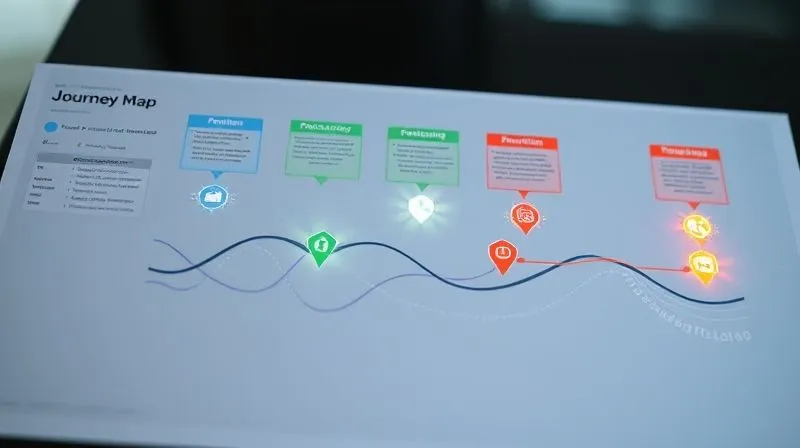
- Awareness Stage: Here, the buyer is just realizing they have a problem. Your value proposition should focus on acknowledging their pain, validating their experience, and hinting at a better way. It's about problem-solving, not product features.
- Consideration Stage: The buyer is now actively researching solutions. Your value proposition should highlight your unique approach, your proven methodology, and how you specifically address the nuances of their problem better than alternatives. This is where your differentiators become crucial.
- Decision Stage: At this point, the buyer is comparing vendors. Your value proposition should emphasize quantifiable ROI, testimonials, case studies, and any guarantees or exceptional support that mitigate risk and build confidence. It's about making the final choice easy and compelling.
By understanding the context of each interaction, you can tailor your value proposition to be maximally impactful, guiding the prospect smoothly through their journey towards a decision.
Your Value Proposition Isn't Credible or Substantiated
In an era of hyper-competition and information overload, buyers are increasingly skeptical. Grand claims without proof points are just noise. If your value proposition promises the moon but lacks evidence, it will fail to build the trust necessary to close deals.
Building Trust Through Proof Points
Credibility is the bedrock of any successful value proposition. You must back up your claims with tangible evidence. This is where your track record, your client successes, and your data come into play.
- Testimonials and Reviews: Authentic endorsements from satisfied clients are powerful.
- Case Studies: Detailed narratives of how you've helped specific clients achieve measurable results.
- Data and Statistics: Quantifiable results from your own performance or industry benchmarks.
- Awards and Recognition: Third-party validation of your expertise or product excellence.
- Pilot Programs or Demos: Allowing prospects to experience the value firsthand.
According to a recent study by Edelman, trust is a critical factor in purchasing decisions, with 81% of consumers saying they need to trust a brand to buy from them. This underscores the necessity of building credibility into every aspect of your value proposition. For deeper insights into fostering trust in sales, consider articles from reputable sources like Forbes Business.
Case Study: How InnovateTech Landed a Major Client
InnovateTech, a B2B SaaS startup specializing in AI-driven data analytics for logistics, initially struggled with a generic value proposition focused on "optimizing supply chains." Their sales team found it hard to differentiate, leading to low conversion rates.
After realizing why isn't our value proposition winning us new business deals, they revamped their strategy. They conducted in-depth interviews with existing customers, identifying that their true unique value lay in reducing *unforeseen delays* by predicting supply chain bottlenecks with 95% accuracy, leading to an average of 15% operational cost savings.
Their new value proposition became: "InnovateTech helps logistics companies proactively eliminate 95% of unforeseen supply chain delays, cutting operational costs by 15% within the first year, powered by our proprietary predictive AI engine." They then backed this with anonymized data from pilot programs and detailed case studies from early adopters.
Result: Within six months, InnovateTech saw a 25% increase in qualified leads and successfully closed a multi-million dollar deal with a Fortune 500 logistics provider, who specifically cited the clear, quantifiable value proposition and supporting data as key decision factors.
Internal Misalignment: Your Team Isn't Speaking the Same Language
Even the most brilliant value proposition will fail if it's not consistently communicated across all touchpoints. If your marketing team promotes one message, your sales team pitches another, and your customer success team talks about something entirely different, you create confusion and erode trust.
The Power of a Unified Message
A strong value proposition requires internal alignment. Everyone, from the CEO to the newest sales rep, needs to understand, internalize, and articulate the core value your company delivers. This isn't just about memorizing a script; it's about deeply understanding the 'why' behind your offering.
To achieve this:
- Regular Training Sessions: Ensure all client-facing teams (sales, marketing, support) receive consistent training on the value proposition, its nuances, and how to adapt it to different scenarios.
- Shared Resources: Create a central repository of messaging guides, case studies, FAQs, and sales collateral that are all aligned with the core value proposition.
- Cross-Functional Collaboration: Foster communication between departments. Product teams should inform sales about new features, and sales should provide feedback on customer pain points to product and marketing.
- Leadership Endorsement: The leadership team must champion the value proposition, reinforcing its importance and demonstrating its application.
When your entire organization is rowing in the same direction, speaking with one voice, your value proposition gains immense power and credibility.
Neglecting to Test, Iterate, and Refine
A value proposition is not a static document; it's a living hypothesis. The market evolves, customer needs shift, and competitors innovate. What resonated yesterday might fall flat tomorrow. One of the biggest reasons why isn't our value proposition winning us new business deals is a failure to continuously test and refine it.
A/B Testing and Feedback Loops for Continuous Improvement
Treat your value proposition as a critical marketing and sales asset that requires ongoing optimization. This means actively seeking feedback, conducting experiments, and being willing to adapt.

How to implement this:
- A/B Test Messaging: Experiment with different headlines, opening statements, and benefit descriptions in your outreach emails, landing pages, and sales scripts.
- Gather Qualitative Feedback: Regularly ask prospects why they chose you (or didn't). Conduct win/loss analyses. What resonated? What was unclear?
- Monitor Key Metrics: Track conversion rates at different stages of the funnel. Is a particular version of your value proposition leading to higher engagement or qualified leads?
- Stay Current with Market Trends: Regularly review industry reports, competitor activities, and customer feedback to ensure your value proposition remains relevant and compelling.
For practical guidance on A/B testing best practices, resources like VWO's A/B testing guides offer excellent frameworks.
| Test Parameter | Value Prop Focus | Open Rate | Click-Through Rate |
|---|---|---|---|
| Email Subject Line A | Cost Savings | 22% | 3.5% |
| Email Subject Line B | Efficiency Gains | 28% | 5.1% |
| Landing Page Headline A | Risk Reduction | 4.8% | 55% |
| Landing Page Headline B | Growth Acceleration | 6.2% | 48% |
This iterative process ensures your value proposition remains sharp, relevant, and consistently effective in winning new business deals.
Frequently Asked Questions (FAQ)
How often should we review our value proposition? You should conduct a formal review of your core value proposition at least annually, or whenever there are significant shifts in your market, competitive landscape, or product offering. However, smaller iterations and A/B tests on specific messaging should be ongoing, ideally monthly or quarterly, based on performance data and customer feedback.
Is a value proposition the same as a slogan or mission statement? No, they are distinct. A slogan is a short, catchy phrase for brand recognition (e.g., "Just Do It."). A mission statement defines your company's purpose and overall goal (e.g., "To organize the world's information..."). A value proposition, however, is a specific statement that articulates the unique benefits your product or service offers to a particular target customer, solving their specific problems better than alternatives. It's externally focused on the customer's gain, not just your company's aim.
How do I identify my ideal customer's pain points effectively? Start with in-depth customer interviews, not just surveys. Ask open-ended questions about their daily challenges, what frustrates them, and their aspirations. Analyze support tickets, sales call recordings, and online reviews for recurring themes. Look at industry reports and forums where your target audience congregates. Empathy mapping exercises can also be incredibly insightful to get into your customer's mindset.
What if our competitors offer similar benefits? How do we differentiate then? This is where your unique differentiator comes in. If benefits are similar, focus on *how* you deliver those benefits differently. Is it your speed, your specific methodology, your proprietary technology, your niche expertise, your level of customer support, or perhaps a unique pricing model? Dive deeper than surface-level comparisons to find a point of difference that truly matters to your ideal customer and that competitors struggle to replicate.
Can a single value proposition serve all our products/services or customer segments? While a core value proposition can unite your brand, it's often more effective to have tailored value propositions for different products/services or distinct customer segments. Each segment might have unique pain points and priorities, requiring a slightly different articulation of value. The key is that these specific value propositions should always align with and support your overarching brand value proposition.
Key Takeaways and Final Thoughts
- Shift from Features to Solutions: Always articulate how you solve specific customer problems and deliver tangible outcomes.
- Embrace Clarity and Specificity: Vague statements get lost. Be precise, concise, and quantify your impact.
- Unearth Your Unique Differentiators: Don't be a commodity. Highlight what makes you uniquely better or different.
- Tailor to the Buyer's Journey: Adapt your message to where the prospect is in their decision-making process.
- Build Credibility with Proof: Back up your claims with data, case studies, and testimonials.
- Ensure Internal Alignment: Everyone in your organization must understand and articulate your core value proposition consistently.
- Commit to Continuous Improvement: Test, iterate, and refine your value proposition based on feedback and performance data.
Mastering your value proposition isn't a one-time fix; it's an ongoing commitment to understanding your customers, articulating your unique worth, and continually refining your message. By diligently applying the insights and strategies shared here, you will not only answer the question 'Why isn't our value proposition winning us new business deals?' but also transform your approach, leading to more meaningful conversations, stronger relationships, and ultimately, a significant increase in new business deals. Go forth and articulate your value with power and precision!
Recommended Reading
- 7 Steps to Unlock Networking ROI for Consistent Business Growth
- Unlock Innovation: Your Guide to Overcoming Barriers in Startups
- Quantifying Intangible Value: 7 Frameworks for Consultant Fee Justification
- Proving Tangible ROI: 8 Strategies for SDG-Aligned CSR Programs
- Unlock Growth: Low Budget Brand Awareness Strategies for Startups Revealed





Comments
Leave a comment below. Your email will not be published. Required fields marked with *