


How to Break Deadlocks in Collective Bargaining Negotiations
For over two decades in Human Resources, specifically navigating the intricate world of labor relations, I've witnessed firsthand the profound frustration that grips both management and union representatives when collective bargaining negotiations grind to a halt. It's a moment when the air thickens with unspoken tension, trust erodes, and the path forward seems utterly obscured. I've seen promising relationships sour and critical operational decisions delayed, all because the parties couldn't find a way to bridge seemingly insurmountable divides.
The problem isn't just a failure to agree; it's often a failure to communicate effectively, to understand underlying interests, and to creatively explore alternatives beyond entrenched positions. A deadlock isn't merely an inconvenience; it's a significant threat to organizational stability, employee morale, and long-term productivity. It can lead to costly disruptions, legal battles, and a lasting legacy of animosity that poisons future interactions.
But here's the crucial insight I've gained: deadlocks are not inevitable, nor are they insurmountable. In this definitive guide, I will share the proven frameworks, strategic maneuvers, and empathetic approaches I've honed over years of experience. You'll learn not just what to do, but how to implement actionable strategies, drawing from real-world analogies and expert insights to transform negotiation impasses into opportunities for breakthrough and sustainable agreement.
1. Understanding the Anatomy of a Deadlock: Beyond the Surface
Before you can break a deadlock, you must first understand its true nature. It's rarely about the superficial issue on the table. Instead, it’s often a symptom of deeper, unaddressed factors. These can range from misaligned expectations and communication breakdowns to historical grievances, personality clashes, or even external pressures influencing either side's stance.
In my experience, a deadlock typically manifests when:
- Positions Harden: Both parties become entrenched in their demands, viewing any movement as a sign of weakness.
- Communication Fails: Dialogue devolves into accusation or silence, rather than constructive problem-solving.
- Underlying Interests Are Ignored: The focus remains on 'what' is demanded, not 'why' it's demanded.
- Trust Erodes: Past perceived betrayals or current misinterpretations chip away at the foundation of good faith.
- External Factors Exert Pressure: Economic conditions, industry trends, or internal political dynamics force rigidity.
Recognizing these symptoms early allows you to diagnose the root cause, which is the first critical step toward finding a cure. It's about stepping back from the immediate conflict and asking, 'What's really going on here?'
"A negotiation deadlock is not an end point, but a signal. It's an invitation to dig deeper, to question assumptions, and to innovate solutions that transcend the obvious." - Industry Expert Insight

2. The Power of Preparation: Beyond the Obvious Details
While preparation is always key in negotiations, it becomes absolutely paramount when facing a deadlock. This isn't just about reviewing your own data; it's about anticipating, understanding, and strategizing around the other party's perspective, constraints, and potential leverage points. When talks stall, going back to robust preparation can illuminate new pathways.
Re-evaluating Your Bargaining Position:
- Re-assess Your BATNA (Best Alternative To a Negotiated Agreement): What are your options if no agreement is reached? A strong BATNA gives you leverage and clarity.
- Re-examine Their BATNA: What are the other party's alternatives? Understanding their pressures can reveal areas for mutual gain or highlight their vulnerabilities.
- Identify & Prioritize Interests: Distinguish between positions (what you say you want) and interests (why you want it). Focus on interests, as they open up more solutions.
- Analyze Power Dynamics: Where does the balance of power truly lie? How has it shifted since the deadlock?
- Brainstorm Creative Solutions: Don't limit yourself to traditional solutions. Think outside the box, even for seemingly intractable issues like wages or benefits.
According to a study published in the Harvard Business Review, negotiators who invest significantly more time in preparation, particularly in understanding the other side's motivations and constraints, are far more likely to achieve favorable outcomes and avoid impasses. This means actively seeking information, even if it requires informal conversations or research into industry trends affecting the other party.
| Preparation Area | Action Steps | Impact on Deadlock |
|---|---|---|
| BATNA Assessment (Self) | Define minimum acceptable outcome, explore alternatives | Increased leverage, reduced desperation |
| BATNA Assessment (Other Party) | Research their external pressures, internal constraints | Identify pressure points, empathy for their situation |
| Interest Identification | Ask 'Why?' repeatedly for each position | Opens up creative, non-positional solutions |
| Communication Strategy | Plan active listening, non-confrontational phrasing | Re-establishes trust, reduces misunderstandings |
3. Shifting Perspectives: Empathy as a Strategic Tool
When negotiations stall, it's often because both sides are viewing the situation solely from their own vantage point. The ability to genuinely step into the other party's shoes—to understand their fears, aspirations, and constraints—is not just a soft skill; it's a powerful strategic advantage. This doesn't mean agreeing with them, but rather understanding their 'why.'
I've seen countless negotiations rescued by a simple, sincere attempt to understand. This involves:
- Active Listening: Truly hearing what they are saying, both verbally and non-verbally, without formulating your rebuttal.
- Asking Open-Ended Questions: Moving beyond 'yes/no' questions to 'how,' 'what if,' and 'tell me more about...' to uncover deeper interests.
- Acknowledging Their Concerns: Validating their feelings and perspectives, even if you don't share them. Phrases like 'I understand why that's a concern for you' can be incredibly disarming.
- Framing Solutions Benefiting Both: Once you understand their interests, you can propose solutions that address both your needs and theirs.
This approach helps to de-escalate tension and rebuild the rapport necessary for productive dialogue. It transforms the dynamic from an adversarial battle into a collaborative problem-solving exercise. Remember, empathy is not weakness; it's intelligence applied to human interaction.
4. Creative Problem-Solving: Beyond the Wage Debate
Many deadlocks occur because parties get fixated on a single issue, most commonly wages or benefits. However, the most effective negotiators understand that value can be created in myriad ways. This requires moving beyond zero-sum thinking and exploring a wider range of options.
Brainstorming Breakthrough Solutions:
- Expand the Pie: Can you introduce new issues into the negotiation that are valuable to one party but less costly to the other? (e.g., training programs, flexible work arrangements, career development opportunities, improved safety protocols).
- Integrative Bargaining: Look for opportunities where different priorities can be traded off. For example, if the union values job security highly and management values flexibility, can a deal be struck that provides greater job security in exchange for some operational flexibility?
- Staggered Implementation: If a large demand is difficult to meet all at once, can it be phased in over the contract term?
- Conditional Agreements: Can an agreement be contingent on certain performance metrics or future economic conditions? This shares risk and reward.
Case Study: How Apex Manufacturing Broke a Wage Impasse
Apex Manufacturing, a mid-sized industrial company, faced a severe deadlock with its union over a 4% wage increase demand. Management insisted they could only afford 2% due to market pressures. Tensions were high, and a strike seemed imminent. Instead of reiterating their positions, the management team, led by a seasoned HR Director, proposed a shift in focus.
They introduced a productivity bonus scheme tied to specific, measurable improvements in efficiency and waste reduction, which were areas the union had expressed concerns about in the past regarding workplace conditions. They also offered enhanced professional development training for skilled trades, a key interest for many long-term employees who felt their skills were becoming outdated. The union, while still wanting the wage increase, saw the value in the bonus potential and the investment in their members' future. After several rounds of creative proposals, they agreed to a 2.5% wage increase, a tiered productivity bonus structure that could potentially yield an additional 1.5-3% for employees, and the new training programs. This resulted in a win-win: management achieved cost control and boosted productivity, while employees gained a respectable wage increase, earning potential, and career development.
5. Leveraging Third-Party Intervention: When to Call for Help
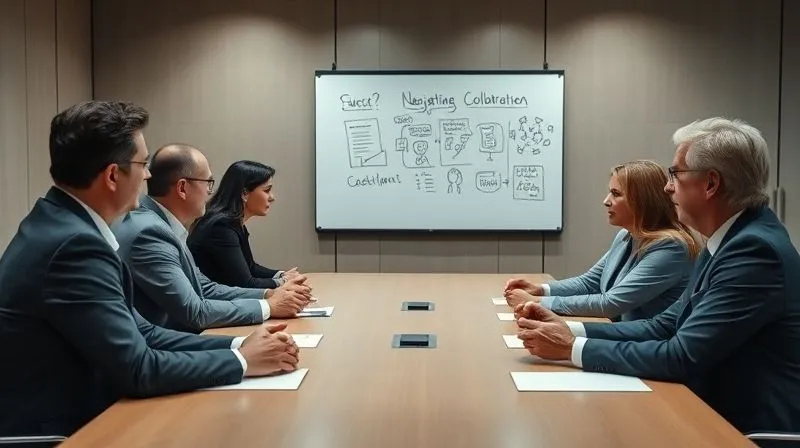
Sometimes, despite best efforts, parties remain stuck. This is where a neutral third party can be invaluable. Knowing when to introduce mediation or conciliation is a critical strategic decision, not a sign of failure. It's an acknowledgement that an objective perspective can often illuminate paths forward that those entrenched in the conflict cannot see.
Understanding Different Intervention Types:
- Conciliation: A conciliator facilitates communication, clarifies issues, and helps parties explore options. They are less directive than mediators.
- Mediation: A mediator actively guides the discussion, helps parties identify common ground, and often proposes solutions. Their role is to facilitate a voluntary agreement.
- Arbitration: This is a more formal process where a neutral third party hears both sides and makes a binding decision. It's typically a last resort when all other methods fail, as it surrenders control over the outcome.
I've found that early intervention with a skilled mediator often prevents a complete breakdown. A good mediator doesn't take sides but helps each party articulate their needs and understand the other's. They can reframe issues, manage emotions, and propose novel solutions. For instance, the Federal Mediation and Conciliation Service (FMCS) in the US offers invaluable resources and expertise specifically for labor-management disputes.
6. Building Bridges: Communication and Trust
At the heart of every deadlock is a breakdown in communication and, often, a significant erosion of trust. Rebuilding these foundations is paramount. It’s not about grand gestures but consistent, transparent, and respectful interactions.
Strategies for Rebuilding Trust and Improving Communication:
- Scheduled Informal Meetings: Beyond the formal bargaining table, arrange casual meetings (e.g., over coffee or lunch) without an agenda to discuss non-negotiation related topics. This humanizes the other side.
- Joint Fact-Finding: When there are disagreements over data or facts, propose a joint committee to research and agree upon the facts. This removes contentious data points from the negotiation.
- Transparency (Where Possible): Be open about your constraints and challenges. While you can't reveal everything, demonstrating a willingness to share can encourage reciprocity.
- Focus on Shared Interests: Remind both parties of what they have in common – the success of the organization, employee well-being, long-term stability.
- Apologize for Misunderstandings: If a misunderstanding has occurred, a sincere apology can go a long way in clearing the air and demonstrating good faith.
"Trust is the currency of negotiation. When it's depleted, every transaction becomes exponentially harder. Invest in rebuilding it with consistent integrity and genuine communication." - Veteran HR Director's Wisdom
7. The Art of the Concession and Trade-off
Breaking deadlocks often requires movement from both sides. This isn't about capitulation, but strategic concession and intelligent trade-offs. The goal is to move from a fixed position to a flexible zone of potential agreement.
Mastering Concessions and Trade-offs:
- Value-Based Concessions: Concede on issues that are of high value to the other party but relatively low cost to you.
- Reciprocal Concessions: Never concede without asking for something in return. This maintains balance and signals that movement is a two-way street.
- Incremental Concessions: Make small, measured concessions rather than large ones. This allows you to test the waters and save significant movement for key issues.
- Package Deals: Offer concessions as part of a larger package, rather than individual items. This allows you to bundle less costly concessions with more significant demands.
- Prioritize Issues: Understand your 'must-haves' versus your 'nice-to-haves.' Be prepared to give on the latter to secure the former.
It's crucial to document every offer and counter-offer. This provides clarity and prevents misunderstandings later. Effective concession strategies require not only foresight but also a deep understanding of your own priorities and those of the other party. As outlined in many negotiation frameworks, like those taught at Harvard's Program on Negotiation, strategic concession is a cornerstone of successful dispute resolution.
Post-Deadlock Strategies: Sustaining Momentum
Breaking a deadlock is a victory, but it's not the end of the journey. The period immediately following a breakthrough is crucial for solidifying gains and preventing future impasses. It's about nurturing the relationship and ensuring the agreement is implemented smoothly.
Maintaining Positive Momentum:
- Formalize Agreements Promptly: Get the agreement in writing as soon as possible. This prevents misunderstandings and ensures clarity.
- Communicate Internally and Externally: Clearly communicate the terms of the agreement to all relevant stakeholders – employees, management, and if necessary, the public.
- Celebrate the Breakthrough: Acknowledge the hard work and willingness of both parties to reach a resolution. A small, joint celebration can reinforce positive collaboration.
- Establish a Joint Monitoring Committee: For complex agreements, a joint committee can oversee implementation, address minor issues before they escalate, and build ongoing trust.
- Schedule Follow-Up Meetings: Plan to review the agreement's effectiveness at regular intervals. This demonstrates commitment to the long-term success of the contract and the relationship.
The lessons learned during a deadlock, however painful, can be invaluable for strengthening future labor relations. By proactively addressing potential friction points and maintaining open channels of communication, organizations can transform challenging periods into opportunities for growth and resilience. Remember, the goal isn't just to sign a contract, but to foster a sustainable, productive working relationship. The International Labour Organization (ILO) consistently advocates for strong, ongoing social dialogue as a means to prevent and resolve disputes, emphasizing that sustained communication is key.
Frequently Asked Questions (FAQ)
Q: What if one party refuses to move from their position, even after trying these strategies? A: If a party remains absolutely rigid, it's crucial to understand their underlying motivation. Is it a matter of principle, a lack of authority to concede, or external pressure? Revisit your BATNA and consider formal third-party intervention like mediation, or even arbitration as a last resort, to break the impasse. Sometimes, the threat of arbitration can prompt movement.
Q: How do I handle strong emotions or personal attacks during stalled negotiations? A: It's vital to separate the people from the problem. Acknowledge their emotions without necessarily agreeing with their content. Take a break if things get too heated. Reframe personal attacks as expressions of frustration about the issue. Focus on the issues, not the personalities, and insist on respectful dialogue. A neutral third party can be very effective in managing emotional dynamics.
Q: Is it ever advisable to walk away from the table? A: Walking away should always be a carefully considered last resort, after all other options (including mediation) have been exhausted, and only if your BATNA is genuinely stronger than any potential negotiated agreement. It signals a complete breakdown and can have significant long-term consequences, so it's a high-stakes move that requires thorough strategic review.
Q: How can technology play a role in breaking deadlocks? A: While face-to-face interaction is often best, technology can facilitate information sharing, joint data analysis, and even virtual mediation sessions. Secure platforms for document exchange, shared spreadsheets for scenario planning, and video conferencing can help maintain communication and transparency, especially when travel or in-person meetings are difficult. However, it should supplement, not replace, direct human engagement.
Q: What's the biggest mistake negotiators make when facing a deadlock? A: The biggest mistake is often a failure to listen and understand the other side's true interests. When both parties are only focused on asserting their own positions, they miss opportunities for creative, integrative solutions. Another common mistake is taking the deadlock personally, which escalates emotions and makes rational problem-solving nearly impossible.
Key Takeaways and Final Thoughts
- Diagnose First: Understand the true, underlying reasons for the deadlock before attempting solutions.
- Prepare Relentlessly: Re-evaluate BATNAs and interests for both sides to uncover new leverage and creative options.
- Embrace Empathy: Shift perspectives to understand the other party's 'why,' fostering trust and opening dialogue.
- Innovate Solutions: Look beyond traditional demands to expand the pie and find integrative, value-creating trade-offs.
- Consider Intervention: Don't hesitate to engage skilled third-party mediators when internal efforts stall.
- Rebuild Trust: Prioritize clear, consistent communication and joint fact-finding to mend fractured relationships.
- Concede Strategically: Use concessions and trade-offs as tools to move towards agreement, always seeking reciprocity.
Breaking deadlocks in collective bargaining negotiations is rarely simple, but it is always possible with the right mindset, preparation, and strategic approach. It demands patience, creativity, and a genuine commitment to finding common ground. As an industry specialist, I've seen that the most successful outcomes arise not from brute force, but from a nuanced understanding of human dynamics and a willingness to explore beyond the obvious. Approach these challenges not as insurmountable barriers, but as complex puzzles waiting for your expert solution, and you will find your path to lasting agreement.
Recommended Reading
- Critical Project Delegation: 5 Strategies for Control & Quality Assurance
- Stop the Leak: 7 Strategies to Cut Post-Sale Churn from Unresolved Issues
- Unexpected Shipping Costs Killing B2C Sales? Fix Abandoned Carts Now!
- 7 Ways to Avoid Greenwashing: Promote Green Initiatives Authentically
- Mastering Global Success: How to Develop Effective Global Leadership Strategies?





Comments
Leave a comment below. Your email will not be published. Required fields marked with *