


How to Improve Financial Forecast Accuracy Amid Market Volatility?
For over 20 years in financial management, I've seen countless businesses, from nimble startups to established enterprises, grapple with the unpredictable beast that is market volatility. The core challenge? Maintaining a reliable compass – your financial forecast – when the economic waters are choppy, and the horizon keeps shifting. Many fall into the trap of rigid, annual forecasts, only to find them obsolete within weeks, leading to poor strategic decisions and missed opportunities.
The pain is palpable: inaccurate forecasts lead to misallocated resources, unrealistic growth targets, supply chain disruptions, and ultimately, eroded profitability. It's a constant battle to make informed decisions when your crystal ball seems perpetually cloudy, and the fear of making the wrong move can paralyze even the most experienced leadership teams.
But what if you could not just survive, but thrive amidst this uncertainty? In this definitive guide, I'll share expert insights, actionable frameworks, and practical strategies I've honed over decades to dramatically improve financial forecast accuracy amid market volatility. We'll move beyond mere adjustments and build a resilient forecasting muscle that empowers your business to anticipate, adapt, and outperform.
1. Embrace Dynamic Scenario Planning: Beyond Best, Worst, and Base
One of the most common mistakes I observe is limiting scenario planning to a simplistic 'best, worst, and base' case. While a good starting point, true resilience in volatile markets demands a more nuanced and dynamic approach. You need to identify a broader spectrum of plausible futures, not just the extremes, and quantify their potential impact.
Actionable Steps for Dynamic Scenario Planning:
- Identify Key Volatility Drivers: Pinpoint the specific external factors most likely to impact your business (e.g., interest rate changes, commodity price fluctuations, geopolitical events, consumer spending shifts, technological disruptions).
- Quantify Impact Ranges: For each driver, define a realistic range of potential outcomes (e.g., interest rates could rise by 0.5% to 2% in the next 12 months).
- Develop Probabilistic Scenarios: Instead of just three, build 5-7 distinct scenarios. Assign probabilities to each based on expert opinion, historical data, and predictive models. These aren't just 'what-ifs'; they're 'what-if-this-happens-then-what's-the-impact'.
- Model Financial Outcomes for Each: Run your full financial model (P&L, Balance Sheet, Cash Flow) for every scenario. This reveals which financial levers are most sensitive to specific market shifts.
- Stress Test Strategic Decisions: Evaluate how well your current strategic plans hold up under each scenario. This helps identify vulnerabilities and opportunities for proactive adjustments.
This iterative process allows you to understand the full spectrum of potential outcomes and build contingency plans, making your forecasts robust, not brittle.
"In a volatile market, your financial forecast isn't a prediction; it's a strategic navigation tool. The more scenarios you map, the better equipped you are to steer through the storm." - Industry Specialist Insight
2. Leverage Predictive Analytics and Machine Learning
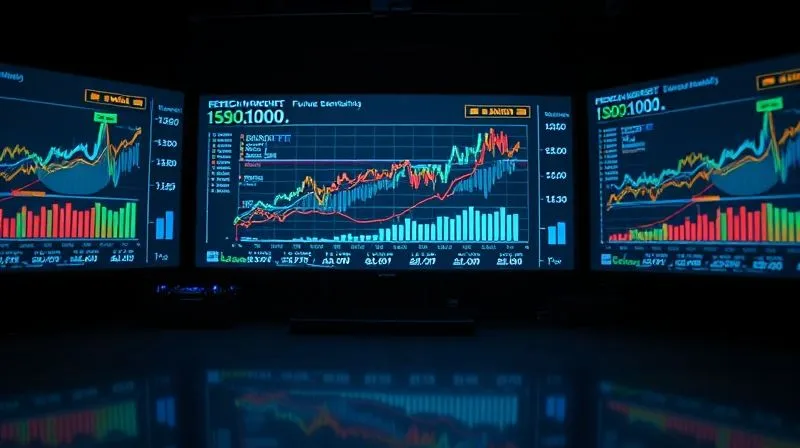
Gone are the days when financial forecasting relied solely on historical averages and linear regressions. Today, the sheer volume and velocity of data, combined with advancements in artificial intelligence (AI) and machine learning (ML), offer unparalleled opportunities to improve financial forecast accuracy amid market volatility.
How AI/ML Transforms Forecasting:
- Pattern Recognition: ML algorithms can identify subtle, non-linear patterns and correlations in vast datasets that human analysts might miss, especially those tied to market sentiment or complex economic indicators.
- External Data Integration: Beyond internal sales and cost data, AI can incorporate external factors like social media trends, news sentiment, geopolitical indices, and real-time economic indicators to provide a more holistic view.
- Adaptive Models: Unlike static models, ML algorithms can continuously learn and adapt as new data becomes available, adjusting their predictions in real-time to reflect changing market conditions. This is crucial for navigating volatility.
- Granular Forecasting: AI can forecast at a much finer level of detail – by product, customer segment, or geographic region – allowing for more precise resource allocation.
According to a McKinsey report, companies leveraging AI in demand forecasting have seen improvements of 10-20% in accuracy and a reduction in lost sales of up to 65%.
Case Study: Horizon Tech's AI-Driven Revenue Forecast
Horizon Tech, a mid-sized SaaS company, faced significant challenges in predicting subscription renewals and new customer acquisition amidst fluctuating tech market sentiment. Their traditional forecasting methods often missed targets by 15-20%. By implementing an AI-driven predictive analytics platform, they integrated not only their historical subscription data but also external data points like tech news sentiment, competitor product launches, and general economic indicators. The AI model identified previously unknown correlations between market news and churn rates. Within six months, their revenue forecast accuracy improved by 25%, enabling them to proactively adjust marketing spend and sales strategies, leading to a 10% increase in quarterly recurring revenue.
3. Shorten Forecasting Horizons and Implement Rolling Forecasts
The traditional annual budget and forecast cycle is a relic of a more stable era. In today's volatile environment, a 12-month static forecast can become irrelevant almost as soon as it's published. The answer lies in shortening your forecasting horizons and adopting a rolling forecast methodology.
The Power of Rolling Forecasts:
- Increased Agility: Instead of a fixed annual view, a rolling forecast continuously updates, typically on a monthly or quarterly basis, extending the forecast period (e.g., always looking 12 months ahead).
- Real-time Relevance: Each update incorporates the latest actuals and market intelligence, ensuring your forecast remains a true reflection of current business realities.
- Improved Decision-Making: With a constantly refreshed outlook, management can make more timely and informed decisions regarding resource allocation, investment, and risk mitigation.
- Focus on the Near-Term: While maintaining a long-term strategic vision, rolling forecasts compel you to focus on the most impactful short-to-medium term predictions, where accuracy is highest.
I've personally guided companies through this transition, and the initial resistance often gives way to appreciation for the enhanced clarity and control it provides. It's a fundamental shift from a static plan to a dynamic, living financial roadmap.
"Your annual forecast is dead. Long live the rolling forecast! It's the only way to keep pace with today's market velocity." - Expert Financial Advice
Consider the difference in insights:
| Forecasting Method | Frequency | Responsiveness to Volatility | Accuracy Potential | Resource Allocation |
|---|---|---|---|---|
| Annual Static Forecast | Once a year | Low, quickly obsolete | Limited beyond initial months | Rigid, prone to misalignment |
| Rolling Forecast | Monthly/Quarterly | High, continuously updated | Significantly higher, especially in near-term | Flexible, adaptive to market changes |
4. Enhance Data Quality and Granularity for Better Insights
Garbage in, garbage out – this adage holds particularly true for financial forecasting. The accuracy of your forecast is directly proportional to the quality and granularity of the data you feed into it. In volatile markets, this means moving beyond aggregated, high-level data to more detailed, real-time information.
Key Data Enhancement Strategies:
- Automate Data Collection: Reduce manual data entry errors and speed up the process by integrating systems (CRM, ERP, accounting software) to automatically feed data into your forecasting models.
- Increase Granularity: Instead of just forecasting 'total revenue,' break it down by product line, customer segment, sales channel, or even individual SKU. The more detailed your inputs, the more precise your outputs can be.
- Incorporate External Economic Indicators: Actively monitor and integrate relevant macroeconomic data (GDP growth, inflation rates, consumer confidence indices, industry-specific benchmarks) from reputable sources like the Federal Reserve or IMF.
- Validate Data Constantly: Implement rigorous data validation processes to identify and correct anomalies or inconsistencies before they skew your forecasts.
- Establish a Single Source of Truth: Ensure all departments are working from the same, reconciled dataset. Discrepancies between sales, marketing, and finance data can severely undermine forecast credibility.
Clean, detailed, and timely data is the bedrock upon which accurate forecasts are built, especially when market signals are faint or conflicting.
5. Foster Cross-Functional Collaboration and Communication
Financial forecasting is not solely a finance department's responsibility; it's a critical enterprise-wide exercise. In volatile markets, the insights from sales, marketing, operations, and even HR become indispensable for building a truly robust and accurate forecast.
Building a Collaborative Forecasting Culture:
- Regular Inter-Departmental Meetings: Establish a cadence for brief, focused meetings where key stakeholders from different departments share their latest insights on market conditions, customer behavior, operational challenges, and potential risks or opportunities.
- Shared Ownership: Encourage department heads to take ownership of their respective forecast inputs and be accountable for their accuracy. This shifts the perception from 'finance's forecast' to 'our company's forecast.'
- Transparent Assumptions: Clearly document and communicate the key assumptions underpinning the forecast. This allows other departments to challenge or validate these assumptions with their unique perspectives.
- Feedback Loops: Create mechanisms for continuous feedback. When actuals deviate from forecasts, involve all relevant teams in the post-mortem analysis to understand *why* and learn for future iterations.
- Technology for Collaboration: Utilize integrated planning platforms that allow multiple users to contribute to, review, and comment on different sections of the forecast in real-time.
I've seen firsthand how breaking down silos and fostering genuine collaboration can transform a struggling forecasting process into a powerful strategic asset. It injects a dose of real-world intelligence that purely quantitative models can sometimes miss.

6. Implement Post-Mortem Analysis and Continuous Learning Loops
Improving financial forecast accuracy amid market volatility isn't a one-time fix; it's a journey of continuous improvement. The most successful organizations treat every forecast deviation as a learning opportunity, meticulously analyzing what went wrong and why.
The Post-Mortem and Learning Cycle:
- Variance Analysis: Regularly compare actual results against your forecasts. Don't just note the difference; dig deep into the root causes of significant variances. Was it a market shift, an operational issue, a flawed assumption, or a data error?
- Model Refinement: Based on variance analysis, adjust your forecasting models, update assumptions, and incorporate new variables that proved influential.
- Process Improvement: Review your forecasting process itself. Are there bottlenecks? Is data flowing efficiently? Are communication channels effective?
- Document Lessons Learned: Maintain a centralized log of insights gained from each forecasting cycle. This institutionalizes knowledge and prevents repeating past mistakes.
- Benchmark Against Peers: Periodically compare your forecast accuracy rates with industry benchmarks, if available. This provides an external perspective on your performance.
As Seth Godin often says, "The market is a conversation." Your forecasting process should be a continuous conversation with your business's performance, constantly adapting and evolving.
7. Leverage Technology for Visualization and 'What-If' Analysis
Even the most accurate forecast can be ineffective if it's not clearly understood or easily manipulated for strategic exploration. Modern financial planning and analysis (FP&A) software and business intelligence (BI) tools are indispensable for enhancing comprehension and flexibility.
How Technology Enhances Forecasting:
- Interactive Dashboards: Present complex financial data and forecast outcomes visually through interactive dashboards. This allows stakeholders to quickly grasp key trends, variances, and sensitivities without sifting through spreadsheets.
- Real-time Data Integration: Connect your forecasting tools directly to your source systems (ERP, CRM) for real-time data feeds, ensuring your models are always working with the freshest information.
- Self-Service 'What-If' Analysis: Empower decision-makers to run their own 'what-if' scenarios by easily adjusting key assumptions (e.g., "What if sales decline by 5% and raw material costs increase by 10%?"). This fosters deeper understanding and ownership.
- Automated Reporting: Automate the generation of forecast reports, freeing up finance teams to focus on analysis and strategic insights rather than data compilation.
- Version Control and Audit Trails: Ensure all forecast versions are tracked, and changes are auditable, which is crucial for governance and understanding forecast evolution.
The right technology transforms forecasting from a static report to a dynamic, interactive strategic planning tool, essential for agile decision-making in volatile times.

Frequently Asked Questions (FAQ)
What is the most common mistake companies make when forecasting in volatile markets? The most common mistake is relying on static, annual forecasts based heavily on historical data without adequately incorporating forward-looking market intelligence, dynamic scenario planning, or real-time adjustments. This leads to forecasts that are quickly outdated and irrelevant for strategic decision-making.
How often should I update my financial forecasts during periods of high volatility? During periods of high volatility, I recommend moving to a monthly or even bi-weekly rolling forecast cycle for critical metrics. While a full financial model update might be quarterly, key performance indicators (KPIs) and critical assumptions should be reviewed and adjusted much more frequently to maintain relevance.
Is it possible to achieve 100% financial forecast accuracy? No, 100% accuracy is an unrealistic goal, especially in volatile markets. The objective is not perfection, but rather to improve financial forecast accuracy to a level that enables robust, informed decision-making and minimizes negative surprises. A highly accurate forecast might be within a 5% variance range, allowing for effective strategic planning and resource allocation.
What role does emotional intelligence play in financial forecasting amidst uncertainty? Emotional intelligence is crucial. It helps leaders avoid panic-driven decisions during market downturns and prevents overconfidence during upturns. An emotionally intelligent forecaster can differentiate between temporary market noise and genuine shifts, maintain objectivity, and foster better cross-functional collaboration by understanding diverse perspectives and anxieties.
How can small businesses, with limited resources, improve their forecast accuracy? Small businesses can start by focusing on the most impactful drivers of their revenue and costs. Implement simple rolling forecasts (e.g., 3-month rolling), leverage accessible tools like advanced spreadsheets or basic cloud-based FP&A software, and prioritize cross-functional communication. Focus on granular data for core products/services and actively monitor 2-3 key external economic indicators relevant to their niche. Even without AI, disciplined process and collaboration yield significant improvements.
Key Takeaways and Final Thoughts
- Embrace Agility: Shift from static annual forecasts to dynamic, rolling forecasts with shorter horizons.
- Leverage Technology: Utilize predictive analytics, AI/ML, and advanced FP&A software for deeper insights and 'what-if' capabilities.
- Prioritize Data Quality: Ensure your data is accurate, granular, and integrated, incorporating external economic indicators.
- Foster Collaboration: Break down silos and ensure all departments contribute to and own the forecasting process.
- Learn Continuously: Conduct rigorous post-mortem analyses to refine models and processes.
- Scenario Plan Deeply: Go beyond simple best/worst/base cases to explore a wider range of probabilistic futures.
Improving financial forecast accuracy amid market volatility is not merely a technical exercise; it's a strategic imperative that builds resilience and competitive advantage. The future will always hold surprises, but with these frameworks and a commitment to continuous improvement, your business can navigate the economic storms with confidence, transforming uncertainty into an opportunity for strategic growth. Start implementing these strategies today, and watch your decision-making clarity soar.
Recommended Reading
- 7 Proven Strategies to Fix Low Local Lead Generation for New Franchise Units
- 5 Steps to Combat Greenwashing & Rebuild Your Company's Reputation
- 7 Proven Strategies: What to Do When Scope Creep Threatens Execution Success?
- 9 Proactive Strategies: Preventing Union Organizing Drives in Your Non-Union Workplace
- Financial Projections Off? 7 Steps to Recalibrate Your Small Business Plan




Comments
Leave a comment below. Your email will not be published. Required fields marked with *