


How to Improve Sales Conversion Rates Through Data Analytics?
For over two decades in the demanding world of business analytics, I've witnessed countless organizations grapple with a fundamental challenge: converting promising leads into loyal customers. It’s a make-or-break moment for any business, and often, the difference between thriving and merely surviving lies not in more effort, but in smarter, data-driven effort.
Many leaders find themselves pouring resources into marketing and sales activities, only to see conversion rates stagnate or even decline. This isn't a failure of intent, but often a lack of precise insight into *why* prospects aren't making the leap. The pain points are real: wasted marketing spend, frustrated sales teams, and missed revenue targets.
In this definitive guide, I will share the actionable framework and proven strategies I've honed over years in the trenches. You'll learn how to harness the power of data analytics to not just incrementally improve, but fundamentally transform your sales conversion rates, unlocking sustainable growth and a clearer path to profitability.
The Foundational Pillars of Data-Driven Sales Conversion
Before we dive into specific strategies, it's crucial to establish a robust foundation. Just as a building needs strong footings, your data-driven sales efforts require clear understanding and defined metrics.
Understanding Your Current Sales Funnel: A Diagnostic Approach
The first step in any analytical endeavor is to understand the current state. Your sales funnel isn't just a conceptual diagram; it's a living, breathing process, and data allows us to see its true form and identify its weaknesses.
- Map Every Stage: Document each step a prospect takes, from initial awareness to becoming a paying customer. Include all touchpoints and decision points.
- Define Entry and Exit Criteria: For each stage, clearly articulate what qualifies a lead to move forward and what might cause them to drop off.
- Assign Metrics to Each Stage: Determine which metrics (e.g., website visits, lead form submissions, demo requests, proposal sent, closed-won) are relevant for each stage.
- Visualize the Flow: Use flowcharts or CRM visualization tools to see the actual path prospects take, not just the idealized one.
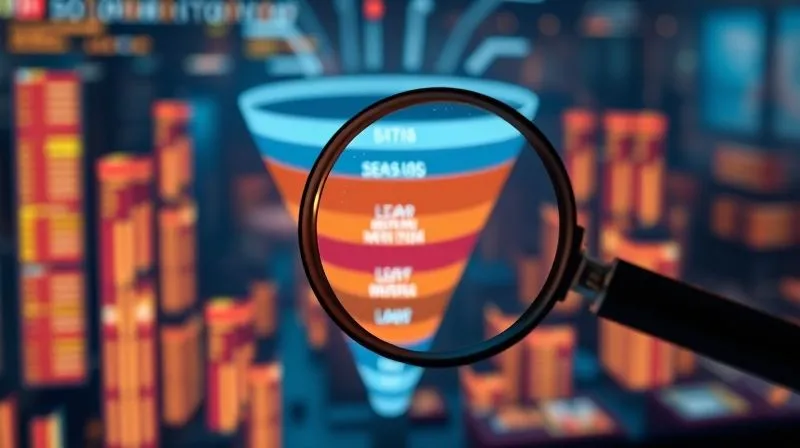
This granular mapping allows you to pinpoint exactly where prospects are disengaging. Is it after the initial contact? During the demo stage? Or are proposals simply not closing?
Identifying Key Conversion Metrics (KCMs) Beyond the Obvious
While overall conversion rate is essential, a true expert knows that drilling down into sub-metrics provides far more actionable insights. These Key Conversion Metrics (KCMs) reveal the health of specific parts of your funnel.
Beyond the common 'Lead-to-Opportunity' or 'Opportunity-to-Win' rates, consider metrics like 'Demo-to-Proposal Rate,' 'Email Open-to-Click Rate for Specific Segments,' or 'Website Visit-to-Qualified Lead Rate by Traffic Source.' These tell a richer story.
| Metric Type | Example | Actionability |
|---|---|---|
| Common Sales Metric | Overall Conversion Rate | High-level indicator, needs drill-down |
| Key Conversion Metric (KCM) | Demo-to-Proposal Rate | Directly highlights issues in product presentation or qualification |
| Key Conversion Metric (KCM) | Trial-to-Paid Conversion Rate | Reveals friction in the onboarding or value realization phase |
| Common Sales Metric | Average Deal Size | Important for revenue, but not directly a conversion step |
| Key Conversion Metric (KCM) | Specific CTA Click-Through Rate | Optimizes micro-conversions on landing pages or emails |
As marketing guru Seth Godin often says, "The job is not to find the perfect customer; the job is to find the perfect customer *for you*." Data analytics helps you identify who that customer is and how to guide them effectively.
Strategy 1: Leveraging Customer Segmentation for Hyper-Targeted Campaigns
One of the most powerful ways to improve sales conversion rates through data analytics is through intelligent customer segmentation. Treating all prospects the same is a recipe for mediocrity; personalized approaches driven by data yield superior results.
How to Segment Effectively with Data
Effective segmentation moves beyond basic demographics. It delves into behavioral, psychographic, and firmographic data to create nuanced groups.
- Gather Comprehensive Data: Consolidate data from CRM, marketing automation, website analytics, and customer support. Look for patterns in past purchases, website behavior, email engagement, and support interactions.
- Identify Segmentation Criteria: Don't just guess. Use clustering algorithms or simple pivot tables to find natural groupings based on common attributes or behaviors. Are there customers who always respond to discounts? Are there leads who spend significant time on your 'pricing' page but never convert?
- Develop Persona Profiles: For each segment, create a detailed persona, including their pain points, goals, preferred communication channels, and common objections. This humanizes the data.
- Craft Tailored Messaging: Develop specific marketing content and sales scripts that resonate directly with each segment's unique needs and motivations.
- Test and Refine: Continuously A/B test your segmented campaigns and adjust based on performance data.
"The era of one-size-fits-all marketing is over. Data-driven segmentation allows us to speak directly to the individual needs and desires of our prospects, making our outreach not just relevant, but irresistible."
Case Study: How 'Apex Solutions' Boosted Conversions by 15% with Micro-Segmentation
Apex Solutions, a B2B SaaS company, struggled with a generic sales approach, resulting in a stagnant 3% conversion rate. By analyzing their CRM data, they identified three distinct customer segments: 'Small Business Start-ups,' 'Mid-Market Growth Companies,' and 'Enterprise Legacy Systems.' They then developed tailored content funnels and sales pitches for each. For the 'Small Business' segment, they emphasized ease of use and affordability. For 'Enterprise,' they focused on integration capabilities and ROI. This micro-segmentation, coupled with targeted outreach, led to a remarkable 15% increase in their overall sales conversion rate within six months, demonstrating the power of understanding who you're talking to.
Strategy 2: Optimizing the Customer Journey Through Behavioral Analytics
Understanding *how* prospects interact with your brand is just as important as knowing *who* they are. Behavioral analytics provides the granular insights needed to smooth out the customer journey and remove friction points, directly impacting how to improve sales conversion rates through data analytics.
Mapping User Paths and Identifying Drop-Off Points
Behavioral data from your website, app, and email campaigns can illuminate the actual paths prospects take. This is often vastly different from the idealized journey you envision.
- Utilize Web Analytics Tools: Tools like Google Analytics, Hotjar, or Amplitude can track page views, time on site, click paths, and form interactions.
- Analyze Funnel Visualizations: Most analytics platforms offer funnel visualization reports that show drop-off rates between specific steps (e.g., from product page to cart, or from pricing page to contact form).
- Identify High-Exit Pages/Forms: Pinpoint pages where a high percentage of users leave your site or forms where many abandon their submission.
- Conduct User Session Replays: For a qualitative layer, watch anonymized session recordings to understand *why* users might be struggling or getting confused.

Once you've identified these critical drop-off points, you can hypothesize changes and test them. Is your pricing page too complex? Is a CTA button not prominent enough? Data provides the clues; your experimentation provides the answers.
Personalization at Scale: From Insights to Action
Behavioral data empowers you to personalize the customer journey dynamically. This isn't just about addressing someone by their first name; it's about showing them the most relevant content, offers, and next steps based on their real-time actions.
- Dynamic Content: Display different website content, product recommendations, or calls-to-action based on a user's browsing history, previous purchases, or demographic data.
- Targeted Email Flows: Trigger automated email sequences based on specific behaviors, such as abandoning a cart, visiting a specific product category multiple times, or downloading a whitepaper.
- Retargeting Campaigns: Use advertising platforms to show highly relevant ads to users who have interacted with your site but not yet converted, reminding them of their interest.
- Sales Outreach Prioritization: Provide sales reps with behavioral scores and insights, allowing them to tailor their conversations based on a prospect's recent activities and expressed interests.
Personalization, when done right, makes prospects feel understood and valued, significantly increasing the likelihood of conversion. It’s about being helpful and relevant at every step.
Strategy 3: Predictive Analytics for Proactive Sales Interventions
Moving beyond reactive analysis, predictive analytics allows you to anticipate future outcomes and take proactive steps. This is where data analytics truly transforms sales from an art into a science, giving you a significant edge in how to improve sales conversion rates through data analytics.
Lead Scoring and Qualification: Focusing on High-Potential Prospects
Not all leads are created equal. Predictive lead scoring uses historical data to assign a 'score' to each new lead, indicating their likelihood of converting. This helps sales teams prioritize their efforts.
- Identify Key Predictors: Analyze your past successful conversions. What common attributes did those leads have? (e.g., industry, company size, website pages visited, whitepapers downloaded, email engagement).
- Develop a Scoring Model: Assign points to different actions and attributes. More sophisticated models use machine learning to weigh these factors automatically.
- Integrate with CRM: Ensure your lead scoring model automatically updates within your CRM system, providing real-time insights to sales reps.
- Define Action Thresholds: Establish clear thresholds for when a lead is considered 'sales-ready' (SQL) and should be passed to a sales rep.
This ensures your sales team spends their valuable time on prospects who are most likely to convert, dramatically improving their efficiency and your overall conversion rates.
Churn Prediction and Retention Strategies
Predictive analytics isn't just for acquiring new customers; it's also crucial for retaining existing ones. Identifying customers at risk of churning *before* they leave allows for proactive intervention.
- Analyze Usage Patterns: For subscription services, track login frequency, feature usage, and engagement metrics. A drop in activity can be a strong predictor of churn.
- Monitor Support Interactions: Frequent support tickets, especially those unresolved, can signal dissatisfaction and potential churn.
- Look for Demographic Shifts: Changes in company size, industry, or key contacts can sometimes indicate a higher churn risk for B2B clients.
- Develop Retention Campaigns: Once at-risk customers are identified, deploy targeted retention campaigns, offering proactive support, personalized outreach, or special incentives.
According to a study by Harvard Business Review, increasing customer retention rates by 5% can increase profits by 25% to 95%. Predictive analytics makes this possible.
Strategy 4: A/B Testing and Experimentation for Continuous Improvement
Data analytics isn't just about understanding the past; it's about shaping the future through informed experimentation. A/B testing is your scientific method for sales optimization, a direct path to how to improve sales conversion rates through data analytics.
Setting Up Effective A/B Tests for Sales Elements
Every element of your sales process, from landing page headlines to email subject lines, can be optimized through A/B testing.
- Identify a Single Variable: Test only one element at a time (e.g., headline, CTA button color, email body copy, pricing structure). This ensures you know what caused the change.
- Define Your Hypothesis: What do you expect to happen? "Changing the CTA from 'Submit' to 'Get My Free Quote' will increase form submissions by 10%."
- Create Variations: Develop at least two versions (A and B) of the element you're testing.
- Split Your Audience: Randomly divide your traffic or audience into two groups, ensuring each group sees only one variation.
- Run for Statistical Significance: Allow the test to run long enough to gather sufficient data and achieve statistical significance, meaning the results are unlikely due to chance.
| Test Element | Control (A) | Variant (B) | Conversion Rate (A) | Conversion Rate (B) |
|---|---|---|---|---|
| Landing Page Headline | Boost Your Business Efficiency | Unlock 20% More Productivity Today | 3.5% | 4.2% |
| Email CTA Button | Learn More | Get Your Free Demo | 1.8% | 2.5% |
| Pricing Page Layout | Tiered List | Feature Comparison Table | 2.1% | 2.8% |
Remember, even small percentage gains, when compounded across your entire sales funnel, can lead to substantial improvements in overall conversion rates and revenue.
Interpreting Results and Scaling Wins
Once a test concludes, it's vital to interpret the results correctly. Don't just look at the raw numbers; understand the statistical confidence.
- Focus on Statistical Significance: Ensure your winning variant truly performed better, not just by chance. Use online calculators or built-in analytics features to determine this.
- Understand the 'Why': Try to hypothesize *why* a particular variant performed better. Was it clearer? More persuasive? Addressed a specific pain point?
- Document and Implement: Document your findings and implement the winning variant. Make it the new 'control' and continue to test against it.
- Avoid Premature Optimization: Don't test minor elements before major ones. Focus on high-impact areas first.
This iterative process of testing, learning, and implementing is the cornerstone of continuous improvement in sales analytics.
Strategy 5: Enhancing Sales Team Performance Through Data Insights
Data analytics isn't just for marketing and website optimization; it's a powerful tool to empower and optimize your sales team's performance. When sales reps understand their metrics, they become more effective, directly impacting how to improve sales conversion rates through data analytics.
Performance Dashboards and Coaching Opportunities
Providing sales representatives with personalized, real-time dashboards can be a game-changer. These dashboards should highlight individual and team performance against key metrics.
- Key Metrics for Reps: Track activities (calls, emails, meetings), lead response time, conversion rates at each stage of *their* funnel, average deal size, and win rate.
- Identify Top Performers: Analyze what your top-performing reps do differently. Is their lead qualification process more stringent? Do they send more follow-up emails?
- Pinpoint Areas for Improvement: If a rep has a high demo rate but a low proposal rate, it might indicate an issue with their demo presentation or objection handling.
- Facilitate Data-Driven Coaching: Use these insights to provide targeted coaching and training. Instead of generic advice, reps receive specific feedback based on their actual performance data.
By making performance transparent and providing actionable insights, you foster a culture of continuous improvement within your sales team.
Identifying Best Practices and Replicating Success
Data allows you to move beyond anecdotal evidence to discover what truly works within your sales organization. This means identifying the strategies and behaviors of your most successful reps and then replicating them across the team.
- Analyze Call Recordings and Email Sequences: Use AI-powered tools to transcribe and analyze successful sales calls and email sequences. Look for common phrases, objection handling techniques, or specific value propositions that resonate.
- Examine Deal Velocity: Compare the time it takes for deals to close across different reps and different types of deals. What factors accelerate or hinder the sales cycle?
- Standardize Training Programs: Build your sales training programs around these data-backed best practices.
- Create a 'Playbook' of Success: Document the most effective strategies and make them accessible to the entire team.
As Salesforce highlights, effective sales performance management hinges on leveraging data to understand, motivate, and optimize your sales force.
Strategy 6: Integrating Data Sources for a Unified View
The biggest challenge I've observed in many organizations is siloed data. Your CRM, marketing automation platform, website analytics, and customer service tools often operate independently. True sales analytics power comes from unifying these sources to create a single, comprehensive view of your customer.
CRM, Marketing Automation, and Web Analytics Synergy
Imagine knowing that a prospect opened your email, clicked a link, visited your pricing page three times, and then had a specific interaction with your chatbot – all before your sales rep even makes the first call. This is the power of data integration.
- Choose an Integration Platform: Utilize iPaaS (Integration Platform as a Service) solutions, native integrations, or custom API development to connect your disparate systems.
- Establish a Common Identifier: Ensure you have a consistent way to identify a customer across all platforms (e.g., email address, unique customer ID).
- Define Data Flow and Hygiene: Clearly define which data flows between which systems and establish protocols for data cleansing and accuracy.
- Create a Centralized Data Warehouse/Lake: For advanced analytics, pull all raw data into a central repository where it can be transformed and analyzed.
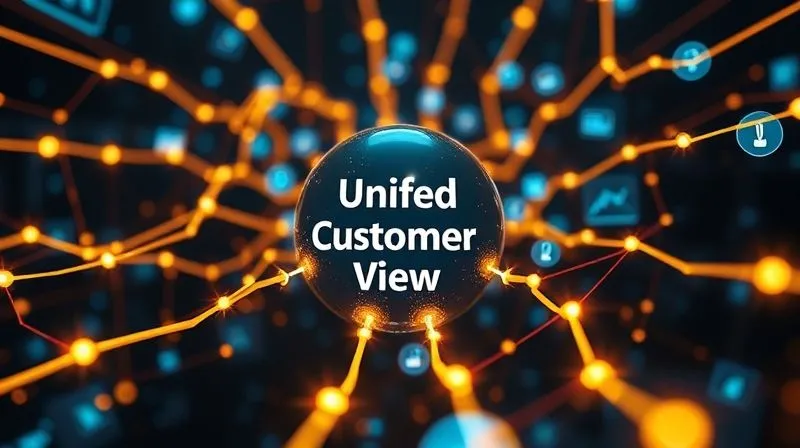
This integrated view provides an unparalleled depth of insight into the customer journey, enabling more intelligent outreach and more effective sales strategies. It's fundamental to truly understanding how to improve sales conversion rates through data analytics.
The Power of a Single Customer View (SCV)
The ultimate goal of data integration is to achieve a Single Customer View (SCV). This means having all known information about a customer – their demographics, purchase history, interactions, preferences, and behaviors – consolidated into one accessible profile.
- Enhanced Personalization: With an SCV, every interaction can be hyper-personalized, from sales calls to marketing emails.
- Improved Customer Experience: Customers appreciate not having to repeat information and receiving consistent, relevant communication.
- Accurate Attribution: Understand which marketing channels and sales efforts truly contribute to conversions.
- Predictive Capabilities: A richer dataset leads to more accurate predictive models for lead scoring, churn, and upsell opportunities.
The SCV transforms your organization from a collection of siloed departments into a cohesive, customer-centric entity.
Strategy 7: Data Governance and Ethical Considerations in Sales Analytics
With great data comes great responsibility. As an industry specialist, I cannot stress enough the importance of data governance and ethical considerations. Trust is paramount, and a breach of it can undo all the gains from improved analytics.
Ensuring Data Accuracy and Reliability
Garbage in, garbage out. The insights you derive are only as good as the data feeding them. Investing in data quality is non-negotiable.
- Implement Data Validation Rules: Set up rules within your CRM and other systems to ensure data is entered correctly and consistently.
- Regular Data Audits: Schedule regular checks to identify and correct inaccuracies, duplicates, or outdated information.
- Automate Data Cleansing: Use tools to automatically identify and clean common data errors.
- Train Your Team: Ensure everyone who inputs data understands its importance and follows best practices.
Reliable data builds trust internally and ensures that your analytical efforts are based on truth, not assumptions.
Navigating Privacy Regulations (GDPR, CCPA)
The regulatory landscape for data privacy is constantly evolving. Ignoring these regulations is not only unethical but can lead to severe legal and financial penalties.
- Understand the Regulations: Familiarize yourself with relevant laws like GDPR (Europe), CCPA (California), and others that apply to your target markets.
- Obtain Consent: Ensure you have explicit consent for collecting, storing, and using customer data for sales and marketing purposes, especially for personalized outreach.
- Ensure Data Security: Protect customer data from breaches through robust cybersecurity measures.
- Provide Transparency and Control: Be transparent about your data practices and provide customers with the ability to access, correct, or delete their data.
Adhering to data privacy regulations isn't just about compliance; it's about building and maintaining customer trust, which is the bedrock of long-term sales success. For more information on GDPR, refer to the official GDPR info site.
Frequently Asked Questions (FAQ)
Q: How quickly can I expect to see results from implementing sales analytics strategies? A: While some initial insights can be gained quickly (e.g., identifying obvious funnel bottlenecks), significant, sustained improvements often take 3-6 months. This allows for data collection, A/B testing cycles, and iterating on strategies. Predictive models, for instance, require sufficient historical data to train accurately. Patience and consistent application are key.
Q: What's the biggest mistake companies make when starting with sales analytics? A: The most common mistake is trying to do too much at once, or, conversely, not defining clear objectives. Many get overwhelmed by the sheer volume of data. My advice is to start small: identify one critical pain point in your sales funnel, gather relevant data for that specific issue, and implement one or two targeted strategies. Iterate from there. Don't let perfect be the enemy of good.
Q: Do I need a data scientist to implement these strategies? A: Not necessarily for the initial stages. Many modern CRM, marketing automation, and business intelligence tools offer built-in analytics capabilities that can be managed by a savvy business analyst or even a sales operations specialist. However, for advanced predictive modeling, machine learning, or complex data integration across disparate systems, a dedicated data scientist or a team with those skills would be highly beneficial.
Q: How do I get buy-in from my sales team for data-driven approaches? A: Focus on how data *helps* them, not how it polices them. Show them concrete examples of how data can shorten their sales cycle, increase their win rate, or help them prioritize high-value leads. Involve them in the process, gather their feedback, and demonstrate how analytics can make their jobs easier and more rewarding. Transparency and showing direct benefits are crucial for adoption.
Q: What are the key tools for sales analytics? A: A robust CRM (e.g., Salesforce, HubSpot), a marketing automation platform (e.g., Marketo, Pardot), web analytics tools (e.g., Google Analytics, Adobe Analytics), and business intelligence (BI) platforms (e.g., Tableau, Power BI) are foundational. For more advanced capabilities, consider lead scoring tools, A/B testing platforms (e.g., Optimizely), and potentially customer data platforms (CDPs) for data integration.
Key Takeaways and Final Thoughts
- Start with a Strong Foundation: Map your sales funnel and identify Key Conversion Metrics (KCMs) to pinpoint exact areas for improvement.
- Segment and Personalize: Use data to understand your diverse customer base and tailor your messaging for maximum impact.
- Embrace Predictive Power: Leverage lead scoring and churn prediction to be proactive, not just reactive, in your sales efforts.
- Experiment Relentlessly: A/B test every aspect of your sales process to continuously learn and optimize for better conversion rates.
- Empower Your Sales Team: Provide data-driven insights and coaching to help your reps perform at their best.
- Integrate for a Unified View: Break down data silos to gain a holistic understanding of your customer journey.
- Prioritize Data Governance: Ensure data accuracy, reliability, and ethical compliance to build trust and avoid pitfalls.
Improving sales conversion rates through data analytics isn't a one-time project; it's an ongoing commitment to understanding, optimizing, and adapting. By embracing these data-driven strategies, you're not just chasing numbers; you're building a more efficient, customer-centric, and ultimately, more profitable sales engine. The data is there, waiting to tell its story. It's time to listen, learn, and lead your business to unprecedented growth.
Recommended Reading
- 7 Critical Steps to Uncover Hidden Financial Risks in Your Franchise FDD
- 7 Budget-Wise Hacks: Preventing Critical Facility Equipment Failures
- 7 Pillars: Future-Proofing Your Franchise from Disruptive Industry Trends
- Boost Deal Size 25% in 6 Months: Proven Strategies for Sales Growth
- 7 Steps to Unlock Growth: Convert Business Data into Actionable Plans





Comments
Leave a comment below. Your email will not be published. Required fields marked with *