


How to instantly identify unqualified leads to boost sales?
For over 15 years in the trenches of B2B sales and growth strategy, I've seen countless companies, both startups and established enterprises, grapple with a silent killer: the unqualified lead. It’s a insidious drain on resources, morale, and ultimately, your bottom line. I vividly recall a client who, despite a seemingly robust pipeline, was consistently missing sales targets. Their sales team was working harder than ever, but their efforts were spread thin, chasing prospects who were never truly a fit. The problem wasn't a lack of effort; it was a lack of precision in identifying who to invest that effort in.
The pain points are universal: sales reps spending precious hours on dead-end calls, marketing budgets funneled into acquiring prospects who will never convert, and a sales cycle that drags on indefinitely. This isn't just inefficient; it's demoralizing. Every minute spent on an unqualified lead is a minute not spent on a genuinely promising opportunity, a minute that could have propelled your business forward.
This article isn't just another theoretical guide. It's a distillation of my experience, packed with actionable frameworks, real-world analogies, and expert insights designed to equip you with the tools to instantly identify unqualified leads to boost sales. We'll move beyond generic advice to provide you with a robust system for pre-qualification, ensuring your sales engine runs lean, efficient, and laser-focused on growth. Prepare to transform your sales process, reclaim valuable time, and dramatically improve your conversion rates.
The Hidden Costs of Chasing Bad Leads: More Than Just Time
Many sales leaders understand that chasing unqualified leads wastes time. What they often underestimate are the cascading negative effects that ripple through the entire organization. It's not just about a few lost hours; it's about a fundamental erosion of efficiency, morale, and strategic focus.
Consider the cumulative impact: diminished sales productivity. When reps are sifting through unqualified prospects, their actual selling time shrinks. This directly impacts their ability to hit quotas, leading to frustration and burnout. Furthermore, there's the significant financial outlay of marketing spend. Every dollar invested in attracting and nurturing a lead that ultimately proves to be a poor fit is a dollar wasted. This could be ad spend, content creation, or event participation – all yielding zero ROI.
Beyond the tangible, there's the intangible cost to team morale. Constantly facing rejection or lukewarm responses from prospects who were never a good fit can be incredibly disheartening for sales professionals. It chips away at their confidence and can foster a culture of cynicism. As marketing guru Seth Godin often says, "Don't find customers for your products. Find products for your customers." In our context, it means don't try to force your product on the wrong customers; find the right customers for your product.
"The true cost of an unqualified lead isn't just the time you spend on it, but the opportunity cost of the qualified leads you could have pursued instead. It's a silent killer of sales momentum and team morale."

Moreover, a lack of stringent lead qualification can skew your sales forecasting, making it notoriously difficult to predict revenue accurately. This impacts everything from resource allocation to strategic planning. If your pipeline is filled with 'fluff,' your projections will be overly optimistic, leading to missed targets and a lack of trust in sales leadership. According to a recent HubSpot report, companies with a well-defined lead qualification process experience 30% higher sales productivity and 20% faster revenue growth.
Mastering the ICP: Your Blueprint for the Perfect Prospect
Before you can instantly identify unqualified leads, you must first have an crystal-clear understanding of what a qualified lead looks like. This is where your Ideal Customer Profile (ICP) comes into play. An ICP isn't just a vague notion of who might buy from you; it's a detailed, data-driven blueprint of the company that would derive the most value from your product or service, and in turn, provide the most value to your business.
Building Your ICP: A Step-by-Step Guide
- Analyze Your Best Customers: Look at your top 10-20% of existing customers. Who are they? What industries are they in? What's their company size (revenue, employee count)? What challenges did they face before using your solution? What specific results have they achieved?
- Identify Firmographics & Demographics: For B2B, this includes industry, company size, revenue, geographic location, tech stack, and growth rate. For B2C, it might include age, income, location, interests, and lifestyle.
- Understand Their Pain Points & Goals: What are the critical problems your ICP faces that your solution addresses? What are their strategic objectives, and how does your offering help them achieve those? This is where you move beyond surface-level data to true empathy.
- Map Their Buying Process: Who are the key decision-makers and influencers within the ICP organization? What is their typical budget cycle? What internal processes do they follow when evaluating new solutions?
- Define Negative ICPs: Just as important as knowing who your ideal customer is, is knowing who they are NOT. This helps you quickly disqualify prospects that might seem promising on the surface but ultimately won't be a good fit.
Once you have a robust ICP, every inbound inquiry and outbound prospecting effort can be measured against this benchmark. This acts as your first, and often most effective, filter to instantly identify unqualified leads. Don't underestimate the power of a well-defined ICP; it's the foundation of all effective sales growth.
The BANT+C Framework: A Modern Approach to Qualification
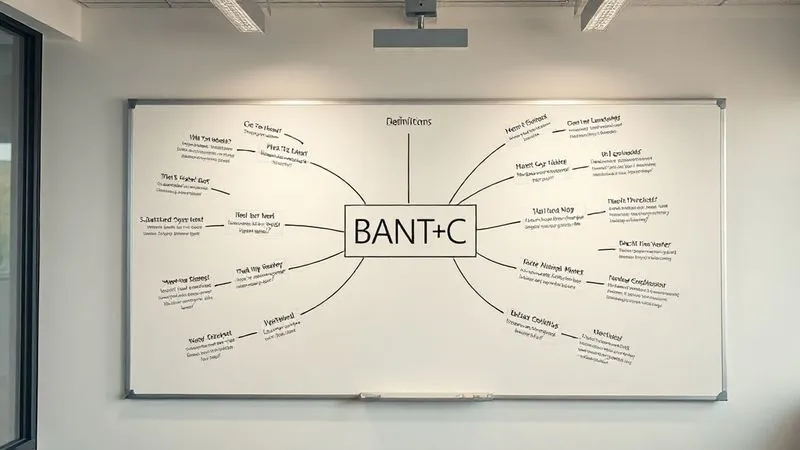
While the traditional BANT (Budget, Authority, Need, Timeline) framework has been a staple in sales for decades, I've found it often falls short in today's complex buying environment. Decision-making is more collaborative, and the 'need' often extends beyond a single problem. That's why I advocate for BANT+C, where 'C' stands for Challenges and Competition.
Breaking Down BANT+C:
- B - Budget: Does the prospect have the financial resources allocated for your solution? Is there an understanding of the potential ROI? This isn't just about asking 'Do you have a budget?'; it's about understanding their financial capacity and willingness to invest.
- A - Authority: Is the person you're speaking with the ultimate decision-maker, or do they have significant influence? Who else needs to be involved in the decision process? Mapping the decision-making unit is crucial.
- N - Need: Does the prospect genuinely have a problem that your solution can solve? Is this need a priority for them? Is there a clear understanding of the value your solution brings?
- T - Timeline: What is the urgency for solving this problem? When do they plan to implement a solution? A clear timeline indicates serious intent.
- C - Challenges: What specific, granular challenges are they facing? How are these challenges impacting their business? The deeper you understand their pain, the better you can position your solution.
- C - Competition: What other solutions are they considering, if any? What alternatives have they tried in the past? Understanding the competitive landscape helps you differentiate your offering.
Case Study: How 'Solutions Inc.' Slashed Disqualified Leads by 40%
Solutions Inc., a SaaS company selling complex project management software, struggled with a high number of late-stage disqualified leads. Their sales reps were diligently using the old BANT model, but often found prospects dropping out when competitive solutions or deeper operational challenges emerged. By integrating the 'Challenges' and 'Competition' elements into their initial qualification calls, they started asking questions like, "What project management tools have you used in the past, and what were their limitations?" and "Beyond the immediate need for a new tool, what are the biggest operational hurdles your team faces daily?" This deeper dive allowed them to instantly identify unqualified leads that would have previously slipped through, reducing their disqualification rate by 40% in just two quarters and freeing up significant sales bandwidth.
Leveraging Data & Technology for Predictive Lead Scoring
In today's digital landscape, relying solely on manual qualification is akin to navigating with a paper map in the age of GPS. To truly instantly identify unqualified leads, you need to harness the power of data and technology through predictive lead scoring. This involves assigning numerical values to leads based on their fit with your ICP and their engagement behaviors.
How Predictive Lead Scoring Works:
Lead scoring models typically combine two main categories of data:
- Demographic/Firmographic Data (Fit Score): This aligns with your ICP. Points are awarded for attributes like industry, company size, job title, revenue, and location. For example, a prospect from a target industry might get +10 points, while one outside it gets -5.
- Behavioral Data (Engagement Score): This measures how a lead interacts with your content and website. Points are awarded for actions like downloading an eBook, attending a webinar, visiting key product pages, or opening emails. Conversely, points might be deducted for inactivity or unsubscribing.
Each action and attribute is assigned a weight based on its correlation with successful conversions. A lead's total score then dictates their readiness for sales engagement. High scores indicate a hot, qualified lead; low scores are instantly identifiable as unqualified, or at least not ready for immediate sales outreach.
| Action/Attribute | Score Impact | Qualifier |
|---|---|---|
| ICP Match (Industry) | +15 | High Relevance |
| Downloaded Case Study | +10 | High Intent |
| Visited Pricing Page | +20 | Strong Intent |
| Opened 5+ Emails | +5 | Engaged |
| Non-ICP Industry | -10 | Poor Fit |
| No Website Activity (30 days) | -5 | Disengaged |
Tools like HubSpot, Salesforce with Pardot, Marketo, and other marketing automation platforms are invaluable here. They automate the scoring process, providing real-time insights into lead quality. According to Forrester Research, companies that excel at lead nurturing generate 50% more sales-ready leads at 33% lower cost.
Asking the Right Questions: Beyond the Surface-Level Inquiry
Even with ICPs and lead scoring, the human element of asking insightful questions remains paramount. A skilled sales professional doesn't just ask questions; they guide a conversation, uncover unspoken needs, and challenge assumptions. To instantly identify unqualified leads, your questions need to be designed to probe beyond the superficial.
Key Questioning Strategies:
- Open-Ended Questions: Move beyond 'yes/no' answers. Instead of 'Do you have a problem?', ask 'Can you describe the biggest challenges your team faces with [specific area]?'
- Impact-Focused Questions: Help the prospect articulate the cost of inaction. 'What is the financial impact of not solving this problem within the next quarter?' or 'How does this challenge affect your team's productivity and morale?'
- Future-Oriented Questions: Understand their vision. 'What would success look like if this problem were completely resolved?' or 'Where do you see your business in 3-5 years, and how does this solution fit into that vision?'
- Challenging Questions: Sometimes, you need to gently challenge their assumptions or current methods. 'Many companies in your industry try X, but often find Y is the real bottleneck. Have you encountered that?' This positions you as an expert.
- Disqualification Questions: Don't be afraid to ask questions that might disqualify a lead early. 'What's your typical budget range for a solution like this?' or 'Who else needs to be involved in a decision of this magnitude?'
"The quality of your sales questions directly correlates with the quality of your leads. Master the art of inquiry, and you'll instantly elevate your qualification process."
Remember, the goal isn't just to gather information, but to understand the depth of their problem, their readiness for a solution, and whether your offering is a genuine fit. This consultative approach builds trust and helps both parties determine if there's a valuable partnership to be forged.
Recognizing Red Flags: Early Warning Signs of Unqualified Prospects
While a robust qualification framework is essential, an experienced salesperson also develops an intuitive sense for 'red flags' – subtle or overt signs that a lead is unlikely to convert. Learning to instantly identify these can save you hours of wasted effort.
Common Red Flags to Watch For:
- Vague or Evasive Answers: When a prospect can't articulate their pain points clearly, avoids budget discussions, or is unclear about their timeline, it's a warning sign. They might be 'tire-kicking' or simply not serious.
- Lack of Engagement: If a lead consistently misses scheduled calls, doesn't respond to emails, or shows minimal interaction with your content despite initial interest, their priority level is likely low.
- No Clear Decision-Making Process: If they can't identify who needs to be involved in the decision, or if the 'decision-maker' keeps changing, it indicates an immature or chaotic buying process, which often leads to stalled deals.
- Unrealistic Expectations: Prospects demanding features you don't offer, expecting immediate, magic-bullet solutions, or having a budget far below market rates are often not a good fit.
- Only Seeking Information, No Intent: Some leads are just gathering data for a school project, market research, or to satisfy an internal curiosity without any real intent to purchase.
- No Identified Problem or Urgency: If they can't articulate a specific problem your solution solves, or if there's no perceived urgency to address it, they're unlikely to move forward.
Cultivating an awareness of these red flags allows you to pivot quickly. Instead of pushing a square peg into a round hole, you can gracefully disengage, re-qualify, or shift them back to a nurturing track if appropriate. This proactive disqualification is a powerful way to instantly identify unqualified leads and protect your valuable time.
The Art of Disqualification: Saying 'No' to Say 'Yes' to Success
One of the hardest, yet most crucial, skills for any sales professional is the ability to gracefully disqualify a lead. It feels counter-intuitive to say 'no' to a potential opportunity, but in my experience, it's one of the fastest ways to boost sales productivity and focus. Saying 'no' to the wrong leads allows you to say a resounding 'yes' to the right ones.
Strategies for Effective Disqualification:
- Be Transparent and Respectful: Don't ghost a prospect. Communicate clearly and politely why you don't think there's a good fit at this time. "Based on our conversation, it seems our solution isn't the ideal fit for your current needs regarding X and Y. I don't want to waste your time..."
- Offer Alternatives (If Appropriate): If you know of another company or solution that might be a better fit, a referral can build goodwill, even if that specific lead doesn't convert for you. This demonstrates expertise and a commitment to helping, not just selling.
- Re-Nurture for Future: Sometimes, a lead isn't unqualified forever; they're just not ready now. If the issue is timeline or budget, suggest staying in touch, perhaps adding them to a newsletter, or scheduling a check-in call in 6-12 months.
- Document Your Reasons: Always log why a lead was disqualified. This data is invaluable for refining your ICP, improving marketing efforts, and training future sales reps. It helps you instantly identify unqualified leads even more efficiently in the future.
Embracing disqualification means adopting an abundance mindset. You trust that by focusing on quality over quantity, you will ultimately achieve greater success. It's about working smarter, not just harder. Harvard Business Review emphasizes that successful salespeople often act like entrepreneurs, making strategic decisions about where to invest their time and energy.

Integrating Qualification into Your Sales Process: A Step-by-Step Guide
Effective lead qualification isn't a one-off task; it's an integrated, continuous process that should be woven into every stage of your sales funnel. From initial contact to closing, having clear qualification gates helps you instantly identify unqualified leads and ensure your team's efforts are always directed towards the highest-potential opportunities.
A Robust Qualification Integration Plan:
- Marketing & MQL Hand-off: Ensure your marketing team understands the ICP and BANT+C framework. Their content and lead generation efforts should target these profiles. Establish clear criteria for a Marketing Qualified Lead (MQL) before it's handed off to sales. For instance, an MQL might be a prospect from a target industry, with a certain job title, who has downloaded a specific piece of content and has a lead score above X.
- Initial Discovery Call (SDR/BDR): The first touchpoint is crucial. Sales Development Representatives (SDRs) or Business Development Representatives (BDRs) should be highly trained in asking initial qualification questions based on your BANT+C framework. Their goal is not to sell, but to qualify and schedule a deeper discovery call with an Account Executive (AE).
- Deep Discovery Call (AE): The AE takes the qualification further, delving into the nuances of the prospect's challenges, budget, and decision-making process. This is where you confirm the ICP fit and identify any remaining red flags. If a lead doesn't pass this stage, it should be gracefully disqualified or sent back to nurturing.
- Throughout the Sales Cycle: Qualification isn't static. As new information emerges, continuously re-evaluate the lead's fit. Has their budget changed? Has a new decision-maker emerged? Is the timeline still valid? Ongoing qualification prevents deals from stalling late in the game.
- Feedback Loop & Optimization: Regularly review your disqualified leads. What were the common reasons? Use this feedback to refine your ICP, adjust your lead scoring model, and improve your marketing and sales processes. This continuous improvement ensures you're always getting better at identifying unqualified leads.
By making qualification an intrinsic part of your sales DNA, you'll create a lean, efficient, and highly effective sales machine. This systematic approach ensures that every step taken is purposeful, leading to higher conversion rates and a healthier pipeline. For more insights on building robust sales processes, check out resources from Salesforce's blog on sales process optimization.
Frequently Asked Questions (FAQ)
What's the difference between a 'bad lead' and an 'unqualified lead'? A 'bad lead' often implies someone who is completely irrelevant, perhaps spam or outside your target market entirely. An 'unqualified lead' is someone who might technically fit some broad criteria but lacks the specific attributes (budget, authority, urgent need, etc.) to be a viable sales opportunity at this moment. Our focus is on quickly identifying the latter to avoid wasted effort.
How often should I review and update my Ideal Customer Profile (ICP)? Your ICP is not static. I recommend reviewing and refining it at least annually, or whenever there are significant shifts in your market, product offering, or business strategy. Customer feedback, lost deal analysis, and market research are crucial inputs for these updates.
Can I automate the lead qualification process entirely? While technology like CRM, marketing automation, and AI-driven lead scoring can significantly automate and streamline parts of the qualification process, the human element remains irreplaceable. A skilled sales professional's ability to ask nuanced questions, build rapport, and interpret subtle cues is essential for true deep qualification. Automation helps you instantly identify unqualified leads at scale, allowing human experts to focus on the most promising ones.
What if a lead isn't qualified now, but might be in the future? This is where a robust lead nurturing strategy comes into play. Instead of discarding these leads, move them into a specific nurturing track. Provide them with valuable content, educational resources, and periodic check-ins. The goal is to keep your brand top-of-mind so when their situation changes and they become qualified, you're their first call.
Is it always better to disqualify quickly, even if there's a tiny chance of conversion? Generally, yes. The cost of pursuing a low-probability lead almost always outweighs the slim chance of success, especially when considering opportunity cost. Your sales team's time is your most valuable asset. Focus on the highest probability opportunities to maximize ROI. A disciplined approach to disqualification is a hallmark of high-performing sales organizations.
Key Takeaways and Final Thoughts
- Define Your ICP Rigorously: Your Ideal Customer Profile is the bedrock of effective qualification. Know exactly who you're looking for, and who you're not.
- Adopt BANT+C: Go beyond basic BANT to understand a prospect's deeper challenges and competitive landscape.
- Leverage Technology: Implement lead scoring and CRM tools to automate initial qualification and prioritize leads based on fit and engagement.
- Master the Art of Questioning: Train your sales team to ask insightful, open-ended questions that uncover true needs and potential red flags.
- Embrace Disqualification: Don't be afraid to say 'no' to unqualified leads. This frees up valuable resources to focus on high-potential opportunities.
- Integrate Qualification End-to-End: Make lead qualification a continuous process throughout your entire sales and marketing funnel.
In my years of experience, the ability to instantly identify unqualified leads to boost sales isn't just a best practice; it's a competitive imperative. It transforms your sales team from a group chasing every glimmer of interest into a surgical unit, precise and powerful, focused on converting the right prospects into loyal, high-value customers. By implementing these strategies, you're not just improving your sales numbers; you're building a more sustainable, efficient, and profitable sales organization. Go forth, qualify with confidence, and watch your sales soar!
Recommended Reading
- 7 Steps: Regain Control When Consulting Projects Go Off Scope
- 7 Reasons Your Small Business Plan Fails Bank Loan Approval
- Validate Your Product Idea: 7 Zero-Budget Strategies for Small Businesses
- 9 Proven Ways to Confirm Remote Candidate Skills Without In-Person Interviews
- Stop High-Value Churn: 7 CRM Data Strategies You Need Now






Comments
Leave a comment below. Your email will not be published. Required fields marked with *