


How to Validate a New Product Idea with Zero Budget?
For over two decades in the small business trenches, I've witnessed countless brilliant product ideas wither on the vine, not because they were bad, but because their creators ran out of resources before truly understanding if anyone wanted what they were building. It’s a heartbreakingly common scenario: passionate entrepreneurs pouring their life savings and countless hours into development, only to discover a disconnect with the market.
The core problem isn't a lack of innovation; it's often the assumption that significant capital is required to prove an idea's worth. Many believe they need expensive market research firms, elaborate prototypes, or extensive advertising campaigns to gauge interest. This misconception can lead to paralysis or, worse, premature investment in unvalidated concepts.
But what if I told you that the most critical validation steps can be taken without spending a single dollar? In this definitive guide, I'll share seven battle-tested, zero-budget strategies that empower you to rigorously test your product idea, gather invaluable insights, and significantly de-risk your venture, all while keeping your wallet firmly closed. You’ll learn actionable frameworks, real-world analogies, and expert insights to navigate the crucial early stages of product development.
Why Zero-Budget Validation Isn't Just Possible, It's Essential
In my experience, the notion that you need a hefty budget to validate a product idea is one of the biggest myths in entrepreneurship. In fact, some of the most successful startups began with founders doing grunt work, talking to customers, and iterating on paper prototypes – essentially, validating with zero budget. This lean approach isn't just a cost-saving measure; it’s a strategic imperative.
The biggest risk in product development isn't building something poorly; it's building something nobody wants. Without proper validation, you’re essentially gambling with your time, energy, and potential future investments. The cost of failure – lost time, emotional toll, and squandered resources – far outweighs the perceived inconvenience of early, frugal validation.
"The most expensive lesson an entrepreneur can learn is building a product nobody wants. Zero-budget validation is your pre-emptive strike against that very outcome."
By embracing zero-budget validation, you cultivate a mindset of resourcefulness and customer-centricity from day one. It forces you to get out of your head and into the market, directly engaging with potential users to understand their real problems and needs. This foundational understanding is far more valuable than any amount of initial investment, as it guides every subsequent decision and helps ensure that when you *do* decide to invest, you’re investing in something truly desired.
Strategy 1: Harnessing Your Existing Network for Early Feedback
One of the most overlooked, yet powerful, resources for initial product idea validation lies right within your immediate circle: your existing network. Friends, family, former colleagues, and even casual acquaintances can provide a wealth of insights, especially when approached correctly. This isn't about selling to them; it's about leveraging their diverse perspectives and honest opinions.
The Power of Personal Connections
Your network knows you and often trusts you, making them more likely to offer candid feedback. They represent a convenient, low-barrier entry point into understanding initial reactions to your concept. Think of them as your first, most forgiving focus group.
- Identify Your Inner Circle: Make a list of 10-20 people who are generally supportive but also honest. Include a mix of people from different backgrounds if possible.
- Frame Your Request Carefully: Don't ask, "Do you like my idea?" Instead, say, "I'm exploring a solution to [specific problem] and would love your candid feedback on whether this resonates with you or if you see a need for it."
- Schedule Short, Focused Conversations: A 15-20 minute phone call or coffee chat is often sufficient. Emphasize that you value their honest critique, not just praise.
Crafting Your Feedback Questions
The quality of your feedback depends entirely on the quality of your questions. Avoid leading questions. Focus on understanding their experiences, pain points, and existing solutions.
- Problem-Centric Questions: "Have you ever experienced [the problem your product solves]? How do you currently deal with it?"
- Solution-Oriented Questions (Abstract): "If there was a way to [achieve your product's benefit], how valuable would that be to you?"
- Willingness to Pay (Hypothetical): "Hypothetically, if a solution existed that truly solved [problem], what would you consider a fair value for it?" (This is tricky with friends, but can still offer insights).
- Referral Questions: "Do you know anyone else who struggles with this problem and might be willing to chat with me?"

Strategy 2: The Art of Problem-Centric Interviewing (Before Building Anything)
Beyond your immediate network, the most potent zero-budget validation tool is direct customer interviewing. This isn't about pitching your product; it's about deeply understanding the problems your target audience faces. As Steve Blank, a pioneer in the Lean Startup movement, often states, "Get out of the building!"
Finding Your Ideal Interviewees
Identifying and approaching potential customers requires a bit of detective work, but it’s entirely doable without spending money.
- Identify Your Target Persona: Clearly define who your ideal customer is. What are their demographics, interests, and online habits?
- Leverage Online Forums & Groups: Search for Reddit subreddits, Facebook groups, LinkedIn groups, or niche online communities where your target audience congregates and discusses their problems. Join these groups and engage authentically.
- Local Meetups & Events: Attend free industry meetups, local business networking events, or community gatherings where your target demographic might be present.
- Direct Outreach (Politely): Once you’ve identified potential interviewees, send a polite, non-salesy message explaining you’re researching a problem they might face and would value their insights for a brief (15-20 min) chat.
Mastering the Interview Process
The goal is to listen far more than you talk. Your objective is to uncover pain points, frustrations, and existing workarounds, not to solicit praise for your idea. According to a Harvard Business Review article on customer empathy, truly understanding your customers' struggles is paramount.
- Focus on Past Behavior: Instead of "Would you use X?" ask "When was the last time you encountered [problem]? How did you solve it?"
- Avoid Leading Questions: Let them describe their world, not validate yours.
- Listen Actively: Pay attention to their emotions, frustrations, and the language they use. Ask 'why' repeatedly to dig deeper into the root causes of their problems.
- Document Everything: Take detailed notes. Look for patterns in the problems and unmet needs described by different individuals.
| Question Type | Example Question |
|---|---|
| Problem Identification | Tell me about a time you struggled with [area your product addresses]. |
| Current Solutions | How do you currently manage or solve that problem? What are the pros and cons of your current approach? |
| Desired Outcomes | If you could wave a magic wand, what would an ideal solution look like? What would it enable you to do? |
| Prioritization | Among the challenges we've discussed, which one causes you the most frustration or costs you the most time/money? |
Strategy 3: Leveraging Free Online Communities and Social Media
The digital age has provided an unparalleled, zero-cost avenue for market research: online communities and social media platforms. These spaces are teeming with potential customers openly discussing their needs, frustrations, and desires. The trick is knowing where to look and how to engage authentically without coming across as spammy or promotional.
Identifying Relevant Platforms
Your target audience isn't everywhere; they congregate in specific digital watering holes. Finding these is key.
- Reddit: Search for subreddits related to your industry, hobbies, or target demographic's pain points. For example, if you're building a productivity app, look at r/productivity, r/getdisciplined, or r/smallbusiness.
- Facebook Groups: Many niche interest groups, professional networks, and local community groups exist. Use Facebook's search function to find them.
- LinkedIn Groups: Excellent for B2B product ideas. Search for groups focused on specific roles, industries, or professional challenges.
- Niche Forums & Blogs: Beyond the major platforms, countless independent forums and blog comment sections cater to highly specific interests.
Engaging Authentically, Not Selling
The golden rule here is to provide value before you ask for anything. Participate in discussions, answer questions, and build rapport. Once you've established yourself as a helpful member, you can cautiously introduce your research.
- Ask Open-Ended Questions: Post questions like, "What's the biggest challenge you face when trying to [solve a problem your product addresses]?" or "I'm exploring solutions for [problem], what are your current frustrations with existing options?"
- Share a Concept (Carefully): Some groups allow you to share a very early, non-commercial concept for feedback. Frame it as, "I'm thinking about building X to solve Y, does this resonate with anyone? What are your initial thoughts?"
- Polls and Surveys (If Allowed): Some platforms (like Facebook) allow simple polls. You can ask about preferences, pain points, or feature priorities.
"Online communities are not just marketing channels; they are living, breathing focus groups waiting to be understood. Listen more than you speak, and the insights will flow."
Remember, the goal is to gather raw, unfiltered feedback and identify recurring themes. Don't get defensive about criticism. Every negative comment is an opportunity to refine your understanding and improve your idea. This approach to validation is highlighted by experts like Seth Godin, who emphasizes the importance of connecting with a 'minimum viable audience' before scaling. See his thoughts on building an audience on his blog.
Strategy 4: Creating a "Pre-Sale" Landing Page with Zero Development Cost
Even without a working product, you can gauge genuine market interest by seeing if people are willing to commit (even if it's just their email address) to your idea. This strategy involves creating a simple landing page that describes your concept and measures engagement.
The Mock-Up MVP Approach
You don't need a web developer or expensive software to create a compelling landing page. Free tools are readily available:
- Free Website Builders: Platforms like Carrd, Google Sites, or even a simple WordPress.com site (with limited features) allow you to build single-page websites quickly and for free.
- Clear Value Proposition: Your page should clearly articulate the problem you solve and the unique benefit your product offers. Focus on the 'why' and 'what' without getting bogged down in 'how.'
- Strong Call-to-Action (CTA): The CTA shouldn't be "Buy Now." Instead, it could be "Join the Waitlist," "Get Early Access," "Notify Me When Launched," or "Download Our Free Guide on [Problem]."
- Minimal Design: Keep it clean, professional, and easy to understand. A compelling headline, a few paragraphs of text, and perhaps one or two relevant images are sufficient.
Measuring Interest Without a Product
The metric here is conversion: how many visitors take your desired action?
- Email Sign-ups: This is the most common and effective metric. A high sign-up rate indicates strong interest.
- "Learn More" Clicks: If you have multiple sections, track which ones people click on.
- Fake "Buy Now" Buttons: Some entrepreneurs place a "Pre-Order Now" button that, when clicked, reveals a message like "Thank you for your interest! We're not quite ready yet, but join our waitlist to be first in line." This tests purchase intent directly.
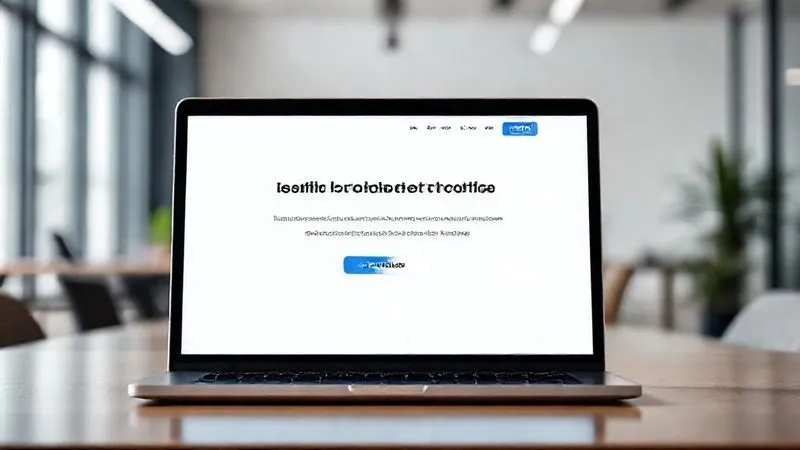
Promote this landing page through your free channels: your network, social media, and online communities. The number of sign-ups will be a powerful indicator of genuine market demand, all without writing a single line of product code.
Strategy 5: The "Concierge MVP" - Manual Validation for High-Touch Ideas
For product ideas that involve a service or a highly personalized experience, a "Concierge Minimum Viable Product" (MVP) is an incredibly powerful, zero-budget validation strategy. Instead of building complex software or infrastructure, you manually deliver the core value proposition of your product to a small group of early customers.
What is a Concierge MVP?
The concept, popularized by Eric Ries in "The Lean Startup," involves providing your service or solution manually to a handful of customers. You act as the 'software' or 'system' behind the scenes. This allows you to observe their reactions, gather intimate feedback, and truly understand their needs before automating or scaling anything. It's high-touch, labor-intensive, but incredibly insightful.
Executing Your Concierge Service
- Identify a Core Problem: Pinpoint the single most important problem your product solves.
- Recruit Early Adopters: Find a few individuals who deeply experience this problem and are willing to try a manual, personalized solution. Your network or online communities are great places to start.
- Manually Deliver the Solution: Fulfill the promise of your product using only manual processes. For example, if you're building an AI-powered personal assistant, you might manually perform tasks for your first few clients. If it's a curated subscription box, you'd manually select and package items.
- Observe and Iterate: Pay close attention to how customers interact with your manual service. What do they love? What frustrates them? What features do they ask for? Use this direct feedback to refine your idea.
Case Study: Sarah's Handmade Jewelry Box Service
Sarah had an idea for a personalized jewelry subscription box, but no budget for inventory or an e-commerce platform. Instead of building a website, she approached 10 friends who loved unique jewelry. She offered to curate a box of handmade pieces based on their style preferences, which she gathered through a simple survey and a brief chat. Sarah then sourced individual pieces from local artisans (paying only for what was sold), hand-packaged them beautifully, and delivered them herself. This manual process, her Concierge MVP, allowed her to:
- Validate that people genuinely valued the personalized curation.
- Understand specific style preferences and price points.
- Identify logistical challenges of sourcing and packaging.
- Gather testimonials and referrals before investing in inventory or a platform.
This hands-on approach proved invaluable, giving her the confidence and insights to eventually build a successful online store, knowing exactly what her customers wanted.
Strategy 6: Analyzing Competitors and Market Trends (The Detective Work)
While direct customer interaction is crucial, a significant amount of validation can come from simply observing the existing market. This 'detective work' involves analyzing competitors, understanding market trends, and identifying gaps – all of which can be done with zero budget.
Free Competitive Analysis Tools and Methods
You don't need expensive software to understand your competitive landscape.
- Google Search: Start with simple searches for solutions to the problem your product addresses. Identify direct and indirect competitors.
- Competitor Websites & Social Media: Study their messaging, pricing (if public), customer reviews, and how they engage with their audience.
- Online Reviews (Amazon, Yelp, App Stores): This is a goldmine! Read both positive and negative reviews. What are customers praising? What are they complaining about? These complaints often highlight unmet needs or weaknesses in existing solutions that your product could address.
- Google Trends: See if the problem your product solves, or related keywords, are increasing or decreasing in search interest over time. This indicates market demand shifts.
- Public Reports & Articles: Many industry associations, government agencies, and even news outlets publish free reports or articles on market trends.
Identifying Gaps and Opportunities
Your goal isn't just to find competitors but to understand where they fall short and where new opportunities lie. According to a Deloitte study on market gap analysis, identifying underserved segments is key for innovation.
- Unmet Needs: What problems do existing solutions fail to solve completely?
- Poor User Experience: Are customers frustrated by clunky interfaces, poor customer service, or confusing processes?
- Niche Markets: Are there specific segments of the market that are being ignored by larger players?
- Emerging Trends: Is there a new technology, cultural shift, or regulatory change that creates a demand for a new type of solution?

By thoroughly analyzing the market, you can identify your unique selling proposition (USP) and position your product to fill a genuine void, rather than just competing on price or features.
Strategy 7: Public Speaking and Workshops – Sharing Your Vision, Getting Feedback
This strategy might seem daunting, but it’s a powerful, zero-cost way to not only validate your idea but also to establish yourself as an expert and build an early audience. By presenting your ideas to a live audience, you get immediate, unfiltered reactions and questions.
Finding Free Platforms to Share Your Idea
You don't need to book a stadium; start small and local.
- Local Meetups & Networking Groups: Many groups are constantly looking for speakers on relevant topics. Offer to give a short presentation on the problem you're solving.
- Community Centers & Libraries: Often host free workshops or talks for local residents.
- Online Webinars/Podcasts: Offer to be a guest on a small podcast or co-host a free webinar with someone in a related field.
- University/College Entrepreneurship Clubs: These clubs are often keen to hear from experienced entrepreneurs and provide a curious, engaged audience.
Structuring Your Presentation for Feedback
Your talk isn't a sales pitch; it's a validation exercise. Focus on the problem, your proposed solution, and then open the floor for discussion.
- Start with the Problem: Clearly articulate the pain point you’re addressing. Use anecdotes or relatable scenarios.
- Introduce Your Vision: Briefly describe your product idea as a potential solution, emphasizing the benefits.
- Call for Discussion: Explicitly ask for feedback. "I'm exploring this concept, and I'd love to hear your thoughts. Does this resonate? What challenges do you foresee?"
- Observe Reactions: Pay attention to body language, the types of questions asked, and the enthusiasm (or lack thereof) in the room.
| Validation Strategy | Pros | Cons |
|---|---|---|
| Existing Network | Easy access, candid feedback, builds confidence | Potential for bias, limited reach |
| Problem-Centric Interviews | Deep qualitative insights, direct understanding of pain points | Time-consuming, requires good interviewing skills |
| Online Communities | Broad reach, diverse opinions, low barrier to entry | Noise, potential for misinterpretation, moderation rules |
| Pre-Sale Landing Page | Quantifiable interest (email sign-ups), tests messaging | Requires traffic generation, doesn't test product functionality |
| Concierge MVP | Intimate customer understanding, validates core value | Manual & labor-intensive, limited scalability |
| Competitor Analysis | Identifies market gaps, informs positioning, low effort | Doesn't directly confirm demand for *your* solution |
| Public Speaking | Direct feedback, builds authority, network expansion | Requires public speaking skills, audience size can vary |
"Every question from an audience member is a data point, every skeptical glance a signal. Embrace the live feedback; it's a real-time market survey."
This approach not only refines your idea but also helps you hone your messaging and identify potential early adopters or even partners. For more insights on public speaking as a validation tool, consider resources from experts like Forbes' Coaches Council.
Frequently Asked Questions (FAQ)
How do I avoid bias when asking friends and family for feedback? The key is in framing your questions. Instead of asking if they like your idea, ask them about their experiences with the problem your product solves. Focus on their past behaviors and frustrations, not their hypothetical future use of your solution. Emphasize that you need their honest, critical feedback, not just encouragement. Also, remember this is just the first step; always cross-reference their input with feedback from strangers who are genuinely part of your target market.
What if my idea is truly unique and no one understands it yet? If your idea is truly groundbreaking, you might be facing an education challenge rather than a validation one. Focus your initial efforts on explaining the core problem and the fundamental shift your solution offers. Use analogies to familiar concepts. A Concierge MVP can be particularly effective here, as it allows you to guide a few early adopters through the experience manually, demonstrating the value directly rather than just explaining it. Patience and clear communication are paramount.
How many interviews are enough for validation? While there's no magic number, I generally advise aiming for 10-15 in-depth, problem-centric interviews with your target audience. You'll often start noticing patterns in responses and recurring pain points around this point. When new interviews stop revealing significantly new information, you've likely reached a saturation point for qualitative insights. Remember, this isn't about statistical significance, but about understanding core needs and validating assumptions.
Can I really trust feedback from online communities? Yes, but with caveats. Online communities offer broad, often unfiltered feedback, which can be incredibly valuable for identifying common pain points and initial reactions. However, it's crucial to filter out noise, identify genuine target users, and avoid being swayed by a few vocal outliers. Look for recurring themes across multiple individuals and platforms. Always treat online feedback as a signal to investigate further, possibly through direct interviews, rather than a definitive validation on its own.
What's the biggest mistake entrepreneurs make during zero-budget validation? The biggest mistake is falling in love with their solution before validating the problem. Many entrepreneurs skip directly to pitching their product rather than deeply understanding the customer's pain. Another common error is seeking only positive reinforcement, ignoring critical feedback. True validation means being open to the possibility that your initial idea might be flawed and being willing to pivot or iterate based on what you learn, even if it's uncomfortable.
Key Takeaways and Final Thoughts
Validating a new product idea doesn't have to be an expensive endeavor. In fact, some of the most profound insights come from direct, resourceful, and zero-cost efforts. By embracing these strategies, you're not just saving money; you're building a deeper understanding of your market and fostering a resilient, customer-centric mindset.
- Start with Your Network: Leverage personal connections for initial, candid feedback.
- Interview for Problems: Talk to potential customers to understand their pain points, not to pitch your solution.
- Engage Online: Use free communities to listen and gather broad insights.
- Test Interest with a Landing Page: Measure genuine demand through email sign-ups or mock pre-orders.
- Go Concierge: Manually deliver your core service to a few users for deep learning.
- Be a Detective: Analyze competitors and market trends to identify gaps and opportunities.
- Speak Up: Share your vision and solicit feedback through free public speaking engagements.
Remember, the goal isn't perfection from day one, but progress through validated learning. Every conversation, every sign-up, every piece of feedback brings you closer to building a product that truly resonates with your audience. Don't let a 'zero budget' deter you; let it fuel your creativity and resourcefulness. Go forth, experiment, learn, and build something remarkable!
Recommended Reading
- 7 Proven Steps to Re-engage Churn-Risk Customers Post-Service Issue
- Unlock the Secrets: Mastering Your Master Franchise Agreement Terms
- Unlock 15% B2B Lead Conversion Growth in 90 Days: An Expert's Blueprint
- 7 Steps: How to Build Team Resilience After Project Failure?
- Co-Founder Gone? 7 Steps to Save Your Startup Before Launch





Comments
Leave a comment below. Your email will not be published. Required fields marked with *