


How to prevent misunderstandings in global virtual teams effectively?
For over 15 years, navigating the intricate landscape of international business, I've witnessed firsthand the incredible potential of global virtual teams. Yet, I've also seen brilliant projects falter, innovative ideas get lost in translation, and promising collaborations dissolve, often for a singular, insidious reason: a breakdown in cross-cultural communication leading to profound misunderstandings.
The challenge isn't merely about different languages; it's about unspoken assumptions, varied communication styles, and deeply ingrained cultural norms that can create invisible barriers. In a virtual setting, where non-verbal cues are largely absent and context can be easily stripped away, these misunderstandings can escalate rapidly, eroding trust, stifling productivity, and ultimately undermining the very purpose of global collaboration.
This article is born from those experiences and countless hours spent helping organizations bridge these gaps. I'll share actionable frameworks, real-world insights, and expert strategies designed to proactively prevent misunderstandings in your global virtual teams. You'll learn how to build resilient communication channels, cultivate cultural intelligence, and leverage technology to foster clarity and cohesion, ensuring your international ventures thrive.
The Silent Saboteurs: Understanding the Roots of Misunderstanding
Before we can effectively prevent misunderstandings, we must first understand their genesis. In global virtual teams, the roots are often multifactorial, stemming from both visible and invisible differences.
Cultural Dimensions at Play
One of the most profound influences on communication is culture. Geert Hofstede's cultural dimensions framework provides an invaluable lens through which to understand these differences. For instance, a team member from a high power distance culture might hesitate to challenge a superior's decision, even if they foresee a problem, leading to unaddressed issues. Conversely, a low power distance culture might encourage direct debate, which could be perceived as disrespectful by others.
Similarly, individualistic cultures prioritize personal achievement and direct communication, while collectivistic cultures emphasize group harmony and often employ more indirect, context-rich communication. Misinterpreting these underlying preferences can lead to frustration and perceived incompetence on both sides. I've often seen team members from individualistic cultures get frustrated by what they perceive as evasiveness, while their collectivistic counterparts might view directness as aggressive or rude.

Language Nuances and Non-Verbal Cues
Even when a common language like English is used, nuances can create significant barriers. Idioms, slang, and even the pace and tone of speech vary dramatically. What's considered polite assertiveness in one culture might be seen as aggressive in another. The absence of non-verbal cues in virtual communication—body language, facial expressions, and hand gestures—exacerbates this challenge.
A simple email or chat message can be devoid of the critical context that gestures or a tone of voice would provide in a face-to-face interaction. This 'context vacuum' often leads to team members filling in the blanks with their own cultural interpretations, which are frequently incorrect. It's like trying to understand a symphony by only reading the sheet music, without ever hearing the performance.
"The biggest communication problem is we do not listen to understand. We listen to reply." - Stephen Covey. This is magnified tenfold in cross-cultural virtual interactions where understanding requires conscious effort to bridge cultural and linguistic gaps.
Establishing a Foundation: Proactive Communication Frameworks
To effectively prevent misunderstandings, you must move beyond reactive firefighting and establish proactive communication frameworks. This isn't about rigid rules, but about creating shared understanding and expectations.
- Develop a Communication Charter: This document, co-created by the team, outlines preferred communication channels, response time expectations, and meeting protocols.
- Define Preferred Channels: Clearly state when to use email (asynchronous, detailed documentation), instant messaging (quick queries, urgent alerts), video calls (complex discussions, relationship building), or project management tools (task updates, progress tracking).
- Set Response Expectations: Agree on reasonable response times for different channels. For example, 'respond to emails within 24 hours,' or 'acknowledge IMs within 2 hours during working hours.'
- Agree on Meeting Protocols: This includes expectations for camera usage, active participation, designated facilitators, note-takers, and clear action item assignment. Consider rotating these roles to foster inclusivity.
- Establish a 'Clarification First' Mindset: Encourage team members to always ask for clarification rather than making assumptions. This should be explicitly stated as a positive behavior, not a sign of weakness.
As Harvard Business Review emphasizes, clear guidelines are crucial for effective virtual collaboration. Without them, each team member operates on their own assumptions, a recipe for friction.
Bridging the Cultural Divide: Cultivating Cultural Intelligence (CQ)
Cultural Intelligence (CQ) is the ability to function effectively in culturally diverse situations. It’s not just about knowing cultural facts; it’s about understanding, adapting, and empathizing.
Developing Empathy and Perspective-Taking
Empathy is the cornerstone of effective cross-cultural communication. It involves actively trying to understand a situation from another person's cultural viewpoint. This means moving beyond judging actions based on your own cultural norms and instead seeking to understand the underlying motivations.
Actionable steps to foster empathy include:
- Active Listening: Go beyond hearing words; listen for context, unspoken emotions, and underlying cultural values.
- Asking Clarifying Questions: Instead of assuming you understand, ask open-ended questions like, 'Could you elaborate on that point?' or 'What does that mean in your context?'
- Seeking Diverse Perspectives: Actively solicit input from all team members, especially those who might be less vocal due to cultural norms.
- Engaging in Cultural Exchange: Encourage team members to share aspects of their culture, whether it's through virtual 'lunch and learns' or sharing holiday traditions.
Training and Resources
Investing in cultural intelligence training can yield significant returns. Workshops, online courses, and even curated reading lists can equip your team with the tools to navigate cultural complexities. I've found that even a basic awareness of common cultural dimensions can drastically improve communication. Understanding that a direct 'no' might be considered impolite in some cultures, leading to a more circuitous 'yes, but...' response, can prevent immense frustration.
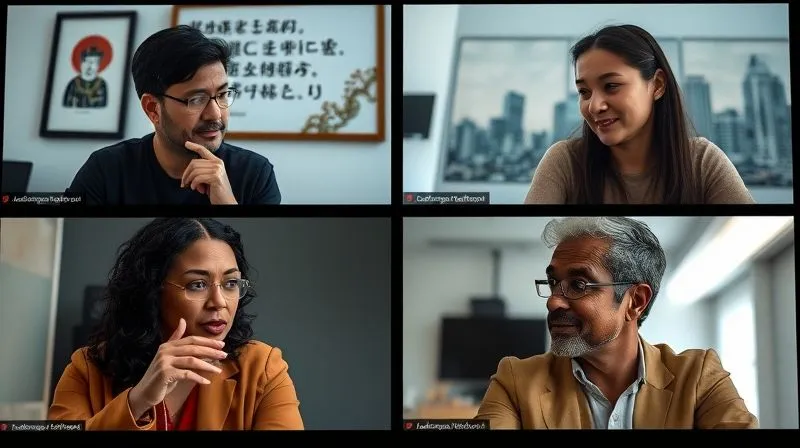
Leveraging Technology for Clarity, Not Confusion
Technology is a double-edged sword in virtual teams. It facilitates connection but can also amplify misunderstandings if not used strategically.
The Right Tools for the Job
Choosing and utilizing the right communication tools is paramount:
- Video Conferencing Best Practices: Always default to video for important discussions. Seeing faces and subtle expressions significantly enhances understanding. Encourage all participants to turn on their cameras, if culturally appropriate and bandwidth allows.
- Project Management Tools with Clear Documentation: Platforms like Asana, Trello, or Jira are essential for documenting tasks, progress, and decisions. This creates a single source of truth, reducing reliance on memory or scattered conversations.
- Translation Tools (with Caveats): While AI translation tools like DeepL or Google Translate can be helpful for quick understanding, never rely on them for critical, nuanced communication. Always have a human review or clarify for important documents.
- Shared Document Platforms: Tools like Google Docs or Microsoft 365 allow for real-time collaborative editing and commenting, ensuring everyone is working from the latest version and can track changes.
The key is to use technology to add layers of clarity, not to replace the human element of communication. A well-documented decision in a project management tool, followed by a video call to ensure shared understanding, is far more effective than a quick, ambiguous chat message.
| Communication Tool | Pros for Global Teams | Cons for Global Teams |
|---|---|---|
| Asynchronous, detailed record, formal | Slow, lacks nuance, easily misinterpreted tone | |
| Instant Messaging (Slack/Teams) | Real-time, quick queries, informal | Can be distracting, context easily lost, informal can be culturally inappropriate |
| Video Conferencing (Zoom/Meet) | Visual cues, fosters connection, real-time discussion | Time zone challenges, technical issues, 'Zoom fatigue' |
| Project Management Software | Centralized tasks/docs, clear ownership, progress tracking | Can be complex to set up, requires consistent updates |
The Art of Feedback: Constructive Criticism Across Cultures
Giving and receiving feedback is a critical component of team performance, but it's also a common flashpoint for cross-cultural misunderstandings.
Direct vs. Indirect Feedback Loops
Cultures vary significantly in their preferred feedback styles. Some cultures favor direct, explicit feedback, often delivered publicly. Others prefer indirect, subtle feedback, perhaps delivered privately or through a third party, to save face. Imposing a single feedback style on a global team is a recipe for disaster.
As a leader, you must adapt. This might mean:
- For direct cultures: Be clear, specific, and action-oriented.
- For indirect cultures: Frame feedback as suggestions, focus on the positive before the corrective, and consider delivering it privately or through a trusted intermediary.
- Encourage 'feedforward' – focusing on future improvements rather than past mistakes, which can feel less accusatory.
Creating a "Psychologically Safe" Environment
Regardless of cultural context, a psychologically safe environment is paramount for effective feedback. Team members must feel safe to express ideas, ask questions, and admit mistakes without fear of punishment or humiliation. As Google's Project Aristotle research famously found, psychological safety is the single most important dynamic for successful teams.
To foster this:
- Leaders must model vulnerability and admit their own mistakes.
- Emphasize that feedback is about improvement, not judgment.
- Focus feedback on specific behaviors and their impact, rather than personal attributes.
- Encourage a culture where asking for clarification is seen as a strength, not a weakness.
Mini Case Study: "GlobalConnect's Turnaround: From Chaos to Cohesion"
How GlobalConnect Reduced Project Delays by 40%
GlobalConnect, a rapidly expanding SaaS company with development teams in India, sales in the US, and marketing in Europe, was plagued by persistent project delays and internal friction. Their virtual stand-ups were often silent, emails went unanswered for days, and key decisions were frequently misunderstood or simply missed. The CEO approached me, frustrated by the escalating costs and declining team morale.
My initial assessment revealed a lack of clear communication protocols and a low cultural intelligence quotient across the teams. Indian developers felt their concerns weren't taken seriously by US management, who in turn found the communication from India too indirect. European marketing felt left out of critical development discussions.
We implemented a three-pronged approach:
- Team Communication Charter: We facilitated a series of virtual workshops where representatives from each region co-created a communication charter. This charter explicitly defined preferred channels (video for all strategic discussions, IM for urgent alerts, project management software for task updates), response time expectations (e.g., 12-hour response for emails during working hours), and meeting norms (all cameras on, clear agendas, designated note-takers).
- Cross-Cultural Training Modules: We introduced mandatory, interactive online modules on Hofstede's cultural dimensions, focusing on power distance, individualism vs. collectivism, and communication styles relevant to their regions. This helped team members understand the 'why' behind different behaviors.
- Structured Feedback Sessions: We implemented a 'feedforward' framework, where feedback was always framed around future improvement rather than past blame. Leaders were trained to deliver feedback culturally sensitively, using more indirect approaches for Indian teams and more direct for US teams, while ensuring psychological safety.
Within six months, GlobalConnect saw a dramatic shift. Project delays reduced by 40%, team member satisfaction surveys showed a 25% increase in perceived clarity and collaboration, and the CEO reported a tangible improvement in cross-functional synergy. This resulted in the successful launch of two major products that year, directly attributed to the enhanced communication and understanding within their global virtual teams.
Mastering Meeting Dynamics: Ensuring Everyone is Heard and Understood
Virtual meetings are often where misunderstandings germinate. Poorly run meetings can exacerbate cultural differences and leave participants feeling unheard or confused.
Structured Agendas and Pre-Reading
A well-structured agenda, distributed well in advance, is non-negotiable. This allows participants, especially those for whom English is a second language, to prepare their thoughts and questions. Include:
- Clear objectives for the meeting.
- Specific topics to be discussed, with estimated timings.
- Any required pre-reading or pre-work.
- Designated time for Q&A and action items.
Encouraging pre-reading is particularly vital for team members from high-context cultures who appreciate having time to process information before contributing verbally.
Facilitation Techniques for Inclusivity
Effective facilitation is key to ensuring all voices are heard and understood:
- Designated Facilitator: One person should be responsible for guiding the discussion, managing time, and actively drawing out quieter voices.
- Round-Robin Check-ins: For important decisions or discussions, go around the 'virtual room' and ask each person for their input. This ensures everyone has a chance to speak and prevents dominant voices from monopolizing the conversation.
- Visual Aids: Use screen sharing for presentations, whiteboards for brainstorming, or collaborative documents to capture ideas in real-time. Visuals transcend language barriers.
- Summarize and Confirm: At key junctures, the facilitator should summarize what has been discussed and confirm understanding with the group, asking, 'Does everyone agree with this summary?' or 'Are there any points that need further clarification?'
- Designated Note-Taker and Action Items: Assign a note-taker to capture key decisions and action items, including who is responsible and by when. Distribute these notes promptly after the meeting.

Sustaining Clarity: Continuous Improvement and Adaptation
Preventing misunderstandings is not a one-time fix; it's an ongoing process of learning, adapting, and refining your approach. Global virtual teams are dynamic entities, and their communication needs will evolve.
Regular Check-ins and Pulse Surveys
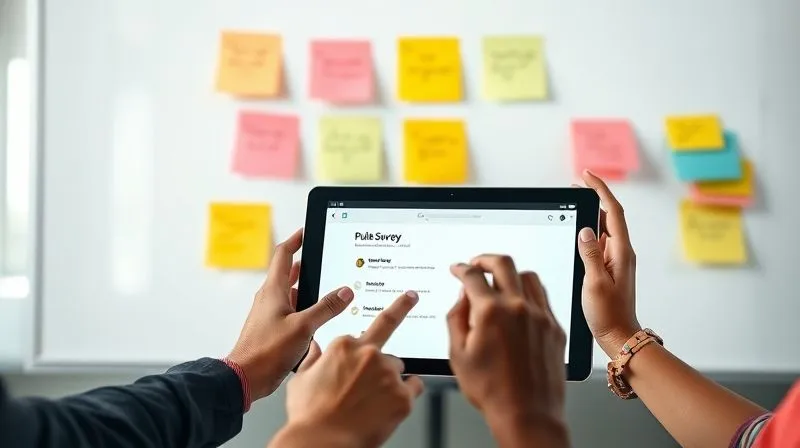
Implement regular, informal check-ins with your team members to gauge their comfort levels with communication processes. Are they feeling heard? Are they finding information easily? Anonymous pulse surveys can also be incredibly valuable for gathering honest feedback on communication effectiveness and identifying pain points before they escalate. Questions like 'Do you feel comfortable asking clarifying questions?' or 'Is our team's feedback constructive?' can provide crucial insights.
Iterative Learning from Mistakes
When a misunderstanding does occur (and they will, despite best efforts), treat it as a learning opportunity rather than a failure. Conduct a brief 'post-mortem' to understand what went wrong, identify the root cause, and agree on how to prevent similar issues in the future. This iterative learning process builds resilience and continuously refines your team's communication protocols.
According to a Deloitte report on the future of work, organizations that embrace continuous learning and adaptation are better positioned to thrive in dynamic environments. This applies directly to the complex world of global virtual teams.
| Communication Health Metric | Target Score | Action Plan |
|---|---|---|
| Clarity of Instructions | 4.5/5 | Implement more visual aids, use 'summarize and confirm' protocol |
| Timeliness of Responses | 90% within agreed SLA | Review communication charter, follow up on overdue responses |
| Psychological Safety for Feedback | 4.0/5 | Leader training on empathetic feedback, anonymous feedback channels |
| Meeting Effectiveness | 80% of meetings achieve objectives | Mandatory agendas, designated facilitator, post-meeting action items |
Frequently Asked Questions (FAQ)
How do I handle language barriers when English isn't a first language for everyone? Beyond using simple, clear language and avoiding idioms, encourage patience and active listening. Implement a 'speak-slowly' policy in meetings. Utilize visual aids extensively. For critical documents, consider professional translation or a 'buddy system' where a native speaker reviews the text for clarity. Most importantly, foster an environment where team members feel comfortable admitting they don't understand without fear of judgment.
What if cultural differences lead to conflict rather than misunderstanding? Misunderstandings can indeed escalate to conflict. The key is early intervention. Establish clear conflict resolution protocols. Train leaders to mediate cross-cultural disputes, focusing on identifying the underlying cultural values at play rather than just the surface-level disagreement. Sometimes, a neutral third party with cross-cultural expertise can help bridge the gap. Emphasize that conflict, when managed constructively, can lead to stronger solutions.
Is it better to over-communicate or risk information overload in virtual teams? The goal is not to 'over-communicate' but to 'communicate effectively and strategically.' Information overload is a real risk. The communication charter helps define what information goes where. For example, critical decisions should be documented in a project management tool, announced via email, and briefly discussed in a video meeting. Redundancy across channels for vital information can be beneficial, but avoid sending the same long email to multiple channels. Prioritize clarity and conciseness, and empower team members to filter information relevant to their roles.
How can leaders model effective cross-cultural communication? Leaders must lead by example. This means actively practicing the strategies outlined: being culturally sensitive, asking clarifying questions, adapting feedback styles, using video, and fostering psychological safety. Leaders should openly discuss their own learning journey in cross-cultural communication, showing vulnerability and a commitment to continuous improvement. Their actions set the tone for the entire team.
What's the role of informal communication in preventing misunderstandings? Informal communication is crucial for building rapport and trust, which in turn reduces misunderstandings. In a virtual setting, this requires intentional effort. Schedule virtual 'coffee breaks,' create non-work-related chat channels, or host virtual team-building activities. These informal interactions allow team members to get to know each other as individuals, fostering empathy and providing context that can smooth over formal communication challenges.
Key Takeaways and Final Thoughts
Successfully navigating the complexities of global virtual teams hinges on a proactive, empathetic, and culturally intelligent approach to communication. Preventing misunderstandings isn't just about avoiding problems; it's about unlocking the full potential of diverse perspectives and fostering innovation.
- Understand the Roots: Recognize how cultural dimensions and the absence of non-verbal cues contribute to misunderstandings.
- Build Foundations: Establish clear communication charters and protocols to set shared expectations.
- Cultivate CQ: Invest in cultural intelligence training and foster empathy through active listening and perspective-taking.
- Leverage Technology Wisely: Choose the right tools and use them strategically to enhance clarity, not confusion.
- Master Feedback: Adapt feedback styles to cultural norms while ensuring a psychologically safe environment.
- Optimize Meetings: Structure agendas, use visual aids, and employ inclusive facilitation techniques.
- Embrace Continuous Improvement: Regularly check in, gather feedback, and learn from every interaction.
As an industry veteran, I've seen that the teams that commit to these principles not only prevent misunderstandings but transform their diversity into their greatest strength. The journey to seamless global virtual communication is ongoing, but with these strategies, your team can build bridges of understanding that transcend borders and screens, leading to unparalleled collaboration and success. Embrace the challenge, and watch your global team thrive.
Recommended Reading
- Unlock the Secret: How to Measure Innovation Strategy Performance Effectively
- Unlock the Secret: How to Reduce Help Desk Agent Burnout Rates Permanently
- Why High-Value Prospects Choose Rivals: 7 Fixes for Your Sales Funnel
- 5 Proven Strategies: Mitigating Currency Exchange Risks in Global Franchising?
- Former Employee Stole IP? 7 Legal Steps to Protect Your Business Now





Comments
Leave a comment below. Your email will not be published. Required fields marked with *