


How to Stop Project Scope Creep Caused by Vague Communication?
For over 18 years in the trenches of project management, I've witnessed firsthand how ambitious initiatives, brilliant ideas, and dedicated teams can be derailed, not by technical challenges or budget cuts, but by a silent, insidious killer: vague communication. It’s a recurring nightmare for project managers, stakeholders, and clients alike.
The pain point is palpable: project requirements shift like sand, deadlines are missed, budgets inflate, and frustration mounts. This isn't just an inconvenience; it's a direct threat to project success, often manifesting as unchecked project scope creep that spirals out of control because nobody was truly on the same page from the beginning.
This article isn't just another theoretical guide. I'm going to share actionable frameworks, real-world insights, and battle-tested strategies that I've personally used and refined to combat scope creep at its source: the communication breakdown. You'll learn how to build communication resilience into every facet of your project lifecycle.
The Insidious Link: How Vague Communication Fuels Scope Creep
Before we can fix the problem, we must understand its roots. Scope creep, the unauthorized or uncontrolled expansion of project scope without adjustments to time, cost, or resources, is often seen as a symptom. The underlying disease? A pervasive lack of clarity in how we communicate project needs, expectations, and changes.
Understanding Scope Creep's Root Causes
In my experience, vague communication is the primary accelerator of scope creep. When initial requirements are ill-defined, stakeholders interpret them differently. What one person envisions as a 'simple reporting feature' can be a complex data visualization dashboard to another. This disconnect creates fertile ground for new requests and 'clarifications' that are, in reality, new requirements.
Another significant cause is the absence of a structured communication plan. Without agreed-upon channels, frequencies, and formats, critical information gets lost, misinterpreted, or simply isn't shared. This leads to assumptions, which, as we all know, are the mother of all project screw-ups.
The Cost of Ambiguity
The financial and reputational costs of scope creep are staggering. Projects run over budget, deadlines are extended, team morale plummets due to endless rework, and client trust erodes. A study by the Project Management Institute (PMI) consistently highlights poor communication as a top factor in project failure, directly contributing to scope creep and missed objectives. It’s a vicious cycle that drains resources and stifles innovation.
"Clarity is not the absence of complexity, but the achievement of understanding despite it. In project management, this understanding is the bedrock of success and the most powerful weapon against scope creep."
Establishing a Crystal-Clear Communication Framework from Day One
The first line of defense against scope creep caused by vague communication is to build a robust communication framework. This isn't just about 'talking more'; it's about talking smarter, with purpose, and with a defined structure.
Define Communication Channels & Cadence
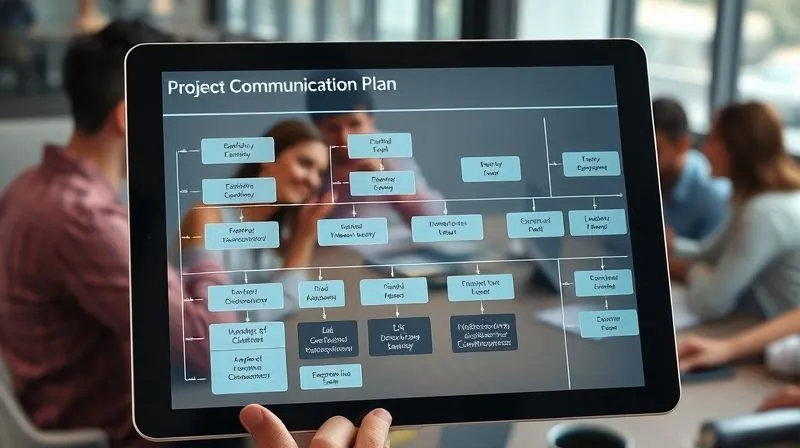
Every project needs a communications plan that specifies who communicates what, when, how, and why. This eliminates guesswork and ensures everyone knows where to find information and how to provide input.
- Identify Stakeholders: List all internal and external parties who need to be informed or consulted.
- Determine Information Needs: For each stakeholder group, identify what specific information they need (e.g., progress reports, risk updates, budget summaries).
- Select Channels: Choose appropriate communication channels (e.g., weekly status meetings, email updates, project management software, dedicated Slack channels).
- Set Cadence: Establish clear frequencies for each communication type (e.g., daily stand-ups, bi-weekly stakeholder reviews, monthly steering committee meetings).
- Assign Ownership: Designate who is responsible for preparing and delivering each communication.
Standardize Terminology & Language
One of the simplest yet most overlooked aspects of clear communication is a shared vocabulary. In diverse teams or with complex technical projects, terms can mean different things to different people. Create a project glossary or a 'definition of terms' document early on.
- Reduces Misinterpretation: Ensures everyone understands technical jargon and project-specific acronyms correctly.
- Streamlines Onboarding: New team members or stakeholders can quickly get up to speed.
- Improves Documentation: Makes all project documentation consistent and unambiguous.
- Fosters Trust: Demonstrates a commitment to precision and shared understanding.
Master Requirements Gathering: The Art of Precision
The most effective way to stop project scope creep caused by vague communication is to prevent it at the source: during requirements gathering. This phase is critical, and it demands meticulous attention to detail and a commitment to absolute clarity.
Beyond the Checklist: Elicitation Techniques
Don't just collect requirements; elicit them. This involves proactive engagement to uncover needs, not just stated desires. It requires asking 'why' repeatedly and validating assumptions.
- Structured Interviews: Conduct one-on-one interviews with key stakeholders using a prepared list of open-ended questions. Focus on understanding their pain points and desired outcomes, not just features.
- Facilitated Workshops: Bring together diverse stakeholders for collaborative sessions. Use techniques like brainstorming, affinity mapping, and user story mapping to collectively define and prioritize requirements.
- Prototyping & Mock-ups: Create visual representations of the desired solution. This helps stakeholders see and interact with the concept, making abstract ideas concrete and easier to validate or refine.
- Use Cases & User Stories: Document requirements from the perspective of the end-user. 'As a [user type], I want to [action], so that [benefit]' helps clarify the 'why' behind each feature.
Documenting with Unambiguous Detail
Once elicited, requirements must be documented in a way that leaves no room for misinterpretation. Avoid subjective language. Use active verbs and measurable criteria. For instance, instead of 'The system should be fast,' specify 'The system should respond within 2 seconds for 95% of user queries.'
According to research published by the Project Management Institute (PMI), projects with well-defined requirements are significantly more likely to meet their original goals and objectives. This underscores the importance of investing time upfront in this critical phase.
| Requirement ID | Description | Acceptance Criteria | Priority | Status |
|---|---|---|---|---|
| REQ-001 | User Login functionality | User logs in with valid credentials in < 2s | High | Approved |
| REQ-002 | Product Search and Filter | Search results appear within 3s; filter by category, price, rating | High | Approved |
| REQ-003 | Order Confirmation Email | Email sent within 30s of order, includes order summary & tracking link | Medium | Approved |
Proactive Stakeholder Engagement: Managing Expectations, Not Just Information
Effective project communication isn't a one-way street; it's a dynamic dialogue. Proactive stakeholder engagement is about continuously managing expectations, ensuring alignment, and building a shared understanding of the project's evolving landscape.
Identify and Segment Stakeholders
Not all stakeholders are created equal in terms of their influence or interest. Use a stakeholder matrix (e.g., Power/Interest grid) to categorize them. This helps tailor your communication strategy. A high-power, high-interest stakeholder needs frequent, detailed updates and active involvement, while a low-power, low-interest stakeholder might only need periodic, summarized reports.
Understanding their perspectives, concerns, and motivations allows you to frame your communication in a way that resonates with them, reducing resistance and preventing misunderstandings that can lead to scope creep.
The Power of Visual Communication
Words can be ambiguous, but visuals often cut through the noise. Incorporate visual aids into your communication wherever possible. This is particularly effective when discussing complex features or user interfaces.
- Wireframes and Mock-ups: Show, don't just tell, what a user interface will look like and how it will function.
- Process Flow Diagrams: Illustrate complex workflows and system interactions.
- Gantt Charts and Roadmaps: Provide a clear visual representation of timelines and key milestones.
- Data Visualizations: Use charts and graphs to present complex data and project performance metrics concisely.
Case Study: How InnovateTech Streamlined Requirements
InnovateTech, a rapidly growing software firm, struggled with a persistent issue: clients would approve initial requirements, but halfway through development, they'd realize 'that's not what I meant,' leading to extensive rework and budget overruns. Their project managers felt constantly on the defensive.
By implementing a new process that mandated visual mock-ups and interactive prototypes for all key features during the requirements phase, they transformed their client interactions. They also introduced a 'Definition of Done' checklist that was signed off by both client and internal teams for each major deliverable. This simple shift, emphasizing visual clarity and mutual agreement, reduced rework due to miscommunication by 40% in their next three projects, significantly improving client satisfaction and project profitability.
"Managing expectations is not just about delivering bad news; it's about consistently aligning everyone to the project's reality, preventing surprises, and fostering a shared vision from start to finish."
Implementing Robust Change Control Processes
Even with the clearest communication, changes are inevitable. The key is to manage them effectively, ensuring they don't lead to uncontrolled scope creep. A formal change control process is your project's firewall.
Formalizing Scope Changes
Any request for a change to the agreed-upon project scope, no matter how small, must go through a defined process. This ensures that the impact of the change on schedule, budget, resources, and quality is properly assessed before approval.
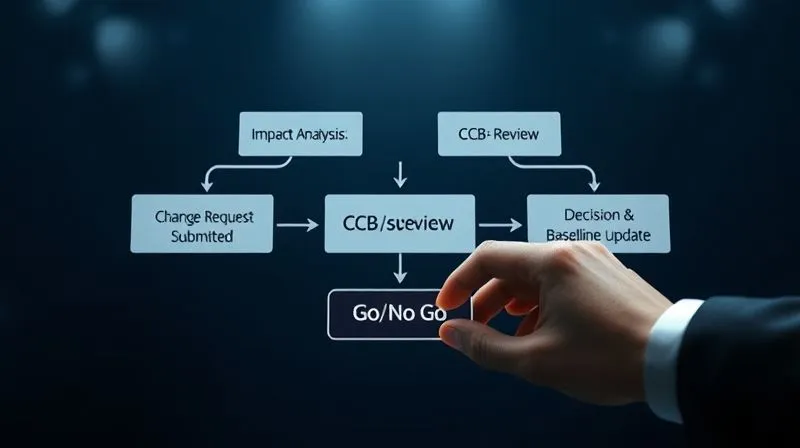
- Submit Change Request: The stakeholder formally submits a change request, detailing what they want and why.
- Impact Analysis: The project team assesses the impact of the change on all project constraints (time, cost, resources, quality, risks).
- Review & Approval: The change request, along with the impact analysis, is presented to a Change Control Board (CCB) or designated approver(s).
- Communicate Decision: The decision (approve, reject, defer, or request more information) is communicated to the requester and all relevant stakeholders.
- Update Baselines: If approved, the project baselines (scope, schedule, budget) are formally updated to reflect the change.
The Role of a Change Control Board
A Change Control Board (CCB) is a critical component of this process. It's typically a small group of key stakeholders (e.g., project sponsor, lead user, technical lead) responsible for reviewing, evaluating, and approving or rejecting change requests. Their collective decision-making power ensures that changes are strategically aligned and their impacts are fully understood.
Continuous Validation and Feedback Loops
Communication is not a one-time event; it's an ongoing process. Establishing continuous validation and feedback loops helps catch potential scope creep early and ensures that the project remains aligned with stakeholder expectations throughout its lifecycle.
Regular Demos and Progress Reviews
Don't wait until the end of a phase or the project to showcase progress. Regular demonstrations of working software, prototypes, or completed deliverables allow stakeholders to provide feedback while changes are still relatively inexpensive to implement. This iterative approach is a hallmark of agile methodologies and a powerful tool against scope creep.
These sessions also serve as an opportunity to reiterate the current scope and highlight any deviations, fostering transparency and accountability. They help bridge the gap between technical teams and business stakeholders, ensuring everyone sees the evolving product through a shared lens.
Building a Culture of Openness
Encourage an environment where team members and stakeholders feel comfortable raising concerns, asking clarifying questions, and providing constructive feedback without fear of reprisal. A psychologically safe environment is crucial for identifying vague communication issues before they escalate.
As highlighted in articles from the Harvard Business Review, organizations with strong feedback cultures tend to be more innovative and adaptable. This applies directly to project teams, enabling them to course-correct proactively rather than reactively.
Leveraging Technology for Communication Clarity
In today's digital age, technology offers powerful tools to enhance communication clarity and reduce the likelihood of scope creep. These platforms centralize information, standardize processes, and improve accessibility.
Project Management Software
Tools like Jira, Asana, Monday.com, or Trello provide a single source of truth for project tasks, deadlines, and progress. They allow for clear assignment of responsibilities, tracking of task statuses, and transparent visibility into the project's health. This centralization combats the 'he said, she said' scenarios that often arise from vague verbal communication.
By documenting requirements, user stories, and acceptance criteria directly within these platforms, teams can refer back to the agreed-upon scope at any time, reducing ambiguity and providing a clear reference point for all work.
Collaboration Tools
Platforms like Slack, Microsoft Teams, or Google Workspace facilitate real-time communication and document sharing. They allow for instant clarification of questions, focused discussions on specific topics, and the creation of dedicated channels for different project aspects or stakeholder groups. The ability to quickly share files, links, and updates minimizes delays and ensures everyone has access to the latest information.
The searchable nature of these tools also means that past discussions and decisions can be easily retrieved, serving as an audit trail and preventing forgotten agreements from resurfacing as scope creep.

Cultivating a Culture of Accountability and Transparency
Ultimately, preventing scope creep caused by vague communication isn't just about processes and tools; it's about people and culture. A project environment that values accountability and transparency is inherently more resilient to ambiguity.
Empowering Team Members
Empower your team members to ask questions, challenge assumptions, and seek clarification when something is unclear. Encourage them to document discussions and decisions, even informal ones, in the designated project communication channels. When everyone feels responsible for clarity, the collective intelligence of the team becomes a powerful guard against ambiguity.
This empowerment also extends to their ability to push back on out-of-scope requests. If a team member understands the defined scope and the change control process, they are better equipped to identify potential creep and guide stakeholders through the proper channels.
Leading by Example
As a project manager, your communication habits set the tone for the entire project. Be meticulously clear in your own communications. Document decisions, summarize meetings, and always provide context. If you encounter ambiguity, address it head-on rather than letting it linger.
Demonstrate your commitment to the change control process by adhering to it yourself. When stakeholders see you consistently championing clarity and process, they are more likely to adopt similar behaviors. As Forbes often emphasizes, effective leadership in project management is about driving clarity and accountability. Read more on the importance of clarity in leadership.
Frequently Asked Questions (FAQ)
Q: How often should I communicate project scope changes? A: Any approved scope change, no matter how minor, should be communicated immediately to all affected stakeholders. For larger, more complex changes, dedicated meetings or detailed memos may be required. The key is timely, transparent communication to avoid surprises and ensure everyone is operating from the latest project baseline.
Q: What if stakeholders refuse to define requirements clearly? A: This is a common challenge. First, emphasize the 'why' – explain the risks (delays, cost overruns, unmet expectations) of vague requirements. Use elicitation techniques like prototyping to make abstract concepts tangible. If resistance persists, you might need to escalate to the project sponsor, making it clear that without defined requirements, the project's success is at risk, and you may need to implement a 'default' scope based on your best understanding, with clear caveats.
Q: Can a communication plan truly prevent all scope creep? A: While a robust communication plan significantly reduces the likelihood of scope creep caused by vagueness, it cannot prevent all forms of scope creep. Some changes are legitimate and necessary. The goal is to ensure that all changes, whether legitimate or not, are identified, assessed, and managed through a formal change control process, rather than silently expanding the project's boundaries.
Q: What's the biggest mistake project managers make with communication? A: The biggest mistake is assuming clarity. We often believe that because we've said something, it has been understood and absorbed exactly as intended. Effective communication requires active listening, asking clarifying questions, and seeking confirmation of understanding. It's a continuous loop, not a one-time broadcast.
Q: How do I handle a client who constantly changes their mind? A: This requires a firm but empathetic approach. Reiterate the agreed-upon scope and remind them of the change control process, explaining how each change impacts the project's timeline and budget. Document every request and its potential impact. It's often helpful to offer a 'parking lot' for future ideas, assuring them that their input is valued but needs to be managed within a structured framework. Sometimes, a fixed-price contract with strict change clauses can also help manage expectations upfront.
Key Takeaways and Final Thoughts
Stopping project scope creep caused by vague communication is not a singular task but a continuous commitment to clarity, structure, and proactive engagement. It demands discipline, empathy, and a strategic approach to every interaction.
- Prioritize Clarity: Implement robust communication frameworks and standardize terminology from day one.
- Master Elicitation: Go beyond surface-level requirements; use advanced techniques to uncover true needs.
- Engage Proactively: Continuously manage stakeholder expectations and leverage visual communication.
- Formalize Change: Establish and enforce a strict change control process for all scope modifications.
- Feedback is Gold: Build continuous validation and feedback loops to catch issues early.
- Use Technology Wisely: Leverage PM software and collaboration tools to centralize and clarify information.
- Cultivate Culture: Foster an environment of accountability and transparency, leading by example.
By embedding these principles into your project management DNA, you won't just mitigate scope creep; you'll build stronger relationships, deliver more successful projects, and enhance your reputation as a leader who delivers on promises. The investment in clear communication pays dividends far beyond the project's completion.
Recommended Reading
- 5 Critical Questions: Choosing Your Small Business Legal Structure Wisely
- Mastering Your Financial Audit: The Ultimate Guide to Seamless Preparation
- Mastering Global Remote Hiring: 7 Legal Pitfalls to Sidestep Now
- Mediation Failed? 7 Critical Steps After a High-Stakes Business Dispute
- Stop the Leak: 7 Strategies to Cut Post-Sale Churn from Unresolved Issues





Comments
Leave a comment below. Your email will not be published. Required fields marked with *