


Preventing Global Supply Chain Disruptions from Trade Wars?
For over 20 years in international business and global supply chain management, I've witnessed firsthand how quickly a seemingly stable operating environment can be upended. I've seen companies, large and small, caught flat-footed by geopolitical shifts, particularly the sudden onset of trade wars. The common thread in those struggles was often a lack of foresight and an over-reliance on single-point dependencies.
Today, with the resurgence of protectionist policies and escalating trade tensions between major economic powers, businesses worldwide face an unprecedented level of uncertainty. Tariffs, sanctions, and non-tariff barriers are no longer abstract concepts; they are tangible threats that can lead to significant cost increases, production delays, market access restrictions, and ultimately, eroded profitability. The question isn't if your supply chain will be impacted, but when and how severely.
This article isn't about predicting the next geopolitical flashpoint. Instead, it's about empowering you with a proactive framework. I will share five battle-tested strategies, enriched with real-world analogies and actionable steps, designed for Preventing global supply chain disruptions from trade wars?. We'll delve into enhancing visibility, strategic diversification, regionalization, contractual resilience, and intelligent inventory management, ensuring your operations remain robust and adaptable amidst global volatility.
Understanding the Geopolitical Landscape: Beyond Tariffs
When we talk about trade wars, the immediate focus often shifts to tariffs. While tariffs are certainly a direct and painful measure, they represent just one facet of a much broader and more complex geopolitical landscape that impacts global supply chains. As an industry specialist, I've learned that true resilience comes from understanding the underlying currents, not just the surface waves.
Geopolitical tensions can manifest in various ways: export controls, import quotas, stringent customs inspections, origin labeling requirements, and even state-sponsored cyberattacks targeting critical infrastructure. These non-tariff barriers can be far more insidious and difficult to navigate than a straightforward tariff, often leading to unpredictable delays and increased compliance costs. Ignoring these broader risks is like preparing for rain by only carrying an umbrella, oblivious to the impending hurricane.
"In today's interconnected world, a supply chain is only as strong as its weakest geopolitical link. Proactive intelligence gathering and scenario planning are no longer luxuries; they are necessities for survival." - Industry Expert Insight
The Ripple Effect: From Tariffs to Non-Tariff Barriers
The initial impact of tariffs is typically seen in increased input costs or reduced market competitiveness. However, the ripple effect extends much further, forcing companies to reconsider sourcing locations, production strategies, and even market entry points. This often leads to a scramble for alternative suppliers or markets, which can strain existing relationships and introduce new, unforeseen risks.
Consider how a trade dispute between two nations can lead to a third nation becoming a 'transshipment hub,' only to face new scrutiny and potential sanctions itself. Or how a shift in political rhetoric can make a previously stable region suddenly appear high-risk. These dynamics underscore the need for a comprehensive understanding of global trade policy and its cascading effects on your supply network.
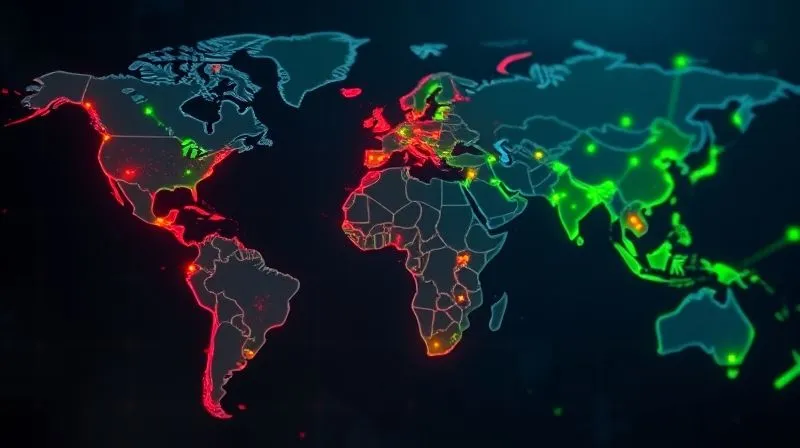
Strategy 1: Enhanced Supply Chain Visibility and Data Analytics
My first and arguably most crucial strategy for Preventing global supply chain disruptions from trade wars? is to achieve unparalleled visibility across your entire supply chain. You cannot manage what you cannot see. For years, companies operated with opaque, multi-tiered supply chains, often unaware of their suppliers' suppliers. This 'blind spot' is a catastrophic vulnerability in an era of trade wars.
Enhanced visibility means knowing not just your direct suppliers, but also their key components, their raw material sources, and their geographic locations. It means understanding the logistics routes, potential bottlenecks, and the regulatory environment at every single point. Without this granular data, any response to a trade disruption will be reactive, costly, and likely insufficient.Leveraging AI and Blockchain for Predictive Insights
Modern technology offers powerful tools to achieve this level of visibility. Artificial Intelligence (AI) and machine learning algorithms can analyze vast datasets to identify patterns, predict potential disruptions based on geopolitical indicators, and even suggest alternative sourcing options. Imagine an AI flagging a specific region's increasing political instability and cross-referencing it with your supplier database, all before a tariff is even announced.
- Implement a Centralized Data Platform: Consolidate data from all suppliers, logistics partners, and internal systems into a single, accessible platform. This forms the backbone of your visibility efforts.
- Map Your Multi-Tiered Supply Chain: Utilize specialized software or engage consultants to map out your entire supply network, identifying all critical nodes and potential single points of failure, including sub-tier suppliers.
- Integrate Real-time Tracking and IoT: Deploy IoT sensors for real-time tracking of goods in transit and at key inventory points. This provides immediate alerts to delays or deviations.
- Leverage AI for Risk Prediction: Implement AI tools that analyze global news, trade policy announcements, economic indicators, and geopolitical events to provide predictive insights into potential disruptions.
- Utilize Blockchain for Transparency: Explore blockchain technology to create an immutable, transparent ledger of transactions and product movements, enhancing trust and traceability across the network, particularly for sensitive goods.

Strategy 2: Diversification – More Than Just Spreading Risk
Diversification is a term often thrown around, but its true strategic depth in supply chain management is frequently underestimated. It's not merely about having two suppliers instead of one; it's about building a resilient ecosystem that can absorb shocks from any direction. In my experience, true diversification involves a multi-faceted approach to sourcing, manufacturing, and market access.
The goal is to avoid over-reliance on any single country, region, supplier, or even a specific logistics route. This strategic distribution of assets and relationships minimizes the impact of a disruption in any one area. It's akin to an investor diversifying their portfolio across different asset classes and geographies, not just different stocks in the same sector.
Multi-Sourcing and Multi-Regional Production Hubs
Multi-sourcing means having approved suppliers for critical components or raw materials in different geographic locations, ideally in countries with distinct geopolitical alignments and trade relationships. This redundancy ensures continuity even if one region becomes inaccessible due to tariffs or sanctions. It's a proactive measure that requires significant upfront investment but pays dividends during crises.
- Identify Critical Components: Determine which parts, materials, or services are most vulnerable to disruption and prioritize them for multi-sourcing.
- Qualify Redundant Suppliers: Invest time and resources in thoroughly vetting and qualifying alternative suppliers, ensuring they meet your quality, cost, and ethical standards.
- Establish Regional Production Hubs: Where feasible, establish manufacturing or assembly facilities in different geographic regions. This not only mitigates trade war risks but can also reduce lead times and improve responsiveness to local markets.
- Diversify Logistics Routes: Don't rely on a single port, shipping lane, or air cargo hub. Explore alternative transportation methods and routes to maintain flexibility.
According to a Harvard Business Review article, companies that prioritize supply chain resilience through diversification are better positioned to weather unforeseen global events, including trade disputes, demonstrating a clear link between strategy and operational continuity.
Strategy 3: Nearshoring, Reshoring, and Friend-Shoring
As geopolitical tensions rise, the concept of geographical proximity in supply chains has gained significant traction. Businesses are increasingly evaluating the benefits of bringing production closer to home (reshoring), to neighboring countries (nearshoring), or to nations with strong political and economic alliances (friend-shoring). These strategies are direct responses to the vulnerabilities exposed by globalized supply chains and trade wars.
While outsourcing to distant, low-cost regions was once the undisputed norm, the cost of disruption now often outweighs the labor arbitrage benefits. My experience has shown that a balanced approach, considering total landed cost, lead times, quality control, and geopolitical stability, is far more sustainable. It’s about creating 'regional ecosystems' that are less susceptible to distant political tremors.
Case Study: Phoenix Manufacturing's Strategic Relocation
Phoenix Manufacturing, a mid-sized electronics components producer, historically relied on a single major Asian hub for 70% of its production. When a series of escalating tariffs and export controls threatened their core business, they faced significant cost increases and delivery delays. By implementing a phased nearshoring strategy to Mexico for North American markets and a friend-shoring initiative to Vietnam for Asian markets, they significantly diversified their production base.
This move, initially perceived as costly, led to reduced lead times, improved responsiveness to customer demands, and a dramatic decrease in tariff exposure. Within two years, Phoenix Manufacturing reported a 15% reduction in overall supply chain risk and a 5% increase in on-time delivery rates, proving that strategic relocation can transform vulnerability into competitive advantage.
| Strategy | Description | Pros | Cons |
|---|---|---|---|
| Reshoring | Bringing production back to the company's home country. | Reduced lead times, improved quality control, national security, local job creation. | Higher labor costs, potential lack of skilled labor, significant investment. |
| Nearshoring | Moving production to a nearby country, often sharing a border or region. | Reduced logistics costs, shorter lead times, cultural/time zone proximity, lower labor costs than reshoring. | Still exposed to some regional geopolitical risks, potential for infrastructure limitations. |
| Friend-Shoring | Relocating production to geopolitically aligned countries. | Enhanced supply chain security, reduced political risk, shared values, potential for trade agreements. | May not always offer lowest cost, requires strong diplomatic ties, limited options. |
| Offshoring (Traditional) | Producing goods in a distant country, typically for cost savings. | Lowest labor costs, access to specialized resources. | Long lead times, high geopolitical risk, complex logistics, cultural barriers. |

Strategy 4: Building Agility and Flexibility into Contracts
In the volatile environment of trade wars, your contracts with suppliers, logistics providers, and customers are not just legal documents; they are critical tools for resilience. Too often, I've seen businesses locked into rigid agreements that offer no recourse when geopolitical events disrupt the flow of goods. Building agility and flexibility into these contracts is paramount for Preventing global supply chain disruptions from trade wars?.
This means moving beyond standard force majeure clauses to explicitly address specific geopolitical risks. It involves negotiating terms that allow for rapid adjustments without incurring punitive penalties. A well-crafted contract can be your shield and sword during times of crisis, enabling you to pivot quickly while minimizing financial exposure.
Negotiating for Resilience: Key Clauses
- Geopolitical Force Majeure: Expand standard force majeure clauses to explicitly include events like tariffs, sanctions, export controls, and significant trade policy shifts. Define clear triggers and responsibilities.
- Diversification Incentives/Obligations: Include clauses that encourage or even mandate suppliers to have diversified sourcing strategies themselves, or to provide transparency on their sub-tier suppliers' locations.
- Flexible Volume Commitments: Negotiate for more flexible volume commitments, allowing for adjustments based on market access changes or unexpected demand shifts due to trade policies.
- Alternative Sourcing & Routing Provisions: Incorporate clauses that permit or outline procedures for utilizing alternative suppliers or logistics routes without penalty if primary options become unviable due to trade restrictions.
- Cost-Sharing Mechanisms: Establish clear frameworks for how unexpected costs arising from tariffs or trade barriers (e.g., duties, rerouting expenses) will be shared between parties.
- Early Termination & Suspension Rights: Define conditions under which either party can suspend or terminate an agreement with reasonable notice, particularly if geopolitical events make performance commercially impractical.
As noted by legal experts at DLA Piper, proactive contractual measures are increasingly vital for mitigating geopolitical risks and ensuring supply chain continuity. Ignoring this aspect is a gamble no international business can afford.
Strategy 5: Strategic Inventory Management and Buffering
The 'just-in-time' (JIT) inventory model, while efficient for cost reduction, has proven vulnerable to sudden, unpredictable disruptions like trade wars. My final core strategy involves a more nuanced, 'just-in-case' approach to inventory management. This isn't about hoarding; it's about strategically buffering critical components and finished goods to bridge potential gaps caused by trade friction.
This requires a sophisticated understanding of your product portfolio, lead times, supplier reliability, and the potential impact of various trade scenarios. It's a delicate balance: carrying too much inventory ties up capital, but carrying too little leaves you exposed to operational paralysis. The key is intelligent, risk-weighted buffering.
Optimizing Safety Stock in Volatile Environments
Optimizing safety stock levels means moving beyond generic percentages. It involves a dynamic calculation based on factors like: supplier lead time variability, historical demand fluctuations, the criticality of the component, and most importantly, the geopolitical risk profile of the sourcing region. For high-risk, high-impact components, a larger buffer might be justified.
"Inventory is often seen as a cost, but in a trade war, it can be your most valuable insurance policy. The art is in knowing what to insure and by how much." - Supply Chain Veteran's Axiom
Consider establishing strategic inventory hubs in different regions, close to key markets or alternative production sites. This distributed inventory approach can help bypass specific port closures or customs delays that might arise from targeted trade actions. Furthermore, explore vendor-managed inventory (VMI) agreements where suppliers take on a greater share of inventory holding responsibilities, often with incentives for resilience.
Developing a Robust Geopolitical Risk Management Framework
Implementing the five strategies above requires an overarching framework for geopolitical risk management. This isn't a one-time project; it's an ongoing process of monitoring, assessment, and adaptation. I've guided numerous organizations through developing such frameworks, and the common denominator for success is embedding risk awareness into the core decision-making process.
A robust framework typically involves a cross-functional team – including supply chain, procurement, legal, finance, and geopolitical intelligence experts – working collaboratively. Their mandate is to continuously scan the horizon for emerging risks, assess their potential impact on the supply chain, and develop proactive mitigation plans. This integrated approach ensures that no single department operates in a silo, leading to a more holistic and effective response.
Scenario Planning and Stress Testing Your Supply Chain
One of the most powerful tools within this framework is scenario planning. This involves developing various hypothetical trade war scenarios (e.g., tariffs on specific goods, sanctions on a key country, closure of a major shipping route) and then 'stress testing' your supply chain against them. How would each scenario impact your costs, lead times, and ability to fulfill orders?
By conducting these simulations, you can identify vulnerabilities before they become crises. This allows you to develop pre-planned responses, establish alternative pathways, and even pre-qualify backup suppliers. As a Deloitte report on supply chain risk emphasizes, organizations that engage in regular scenario planning are significantly more resilient and agile in the face of unexpected disruptions.
Fostering Strong Supplier Relationships and Collaboration
Beyond technology and contracts, the human element remains incredibly vital. In my career, I've seen that the most resilient supply chains are built on strong, trusting relationships with suppliers. When trade wars hit, it's these partnerships that often provide the flexibility and cooperation needed to navigate the storm. Your suppliers are not just vendors; they are extensions of your own operations and key allies in Preventing global supply chain disruptions from trade wars?.
This means moving away from purely transactional relationships to a more collaborative, partnership-based model. Share information, discuss potential risks openly, and work together on mitigation strategies. A supplier who feels valued and integrated into your strategic planning is far more likely to go the extra mile when challenges arise.
The Power of Shared Risk and Information Exchange
True collaboration involves shared risk and shared rewards. Explore joint ventures, long-term agreements with mutual transparency, and even co-investment in resilience-building initiatives. Regular communication, including sharing your geopolitical risk assessments and future outlook, enables your suppliers to better prepare and adapt their own operations to support your needs.
Establish a clear communication protocol for crisis situations, ensuring that information flows quickly and accurately. This includes understanding their own supply chain vulnerabilities and working with them to diversify their sub-tier suppliers. Remember, a chain is only as strong as its weakest link, and often that link is several tiers down, hidden from direct view.
| Criteria | Importance | Assessment Method | Notes |
|---|---|---|---|
| Financial Stability | High | Annual reports, credit checks, industry ratings. | Ensures supplier can weather economic shocks. |
| Geographic Diversity of Production | Very High | Site visits, supplier declarations, third-party audits. | Crucial for mitigating trade war risks. |
| Tier 2 & 3 Visibility | High | Supply chain mapping tools, direct inquiries, blockchain. | Identifies hidden dependencies and risks. |
| Contractual Flexibility | High | Legal review of terms, negotiation history. | Ability to adapt to changing trade conditions. |
| Communication & Transparency | Very High | Regular meetings, shared platforms, crisis response drills. | Key for proactive risk management and rapid response. |
Frequently Asked Questions (FAQ)
How do I identify potential trade war risks specific to my industry? Begin by mapping your entire supply chain, identifying all countries of origin for raw materials, components, and finished goods, as well as critical transit points. Then, monitor geopolitical news, trade policy announcements, and economic indicators for those specific regions. Industry-specific reports from organizations like the WTO, chambers of commerce, and consulting firms can also provide tailored insights into sector-specific vulnerabilities. Engaging with trade associations often helps in understanding common industry challenges and emerging threats.
What's the difference between nearshoring, reshoring, and friend-shoring, and which is best? Reshoring involves bringing production back to your home country. Nearshoring moves production to a geographically closer country, often a neighbor. Friend-shoring means relocating production to a country that is a geopolitical ally, regardless of proximity. There's no single 'best' option; the ideal choice depends on your specific product, cost structure, market access requirements, existing infrastructure, and risk tolerance. A hybrid approach, combining elements of each, is often the most resilient strategy, balancing cost, efficiency, and security.
How can smaller businesses with limited resources implement these strategies? Smaller businesses can start with incremental steps. Focus on enhanced visibility for your most critical components and suppliers first. Prioritize having at least two qualified suppliers for key items, even if they are in the same region initially. Leverage cloud-based supply chain management tools which are often more affordable. Join industry consortia or collaborate with non-competing businesses to share intelligence and potentially consolidate purchasing power for better terms. Remember, even small changes can significantly reduce exposure.
What role does technology play in mitigating trade war risks? Technology is absolutely critical. AI and machine learning can provide predictive analytics for risk identification, while blockchain enhances transparency and traceability. IoT devices offer real-time tracking, and advanced planning systems optimize inventory. Digital platforms facilitate better communication and collaboration with suppliers globally. These tools move you from reactive problem-solving to proactive risk management, giving you the foresight needed to navigate complex trade environments.
How often should I review my supply chain for geopolitical vulnerabilities? In today's dynamic environment, I recommend a formal, comprehensive review at least annually, with continuous, real-time monitoring of key geopolitical indicators and trade policy changes. Quarterly deep-dives into your most critical supply chain nodes are also advisable. However, any significant global event, new trade agreement, or escalation of political tensions should trigger an immediate ad-hoc review of affected areas. Agility in monitoring is as important as agility in execution.
Key Takeaways and Final Thoughts
Navigating the turbulent waters of global trade wars is undoubtedly one of the most pressing challenges facing international businesses today. Yet, as I've aimed to illustrate, it is not an insurmountable one. The key lies in moving beyond a reactive stance to embrace proactive, strategic resilience. By systematically implementing the frameworks and strategies we've discussed, you can transform vulnerability into a source of competitive advantage.
- Prioritize Unparalleled Visibility: Know your entire supply chain, from tier 1 to tier N, leveraging data and technology for predictive insights.
- Embrace Strategic Diversification: Spread your risk across multiple suppliers, regions, and logistics routes to build true redundancy.
- Evaluate Regionalization: Explore nearshoring, reshoring, and friend-shoring to reduce geopolitical exposure and shorten lead times.
- Build Contractual Agility: Negotiate flexible terms and specific geopolitical clauses into all supplier and customer agreements.
- Optimize Strategic Inventory: Move beyond pure JIT; implement intelligent, risk-weighted buffering for critical components.
- Establish a Geopolitical Risk Framework: Continuously monitor, assess, and plan for various trade war scenarios.
- Cultivate Strong Supplier Relationships: Foster collaboration and transparency with your partners, treating them as extensions of your own resilience strategy.
The global trade landscape will continue to evolve, presenting new challenges and opportunities. By embedding these principles into your operational DNA, you're not just protecting your business; you're future-proofing it. The time to build a resilient, adaptable, and robust global supply chain is not tomorrow, but today. I encourage you to take these insights and begin implementing them, one strategic step at a time, to ensure your business thrives amidst the complexities of international trade.
Recommended Reading
- 7 Critical Reasons: Why Your New Product Commercialization Strategy Fails
- 7 Proven Strategies: How to Accelerate Sluggish Innovation Tech Adoption Rates?
- 7 Proven Strategies: Slash Franchisee Staff Turnover, Uphold Brand Standards
- Unlock Innovation: How to Foster Dynamic Leadership in Your Hybrid Team
- Unlock Business Insights: The Ultimate Guide to Solving Data Quality Issues





Comments
Leave a comment below. Your email will not be published. Required fields marked with *