


Preventing quiet quitting due to ignored employee wellness?
For over 15 years in Human Resources, I've seen countless organizations grapple with employee disengagement, often without truly understanding its insidious root cause. It's not always about pay or promotions; more often, it's about a foundational breakdown in how we support our people.
The rise of 'quiet quitting' has spotlighted a critical, yet frequently overlooked, issue: the profound impact of neglected employee wellness. This isn't just about employees doing the bare minimum; it's a silent erosion of morale, productivity, and innovation that stems from feeling undervalued, overworked, and unsupported in their overall well-being.
In this definitive guide, I'll share expert insights and actionable frameworks to help you move beyond superficial perks. We'll explore how to build a truly holistic wellness strategy that not only prevents quiet quitting but also cultivates a thriving, engaged workforce ready to drive your business forward.
Understanding the Silent Erosion: What is Quiet Quitting?
Quiet quitting isn't a new phenomenon, but its recent prevalence demands our urgent attention. In my experience, it's less about employees actively 'quitting' their jobs and more about them disengaging from the emotional and discretionary effort that defines a truly committed team member.
It manifests as employees doing only what's strictly required by their job description, no more, no less. They might still meet deadlines and complete tasks, but the spark, the initiative, the willingness to go the extra mile – that's gone. This often stems from a deep-seated feeling of burnout, a lack of recognition, or a perception that their well-being is simply not a priority for the organization.
The symptoms are subtle but impactful: reduced participation in team initiatives, a reluctance to offer new ideas, diminished enthusiasm, and a general withdrawal from the company culture. It's a protective mechanism against perceived exploitation or exhaustion, a way for individuals to reclaim boundaries when those boundaries haven't been respected by their employer.
The Unseen Costs of Neglected Wellness
The financial and cultural toll of ignoring employee wellness is staggering. It's a hidden tax on productivity, innovation, and ultimately, your bottom line. I've witnessed organizations bleed talent and innovation because they failed to invest meaningfully in their people's well-being.
According to a Gallup report, actively disengaged employees cost the world's economy $8.8 trillion, or 9% of global GDP, due to lost productivity. Quiet quitters fall squarely into this category, draining resources without providing visible returns. Beyond the numbers, there's the immeasurable cost to team morale, psychological safety, and the ability to attract top talent.
Ignoring wellness leads to increased absenteeism, higher turnover rates, and a decline in overall job satisfaction. It creates a toxic cycle where remaining employees become overburdened, leading to further burnout and an accelerated exodus. This isn't merely an HR problem; it's a strategic business imperative.

Beyond Perks: Crafting a Holistic Wellness Strategy
Many companies mistakenly believe that a gym membership or a fruit basket constitutes a 'wellness program.' While these perks have their place, they barely scratch the surface of a truly holistic strategy. In my experience, genuine wellness integrates into the very fabric of your organizational culture.
A holistic approach acknowledges that employee well-being encompasses multiple dimensions. It’s about creating an environment where individuals can thrive physically, mentally, emotionally, financially, and socially. It requires a strategic, long-term commitment, not a series of ad-hoc initiatives.
- Physical Wellness: Beyond gym access, consider ergonomic workspaces, healthy food options, and encouraging movement breaks.
- Mental & Emotional Wellness: Provide access to mental health resources, stress management workshops, and foster a culture where it's safe to discuss challenges.
- Financial Wellness: Offer financial literacy programs, retirement planning advice, and fair compensation that reduces financial stress.
- Social Wellness: Promote team building, opportunities for connection, and a sense of belonging within the workplace community.
- Professional Wellness: Ensure clear career paths, opportunities for growth, and a healthy work-life balance to prevent professional burnout.
Step-by-Step: Implementing a Proactive Wellness Framework
Building a robust wellness framework requires a systematic approach. I've guided numerous organizations through this process, and these steps consistently yield positive results. It's about being intentional and data-driven.
- Assess Current State & Employee Needs: Don't guess. Conduct anonymous surveys, focus groups, and analyze existing HR data (absenteeism, turnover rates). Understand what your employees truly need and where the biggest pain points lie.
- Define Clear, Measurable Objectives: What do you want to achieve? Reduce burnout by X%? Improve eNPS scores by Y points? Decrease stress-related sick days? Set SMART (Specific, Measurable, Achievable, Relevant, Time-bound) goals.
- Design Tailored Programs & Initiatives: Based on your assessment, develop programs that address specific needs. This might include flexible work arrangements, mental health first aid training, financial planning webinars, or even quiet zones for focused work.
- Communicate & Engage for Buy-in: A great program is useless if no one knows about it or feels encouraged to participate. Communicate clearly, consistently, and from leadership. Highlight the benefits and make participation easy and confidential where appropriate.
- Measure Impact & Iterate: Regularly track your KPIs against your objectives. Use feedback loops to understand what’s working and what’s not. Be prepared to adapt and evolve your programs based on real-world results and changing employee needs.
Here’s a snapshot of how a tailored approach can differ from generic offerings:
| Wellness Program Aspect | Generic Approach | Holistic Approach |
|---|---|---|
| Mental Health Support | EAP hotline (reactive) | Proactive mental health workshops, leadership training on psychological safety, EAP + in-house counseling options |
| Physical Activity | Discounted gym membership | On-site fitness classes, walking challenges, ergonomic assessments, standing desks, healthy cafeteria options |
| Work-Life Balance | Occasional remote work day | Flexible work hours, compressed workweeks, unlimited PTO (with clear expectations), boundary-setting training |
Leadership's Pivotal Role: Championing Wellness from the Top
A wellness strategy, however well-designed, will falter without visible and genuine leadership support. In my career, I've seen that commitment from the top isn't just beneficial; it's absolutely non-negotiable for success. Leaders must not only advocate for wellness but actively embody it.
When leaders openly discuss their own work-life balance strategies, take mental health days, or participate in wellness initiatives, it sends a powerful message. It normalizes these behaviors and signals to employees that their well-being is truly valued, not just a corporate talking point. This authenticity builds trust and encourages widespread participation.
“True leadership in wellness isn't about mandating participation; it's about modeling the behavior you wish to see and creating an environment where well-being is intrinsically linked to high performance.”
Leaders must be trained to recognize signs of burnout and quiet quitting, to engage in empathetic conversations, and to understand how their own demands impact their teams. This cultural shift begins and is sustained by the C-suite and cascades down through every level of management.
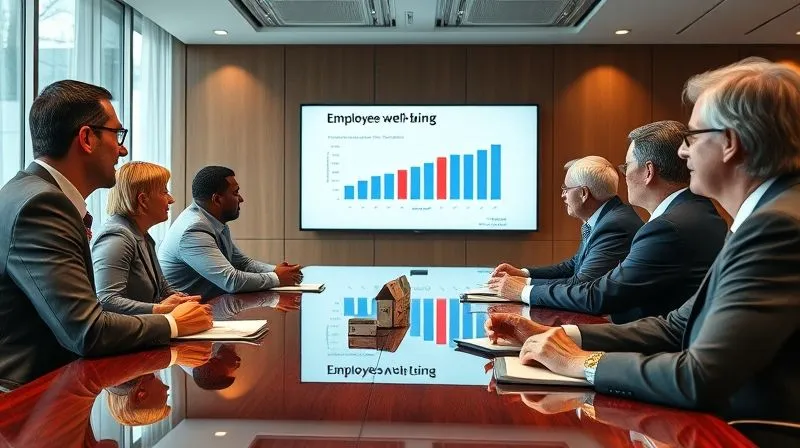
Case Study: Revitalizing Employee Engagement at 'Synergy Solutions'
Synergy Solutions, a mid-sized software development firm with about 300 employees, was experiencing a concerning trend. Their annual engagement survey showed a steady decline in discretionary effort, and exit interviews frequently cited 'burnout' and 'lack of support' as reasons for departure. They were quietly losing their top talent.
Working with Synergy Solutions, we initiated a comprehensive wellness audit. The data revealed that while the company offered competitive salaries, employees felt overwhelmed by project demands, lacked clear boundaries between work and personal life, and perceived mental health support as insufficient. Many were working 10-12 hour days consistently.
Our solution involved a multi-pronged approach:
- Flexible Work Policy: We introduced a hybrid model with core collaboration hours, empowering employees to manage their schedules.
- 'No Meetings' Wednesdays: One day a week was designated meeting-free to allow for deep, uninterrupted work.
- Enhanced Mental Health Resources: Beyond an EAP, we brought in a regular on-site therapist for confidential 1-on-1 sessions and launched a peer support network.
- Leadership Training: Managers received training on empathetic leadership, workload management, and recognizing burnout signs.
Within 18 months, Synergy Solutions saw remarkable improvements. Their employee Net Promoter Score (eNPS) increased by 25 points, voluntary turnover decreased by 15%, and project completion rates actually improved due to increased focus and reduced re-work. The leadership's visible commitment to these changes was pivotal, transforming a quiet quitting culture into one of genuine engagement.
Leveraging Technology and Data for Smarter Wellness
In today's data-rich environment, HR leaders have an unprecedented opportunity to use technology to inform and enhance wellness initiatives. Gone are the days of purely anecdotal evidence; now, we can measure, predict, and personalize wellness support.
From anonymous sentiment analysis tools that gauge team morale to wearable tech that encourages physical activity, technology can be a powerful ally. Mental health apps, personalized coaching platforms, and AI-driven platforms that recommend resources based on individual needs are becoming standard. These tools allow for proactive intervention rather than reactive crisis management.
However, it's crucial to approach technology with an ethical lens. Data privacy and transparency are paramount. Employees must trust that their data is used to support them, not to monitor or judge them. The goal is to empower individuals with insights and resources, not to create a surveillance culture.
| Technology Category | Example Tools | Benefit |
|---|---|---|
| Mental Health & Stress Management | Headspace for Work, Calm Business, Spring Health | Accessible, confidential support; stress reduction; improved focus |
| Physical Wellness & Engagement | Wellable, Virgin Pulse, Fitbit (integrated platforms) | Gamified challenges; personalized activity tracking; health incentives |
| Feedback & Sentiment Analysis | Culture Amp, Glint, Peakon | Real-time insights into employee morale; identify quiet quitting signs; data-driven decision making |
The Power of Psychological Safety and Open Communication
At the heart of any successful wellness strategy lies the bedrock of psychological safety. As I've often emphasized, an employee can have access to all the wellness resources in the world, but if they don't feel safe enough to use them, or to speak up about their struggles, those resources become largely ineffective.
Psychological safety is the belief that one will not be punished or humiliated for speaking up with ideas, questions, concerns, or mistakes. In the context of wellness, it means creating an environment where employees feel comfortable admitting they are struggling with stress, anxiety, or burnout without fear of judgment, career repercussions, or being seen as 'weak'.
Open communication channels, active listening from management, and a genuine commitment to acting on feedback are crucial. Regular one-on-one check-ins, anonymous suggestion boxes, and forums for honest dialogue can help build this trust. It transforms the workplace from a place of performance anxiety to a space of mutual support and understanding.

Measuring Impact: KPIs for a Thriving Workforce
To truly understand the return on investment (ROI) of your wellness initiatives, you must establish clear Key Performance Indicators (KPIs) and consistently track them. This isn't just about justifying budgets; it's about continuous improvement and demonstrating tangible value to both employees and stakeholders.
Some critical KPIs I always recommend tracking include:
- Employee Net Promoter Score (eNPS): A measure of employee loyalty and satisfaction.
- Absenteeism Rates: Track sick days, particularly stress-related or mental health days.
- Turnover Rates: Differentiate between voluntary and involuntary turnover.
- Productivity Metrics: While harder to directly link, look for trends in project completion, quality of work, and innovation.
- Healthcare Claims Data: Analyze trends in mental health-related claims, chronic disease management, etc. (while maintaining employee anonymity).
- Engagement Survey Scores: Pay close attention to questions related to work-life balance, stress levels, and perceived support.
Regularly review these metrics, perhaps quarterly, and present them transparently to leadership. This data-driven approach allows you to refine your strategies, allocate resources effectively, and prove that investing in employee wellness is not just a 'nice-to-have' but a strategic imperative. For more insights on measuring HR impact, consider resources like the Harvard Business Review.

Frequently Asked Questions (FAQ)
Q: How can small businesses implement effective wellness programs with limited budgets? Even with a small budget, focus on cultural shifts. Prioritize psychological safety, flexible work options, and open communication. Leverage free resources like mental health awareness campaigns, peer support networks, and partnerships with local community wellness providers for discounts. Leadership modeling healthy behaviors costs nothing but has immense impact.
Q: Is it possible to reverse quiet quitting once it has started in an organization? Absolutely, but it requires genuine commitment and consistent effort. Start by openly acknowledging the issue (without blame), conduct empathetic listening sessions, and implement immediate, tangible changes based on feedback. Focus on rebuilding trust through transparent communication, fair workload distribution, and visible investment in well-being. It's a marathon, not a sprint, but it is achievable.
Q: How do we get leadership to buy into significant investment in employee wellness? Frame wellness as a strategic business imperative, not a cost center. Present data on the financial costs of quiet quitting, turnover, and burnout (e.g., Gallup statistics). Showcase case studies of companies that have seen significant ROI from wellness investments. Connect wellness directly to productivity, innovation, talent retention, and employer brand reputation. Speak their language of business metrics.
Q: What are the biggest mistakes companies make when implementing wellness programs? The most common mistakes I've observed are: treating wellness as a one-off perk rather than a continuous strategy, failing to involve employees in the program design, not having visible leadership support, neglecting to measure impact, and ignoring the foundational need for psychological safety and work-life balance in favor of superficial initiatives.
Q: How can HR professionals balance employee privacy with collecting data for wellness program effectiveness? This is a critical ethical consideration. Always prioritize anonymity and aggregation of data. Use third-party platforms that guarantee data privacy. Be transparent with employees about what data is collected, why, and how it will be used (only for aggregate insights, never for individual monitoring). Obtain explicit consent where necessary.
Key Takeaways and Final Thoughts
Preventing quiet quitting due to ignored employee wellness isn't a simple fix; it's a strategic journey that requires empathy, commitment, and a holistic approach. It's about recognizing that your employees are your most valuable asset, and their well-being is directly correlated with your organizational success.
- Prioritize Holistic Wellness: Look beyond physical health to mental, emotional, financial, and social well-being.
- Leadership Must Champion It: Wellness starts at the top and must be modeled authentically by leaders.
- Be Data-Driven: Assess needs, set measurable goals, and track KPIs to prove ROI and refine programs.
- Foster Psychological Safety: Create an environment where employees feel safe to be vulnerable and communicate openly.
- It's a Continuous Journey: Wellness is not a destination but an ongoing process of adaptation and improvement.
As an industry specialist, I've seen firsthand that companies who genuinely invest in their employees' well-being don't just survive; they thrive. They build cultures of trust, innovation, and unwavering loyalty. The choice is clear: ignore wellness at your peril, or embrace it as the cornerstone of your future success. Your workforce, and your business, will thank you for it.
Recommended Reading
- The Ultimate Guide: Navigating Cross-Border E-commerce Tax Implications
- Analytics Not Driving Decisions? 7 Fixes for Actionable Insights
- Flexible Remote Hours: 7 Ways to Measure Productivity Effectively
- Unlock the Secret: How to Reduce Help Desk Agent Burnout Rates Permanently
- Mastering the Unknown: 7 Strategies to Shield Projects from Unidentified Risks





Comments
Leave a comment below. Your email will not be published. Required fields marked with *