


What to do when critical software bugs slip past final QA testing?
For over two decades in Project Management, particularly in software development, I've witnessed the heart-stopping moment when a critical software bug, one that should have been caught, instead makes a dramatic entrance into the live production environment. It’s a gut punch, a moment of collective dread that every project manager, QA lead, and development team hopes to avoid, yet often faces.
This isn't just about a minor glitch; we're talking about a critical defect that can halt operations, compromise data, erode user trust, and trigger significant financial losses. The fallout can be immediate and severe, impacting customer satisfaction, damaging brand reputation, and even leading to compliance issues. The pressure to act swiftly and effectively is immense, but panic can often lead to further mistakes.
In this definitive guide, I'll share a structured, battle-tested framework for not only navigating the immediate crisis but also for transforming these painful lessons into a robust strategy for continuous improvement. You'll learn actionable steps for incident response, thorough root cause analysis, and proactive measures to prevent similar escapes, ensuring your team emerges stronger and more resilient.
The Immediate Aftermath: Activating Your Incident Response Protocol
When a critical bug slips into production, the clock starts ticking. Your initial response dictates the severity of the damage and the speed of recovery. This isn't the time for blame, but for coordinated action.
Step 1: Containment and Damage Control
Your absolute first priority is to stop the bleeding. This means minimizing the impact on users and systems.
- Isolate the Problem: Can you temporarily disable the affected feature or module without bringing down the entire system? Sometimes, a surgical strike is better than a full system shutdown.
- Deploy a Hotfix (If Feasible): If a quick, well-tested patch is immediately available, deploy it. Ensure it's rigorously reviewed and tested in a staging environment, even under pressure.
- Initiate a Rollback: If a hotfix isn't viable or carries too much risk, rolling back to a previous stable version might be the safest bet. This often means temporary data loss or inconvenience for users, but it prevents further critical damage.
In my experience, prioritizing user safety and system stability over a quick, untested fix is always the correct decision. A temporary inconvenience is far better than catastrophic failure.
Step 2: Transparent Communication is Key
Silence breeds speculation and erodes trust. You must communicate clearly and promptly, both internally and externally.
- Internal Communication: Alert all relevant teams (development, QA, operations, product, customer support, leadership). Establish a central communication channel (e.g., a dedicated Slack channel or war room) to ensure everyone is on the same page.
- External Communication: Draft clear, concise messages for affected users and stakeholders. Acknowledge the issue, explain what steps you're taking, and provide an estimated time to resolution if possible. Be honest about the impact.

Mobilizing Your Bug Hunt: The Triage and Diagnosis Phase
Once the immediate crisis is contained, it's time to systematically understand the bug and plan its permanent eradication. This requires a dedicated effort and a structured approach to ensure no stone is left unturned.
Forming a Dedicated Bug SWAT Team
This isn't a job for one person. Assemble a small, cross-functional team with the right expertise. Typically, this includes:
- Development Lead: For code analysis and potential fixes.
- QA Lead: To help reproduce the bug and understand test coverage.
- Operations/DevOps Engineer: For infrastructure, logs, and deployment insights.
- Product Owner: To assess business impact and prioritize fixes.
Prioritizing and Reproducing the Bug
Even if the bug is critical, a systematic approach to understanding its nuances is vital.
- Reproduce with Precision: The SWAT team must be able to consistently reproduce the bug in a controlled environment. This is fundamental for diagnosis. Document every step, every input, every environment detail.
- Gather All Data: Collect logs, error messages, user reports, system metrics, and any other relevant data. These are your breadcrumbs leading to the source.
- Triage Severity and Impact: While it's already critical, understanding its precise severity (how bad is it?) and impact (who/what does it affect?) helps in planning the fix and future prevention.
| Metric | Description | Example |
|---|---|---|
| Severity | How bad is the technical impact (e.g., data corruption, system crash)? | High: Data Loss, System Down |
| Impact | How many users or business processes are affected? | High: All Users Affected, Core Business Functionality Down |
| Urgency | How quickly does it need to be fixed? | Immediate: Production Blocked |
| Priority Score | A composite score to rank against other issues. | 1 (Highest Priority) |
Unearthing the Root Cause: Beyond the Surface-Level Fix
Fixing the immediate problem is only half the battle. To truly prevent recurrence, you must understand *why* the bug occurred and *how* it escaped your testing processes. This is where the detective work truly begins, moving beyond symptoms to the underlying systemic issues.
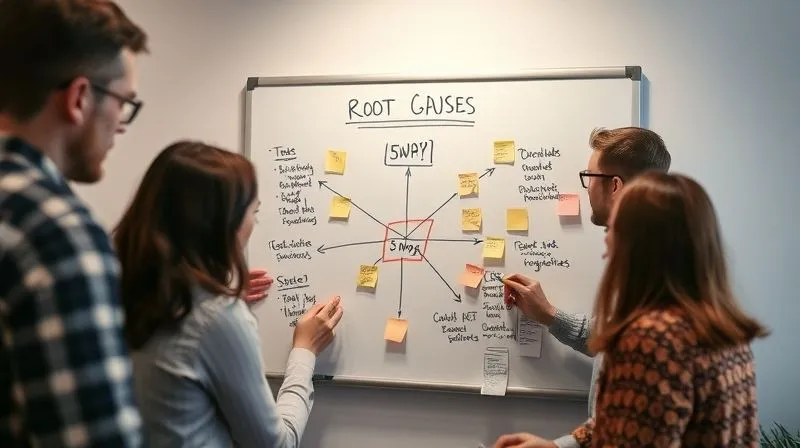
Applying the 5 Whys Method for Deep Analysis
One of the most effective techniques for root cause analysis is the "5 Whys." It's deceptively simple but incredibly powerful. You ask "Why?" five times (or more, until you reach a fundamental cause) to peel back layers of symptoms.
- Example: Critical Bug: User data corrupted during profile update.
- Why? The update process failed to validate input correctly.
- Why? The validation logic was incomplete for edge cases.
- Why? The developer misunderstood the specific requirements for data types.
- Why? The requirements document was ambiguous, and there was no peer review for this specific logic change.
- Why? The team's process lacks mandatory peer review for critical data handling logic, and requirements aren't signed off by QA.
This reveals a process gap, not just a coding error. The ultimate goal is to identify systemic failures, not just individual mistakes.
Leveraging Post-Mortem Analysis and Retrospectives
A post-mortem meeting is crucial. This should be a blameless discussion focused on learning and improvement. Every critical bug escape warrants a thorough post-mortem.
- What Happened: A detailed timeline of the incident.
- Why It Happened: The root causes identified through methods like the 5 Whys.
- What Was the Impact: Quantify the damage (e.g., lost revenue, user churn, engineering hours).
- What Can Be Done to Prevent Recurrence: Concrete action items assigned to individuals with deadlines.
For more insights on conducting effective post-mortems, I highly recommend exploring resources like Google's SRE Postmortem Culture, which emphasizes learning over blame.
Fortifying Your Defenses: Preventing Future Escapes
The best way to handle critical software bugs slipping past final QA testing is to prevent them from ever reaching that stage. This requires a proactive, multi-layered approach to quality assurance that goes beyond traditional end-of-cycle testing.
Strengthening Your QA Strategy: Beyond Basic Testing
Your QA strategy needs to evolve. It's not just about finding bugs; it's about building quality in from the start.
- Shift-Left Testing: Integrate testing earlier in the development lifecycle. This means involving QA in requirements gathering, design reviews, and even unit testing.
- Test Automation: Automate repetitive and critical test cases. This frees up manual testers for more complex exploratory testing.
- Exploratory Testing: Encourage skilled testers to creatively explore the application, looking for unexpected behaviors that automated scripts might miss.
- Performance and Security Testing: These are often overlooked but can lead to critical production issues. Integrate them into your regular cycles.
Enhancing Your CI/CD Pipeline
Your Continuous Integration/Continuous Delivery (CI/CD) pipeline is a critical defense line. Every step should be a quality gate.
- Automated Build & Test Gates: Ensure every code commit triggers automated tests (unit, integration, regression). Builds should fail if tests don't pass.
- Static Code Analysis: Implement tools that automatically scan code for common vulnerabilities, bad practices, and potential bugs before runtime.
- Peer Code Reviews: Mandate thorough code reviews for all changes, especially critical path or complex logic. This is an invaluable human-powered quality gate.
Understanding and implementing robust CI/CD practices is paramount. For further reading, I recommend exploring resources like Atlassian's CI/CD best practices.
The Human Element: Culture, Training, and Collaboration
Technology and processes are only as good as the people who implement them. A strong culture of quality, continuous learning, and seamless collaboration is the bedrock of preventing critical software bugs from slipping past final QA testing.
Fostering a Culture of Quality and Accountability
Quality is everyone's responsibility, not just QA's. This mindset shift is critical.
As a project leader, I've seen that when quality becomes a shared value—from product ideation to deployment—the entire team becomes invested in preventing defects, not just finding them.
- Shared Ownership: Encourage developers to take ownership of the quality of their code, not just its functionality.
- Blameless Post-Mortems: Reinforce that post-mortems are for learning, not for assigning blame. This encourages transparency and honest introspection.
- Celebrate Quality Wins: Acknowledge teams or individuals who proactively identify and resolve potential issues, or who contribute to process improvements that enhance quality.
Continuous Learning and Skill Development
The software landscape evolves rapidly, and so must your team's skills. Invest in ongoing training.
- New Testing Techniques: Train QA teams on emerging testing methodologies (e.g., chaos engineering, AI-powered testing).
- Developer Testing Skills: Equip developers with better unit testing skills and an understanding of test-driven development (TDD).
- Cross-Functional Training: Encourage developers to understand operational concerns and QA to understand development challenges.
Case Study: How Tech Innovators Inc. Transformed Their QA Culture
Tech Innovators Inc., a mid-sized SaaS provider, was plagued by an average of three critical production bugs per quarter. Their QA team was seen as a bottleneck and often blamed. By implementing a company-wide initiative focused on 'Quality Champions'—developers, QA, and operations staff who received advanced training and mentored their peers—they transformed their approach. They introduced mandatory peer code reviews with a quality checklist, integrated security scans earlier, and held monthly 'Quality Guild' meetings. Within 18 months, their critical bug escape rate dropped by 80%, and team morale significantly improved as the 'blame game' dissipated. This resulted in increased product stability and a stronger market reputation.

Tools and Technologies: Your Allies in the Quality Battle
While people and processes are paramount, the right tools can significantly amplify your efforts in detecting and preventing critical software bugs that might otherwise slip past final QA testing. Leveraging modern technology is not just an option; it's a necessity.
Modern Bug Tracking and Project Management Systems
A robust system for tracking defects and managing projects is the backbone of effective quality assurance and incident response.
- Centralized Reporting: Tools like Jira, Azure DevOps, and Asana provide a single source of truth for all defects, their status, and assigned owners.
- Workflow Automation: Automate the routing of bugs to the correct teams, set up notifications for status changes, and integrate with your CI/CD pipeline.
- Reporting and Analytics: Generate insights into defect trends, lead times for fixes, and overall quality metrics.
Automated Testing Frameworks and Monitoring Solutions
Automation is your force multiplier, catching predictable errors quickly and consistently.
- Unit and Integration Testing: Frameworks like JUnit, NUnit, Jest, and Pytest are essential for developers to test individual components and their interactions.
- UI/E2E Testing: Tools like Selenium, Cypress, Playwright, and TestCafe automate user interface interactions to catch visual and functional regressions.
- Performance Monitoring: Solutions such as New Relic, Datadog, and Prometheus provide real-time insights into application performance, allowing you to catch issues before they become critical.
- Security Scanners: SAST (Static Application Security Testing) and DAST (Dynamic Application Security Testing) tools help identify vulnerabilities in your code and running applications.
Choosing the right testing tools can be overwhelming. For a comprehensive overview and comparison, consider consulting expert analyses and reviews like those found on Gartner Peer Insights on Testing Tools.
| Feature | Jira | Azure DevOps | Asana |
|---|---|---|---|
| Integration with CI/CD | Excellent | Excellent | Good (via integrations) |
| Customizable Workflows | High | High | Medium |
| Reporting & Analytics | Strong | Strong | Basic |
| Scalability | Enterprise-ready | Enterprise-ready | Good for mid-size |
From Crisis to Continuous Improvement: The Long Game
Successfully navigating a critical bug incident isn't just about fixing the problem; it's about learning, adapting, and continuously evolving your processes. The goal is to transform a painful experience into a catalyst for ongoing excellence.
Implementing a Feedback Loop for Constant Evolution
A critical bug escape should trigger a systematic review and adjustment of your development and QA processes. This isn't a one-off event but an iterative cycle.
- Process Audits: Regularly review your entire software development lifecycle (SDLC) to identify potential weaknesses or areas where bugs could slip through.
- Action Item Tracking: Ensure that every action item identified in a post-mortem is tracked, assigned, and completed. Follow up on these diligently.
- Regular Retrospectives: Beyond incident-specific post-mortems, hold regular team retrospectives to discuss what went well, what could be improved, and how to implement those improvements.
Measuring Success: Key Metrics for Quality Assurance
You can't improve what you don't measure. Establish key performance indicators (KPIs) to track your progress in quality assurance.
- Defect Escape Rate: The percentage of defects found in production compared to the total number of defects. A lower rate indicates better QA.
- Mean Time To Resolution (MTTR): The average time it takes to resolve a defect once it's identified. Faster MTTR indicates efficient incident response.
- Defect Density: The number of defects per lines of code or per feature. A lower density suggests higher code quality.
- Test Coverage: The percentage of code covered by automated tests. Higher coverage generally correlates with fewer escaped defects.
Frequently Asked Questions (FAQ)
How can we prevent critical bugs from reaching production in the first place? Prevention is multi-faceted: implement rigorous shift-left testing, automate comprehensive test suites, conduct thorough peer code reviews, integrate static code analysis into your CI/CD pipeline, and foster a culture where quality is a shared responsibility across the entire development team. Early detection and proactive measures are far more effective than reactive fixes.
What's the role of automation in catching bugs that manual QA might miss? Automation excels at repetitive, high-volume testing and ensuring consistent coverage across regression suites. It can catch subtle regressions, performance bottlenecks, and security vulnerabilities that manual testers might overlook due to fatigue or time constraints. While it doesn't replace exploratory manual testing, it provides a strong baseline of quality, allowing manual QA to focus on more complex, creative testing scenarios.
How do you handle stakeholder expectations and manage communication during a critical bug incident? Transparency and proactivity are key. Establish a clear communication plan, provide regular updates (even if it's just to say 'we're still working on it'), and set realistic expectations for resolution. Designate a single point of contact for external communications to avoid conflicting messages. Focus on what you are doing to fix the issue and prevent recurrence, rather than dwelling on the problem itself.
Is it better to roll back or hotfix when a critical bug is found post-release? This depends on the nature and complexity of the bug, and your system's architecture. A rollback is often safer if the bug's impact is widespread and immediate, and a quick, low-risk hotfix isn't readily available. Hotfixes are preferable for isolated, well-understood issues that can be patched with minimal risk. Always weigh the risk of a new bug introduced by a hotfix against the risk of continued exposure to the existing critical bug. Speed is important, but stability is paramount.
How can small teams implement robust QA processes without extensive resources? Small teams must prioritize. Focus on core areas: strong unit tests (developer-led), critical path integration tests, and a streamlined CI/CD pipeline. Leverage open-source automation tools. Encourage cross-training so developers also contribute to testing. Implement regular, blameless peer code reviews. Even without a large dedicated QA team, a quality-first mindset and smart process choices can significantly reduce escaped defects.
Key Takeaways and Final Thoughts
Successfully navigating the challenging scenario of critical software bugs slipping past final QA testing is a definitive test of an organization's resilience and commitment to quality. It's a moment that can either spiral into chaos or serve as a powerful catalyst for profound improvement.
- Act Swiftly, Strategically: Prioritize containment and transparent communication.
- Dig Deep for Root Causes: Go beyond the symptom to understand the systemic 'why.'
- Fortify Your Defenses: Strengthen QA, enhance CI/CD, and embrace automation.
- Cultivate a Quality Culture: Empower your team and foster shared accountability.
- Embrace Continuous Improvement: Learn from every incident and evolve your processes.
Remember, no system is entirely foolproof, and bugs are an inevitable part of software development. What truly defines a high-performing team is not the absence of errors, but the robustness of their response and their unwavering dedication to learning and improving. By implementing these strategies, you'll not only survive the next critical bug escape but will transform it into an opportunity to build a more resilient, reliable, and ultimately, more successful product.
Recommended Reading
- 7 Strategies: How to Prevent Endless Virtual Meetings from Wasting Remote Team Time
- Unlock Success: Avoid the Common Pitfalls in New Venture Creation
- 5 Urgent Fixes: Transform Low B2B Social Media Leads to High-Quality SQLs
- Training Not Enough? 7 Core Reasons Service Quality Scores Are Falling
- Sales Team Consistently Missing Targets? 8 Proven Fixes From a Veteran





Comments
Leave a comment below. Your email will not be published. Required fields marked with *