


What to do when operations performance dashboards show red?
For over 15 years in operations management, I've seen companies of all sizes, from agile startups to multinational corporations, grapple with the unsettling sight of a dashboard bathed in red. It’s a moment that can trigger panic, finger-pointing, or even paralysis. But in my experience, it's also a critical juncture—an invaluable signal that, if handled correctly, can lead to profound improvements.
The immediate reaction to a 'red' KPI often ranges from anxiety to a desperate search for quick fixes. This initial panic, while understandable, rarely leads to sustainable solutions. It's a pain point I've helped countless leaders navigate: the pressure to reverse negative trends without truly understanding their genesis.
This article isn't about quick fixes; it's about building resilience. You're about to learn a definitive, 7-step framework that I've refined over years, designed to systematically diagnose, address, and ultimately prevent recurring operational performance issues. We'll move beyond superficial indicators to uncover root causes, implement strategic interventions, and foster a culture of continuous improvement, ensuring your operations not only recover but thrive.
Don't Panic: The First Reaction to a Red Dashboard
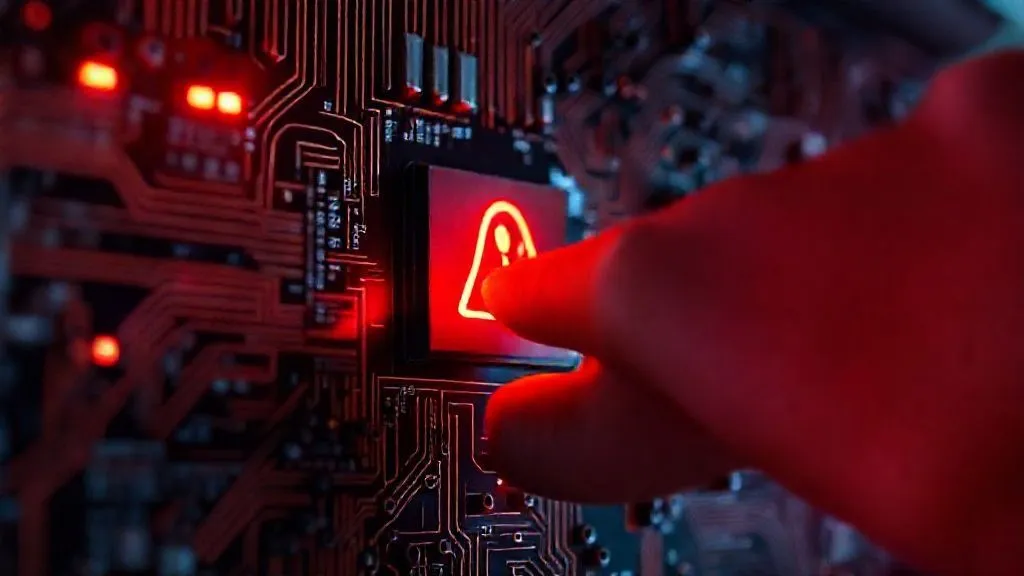
The moment you see those red indicators flashing across your operations performance dashboard, a natural alarm bell rings. This initial jolt is normal, even healthy, as it signals that something requires attention. However, it's crucial to distinguish between healthy alert and unproductive panic. Uncontrolled panic leads to rash decisions, blaming games, and often, misallocation of resources.
I recall a client, a logistics manager, who once saw a sudden drop in on-time delivery rates. His immediate response was to push his drivers harder, increase overtime, and micromanage routes. While his intentions were good, this reactive approach created burnout, increased errors, and didn't address the underlying issue, which turned out to be a miscalibrated GPS system and a sudden surge in traffic congestion due to local roadworks—factors entirely outside the drivers' control. This illustrates a fundamental principle: the red is a symptom, not the disease.
"A red dashboard is not a failure; it's an urgent invitation to investigate, understand, and improve."
Your first, most critical step is to take a deep breath and adopt a structured, analytical mindset. Recognize that the dashboard is a tool, a messenger. It's telling you where to look, not necessarily what to do. Before any action, you need to understand the context and the true nature of the problem. This initial pause allows you to move from reactivity to strategic response.
Step 1: Validate the Data – Is the Red Real?
Before you mobilize your teams or make any significant decisions, the absolute first step is to question the data itself. In my career, I've seen countless instances where a 'red' indicator was a result of a data glitch, an incorrect calculation, or a reporting delay rather than an actual operational decline. It's a common pitfall to assume the data is always flawless.
- Check Data Sources and Integrations: Are all data streams feeding into your dashboard active and correctly configured? A broken API, a disconnected sensor, or a manual entry error can skew results.
- Review Data Refresh Rates: Is the data truly real-time, or is there a latency? A KPI might appear red because the latest positive data hasn't yet been processed.
- Confirm Calculation Logic: Has the formula for the KPI been altered recently? Are all variables being correctly applied? Sometimes, a simple change in a definition can cause a metric to appear out of line.
- Cross-Reference with Other Systems: If your sales conversion rate is down, does your CRM show similar trends? If production output is low, do raw material inventory levels align with that? Always seek corroborating evidence from independent systems.
- Look for Anomalies and Outliers: A single, unusual event (e.g., a massive, cancelled order, a system-wide outage) can temporarily skew averages.
This validation phase is non-negotiable. Acting on faulty data is worse than acting on no data at all, as it misdirects valuable resources and erodes trust. According to a Harvard Business Review article on data-driven decision-making, even the best data requires human judgment and validation to be truly useful.

Step 2: Pinpoint the Specifics – Deconstructing the Red
Once you've confirmed the data's integrity, your next step is to get granular. A dashboard might show 'Overall Customer Satisfaction' in red, but that's too broad. You need to break it down. Think of it like a doctor diagnosing a patient: they don't just say 'you're sick'; they run tests to pinpoint the specific organ or system affected.
Drill Down into Sub-Metrics and Segments
Most sophisticated dashboards allow you to drill down into the components of a composite metric. If 'Overall Efficiency' is red, look at its contributing factors: 'Machine Uptime,' 'Labor Utilization,' 'Waste Rate,' 'Throughput per Hour.' Which of these are specifically declining?
- Geographic Segments: Is the issue localized to a particular region or branch?
- Product Lines: Is one product experiencing issues, or is it across the board?
- Customer Segments: Are only new customers dissatisfied, or long-term ones too?
- Time Periods: Did the dip start suddenly yesterday, or has it been a gradual decline over weeks? Identifying the exact start time can be crucial.
- Process Steps: For a process-oriented KPI, which specific step in the workflow is underperforming?
This systematic deconstruction helps you differentiate between a systemic problem and an isolated incident. For example, if 'Customer Service Response Time' is red, drilling down might reveal it's only red for email support, not phone support, and only during evening shifts. This immediately narrows your focus.
Step 3: Dive Deeper – Root Cause Analysis (RCA)
Now that you've validated the data and pinpointed the specific area of concern, it’s time to ask the most important question: Why? This is where Root Cause Analysis (RCA) comes in. RCA is not about assigning blame; it's about uncovering the fundamental reasons behind the performance dip. I've found that without a robust RCA, you're merely treating symptoms, leading to recurring problems.
Common RCA Techniques:
- The 5 Whys: A simple yet powerful technique. Start with the problem and keep asking 'Why?' five times (or more) until you get to the core issue.
- Fishbone Diagram (Ishikawa Diagram): Categorizes potential causes into categories like People, Process, Equipment, Materials, Environment, Management. This helps visualize all possible contributing factors.
- Process Mapping: Visually mapping out the entire process related to the red KPI can reveal bottlenecks, inefficiencies, or broken steps that are causing the problem.
- Pareto Analysis (80/20 Rule): Identify the 20% of causes that are leading to 80% of the problems. Focus your efforts on these high-impact causes.
Example: Applying the 5 Whys to a 'Low Production Output' KPI
- Problem: Production output is consistently 20% below target.
- Why? (1) Machine X frequently breaks down.
- Why? (2) It's an old machine and parts are hard to find, leading to long repair times.
- Why? (3) Maintenance staff lack training on older models and don't have a preventative maintenance schedule for it.
- Why? (4) Budget cuts last year eliminated specialized training, and the maintenance schedule was never updated after a team restructuring.
- Why? (5) Management prioritized short-term cost savings over long-term asset health and employee development.
The root cause isn't the machine breaking down; it's a systemic issue of budget allocation, training, and maintenance strategy. Addressing only the machine breakdown would be a temporary fix.

Case Study: How ConnectTech Solved Customer Churn
ConnectTech, a mid-sized SaaS company, saw its 'Monthly Active Users' (MAU) KPI dip into the red, indicating increasing customer churn. Initial reactions pointed to product features, but a thorough RCA revealed a different story. Using process mapping for their customer onboarding journey and conducting targeted interviews with churned customers, they discovered a significant drop-off point: users were not successfully integrating the software with their existing CRM due to complex documentation and a lack of personalized support during the critical first week.
The root cause wasn't the product itself, but the onboarding *process* and a gap in early-stage customer support. By implementing a dedicated 'Onboarding Success Specialist' role and revamping their initial documentation with interactive guides, ConnectTech saw MAU recover within three months and reduced churn by 15% year-over-year. This resulted in a 10% increase in customer lifetime value within the next fiscal year.
Step 4: Formulate a Strategic Response – Crafting Your Action Plan
With the root causes identified, the next step is to develop a clear, actionable plan. This isn't just about 'doing something'; it's about doing the *right* something, strategically. Your action plan must be specific, measurable, achievable, relevant, and time-bound (SMART).
- Prioritize Interventions: Not all root causes are equal. Use a matrix (e.g., impact vs. effort) to prioritize actions that will yield the greatest positive impact with feasible effort.
- Define SMART Goals for Each Action: Instead of 'Improve customer satisfaction,' make it 'Increase customer satisfaction score by 10% for new users within 90 days by implementing personalized onboarding calls.'
- Assign Ownership and Resources: Every action item needs a clear owner responsible for its execution. Ensure they have the necessary resources (budget, team members, tools, training).
- Set Clear Timelines: Establish realistic start and end dates for each action. Break larger tasks into smaller milestones.
- Identify Key Performance Indicators (KPIs) for the Intervention: How will you measure the success of your fix? This might involve new, temporary KPIs or a closer watch on existing ones.
This phase often involves cross-functional collaboration. For instance, if the root cause of a production delay is a supply chain issue, your operations team needs to work closely with procurement and logistics to find alternative suppliers or optimize existing contracts. As Forbes highlights, cross-functional teams are crucial for complex problem-solving.
Step 5: Execute and Monitor – The Implementation Phase
A well-crafted plan is only as good as its execution. This phase is about putting your strategy into motion and diligently tracking its progress. This is where many companies falter, either due to a lack of sustained effort or insufficient monitoring.
Key Aspects of Effective Execution:
- Communicate the Plan Widely: Ensure everyone involved understands their role, the objectives, and the expected outcomes. Transparency fosters buy-in and accountability.
- Regular Check-ins and Progress Updates: Establish a cadence for reviewing progress. Daily stand-ups, weekly meetings, or bi-weekly reviews can keep momentum.
- Dedicated Monitoring Dashboards: Create a temporary 'recovery dashboard' or dedicated section within your main dashboard to specifically track the KPIs related to your intervention. This allows for focused attention.
- Be Prepared to Adjust: Rarely does a plan unfold exactly as envisioned. Be agile. If an intervention isn't producing the desired results, don't hesitate to re-evaluate and pivot. This might mean revisiting your RCA or adjusting your action plan.
I always advise my clients to view this as an experiment. You've formed a hypothesis (the action plan will fix the red KPI), now you're running the experiment and collecting data. If the data shows it's not working, you learn from it and adjust.
| Intervention | Target KPI Impact | Owner | Start Date | End Date | Status | Current Impact |
|---|---|---|---|---|---|---|
| Implement new CRM training for sales team | Increase lead conversion by 5% | Sarah Chen (Sales Enablement) | 2023-10-01 | 2023-11-15 | In Progress | +2% |
| Optimize server infrastructure for peak hours | Reduce website load time by 1.5s | Mark Johnson (IT Operations) | 2023-09-20 | 2023-10-30 | Completed | -1.8s |
| Revise supplier contract for Component A | Reduce raw material delay by 2 days | David Lee (Procurement) | 2023-10-05 | 2023-12-01 | In Progress | No Change Yet |
Step 6: Communicate and Collaborate – Transparency is Key
When operations performance dashboards show red, it's not a secret to be kept. Effective communication is paramount, both internally and, where appropriate, externally. A lack of transparency can breed fear, rumors, and distrust, undermining any recovery efforts.
Who to Communicate With and How:
- Your Team: Be honest about the situation, explain the root causes you've identified, and clearly articulate the action plan. Involve them in the solution. They are often closest to the problem and have invaluable insights.
- Leadership/Stakeholders: Provide regular, concise updates. Focus on what was found, what's being done, and the expected timeline for recovery. Manage expectations realistically.
- Customers (if affected): If the red KPI directly impacts customer experience (e.g., service delays, product quality issues), proactive communication, apology, and clear steps for resolution can mitigate damage and preserve loyalty.
"Open communication during a crisis builds trust; silence breeds suspicion and undermines morale."
I've seen situations where leaders tried to 'hide' a red dashboard, only for the problems to fester and become far worse. Conversely, I've witnessed teams rally with incredible resolve when their leaders were transparent, empathetic, and collaborative. Transparency, as emphasized by McKinsey & Company in their work on operations analytics, is a cornerstone of effective operational leadership.
Step 7: Learn and Adapt – Preventing Future Reds
The final, and perhaps most crucial, step is to institutionalize the learnings from this experience. Successfully turning a red dashboard green is a victory, but a temporary one if you don't implement measures to prevent recurrence. This is about establishing a culture of continuous improvement.
- Conduct a Post-Mortem (Lessons Learned): Once the KPI is back in the green, gather the team. What went well? What could have been done better? Were there any unforeseen challenges? Document these insights.
- Update Processes and Documentation: Based on your learnings, revise standard operating procedures (SOPs), training materials, and internal guides. Ensure the new, improved way of working is formally captured.
- Enhance Monitoring and Alert Systems: Were there early warning signs you missed? Can your dashboard be improved to detect potential issues sooner? Consider adding new metrics or adjusting alert thresholds.
- Implement Preventative Measures: If budget cuts led to maintenance issues, advocate for a revised budget. If lack of training was a factor, integrate it into onboarding or ongoing development.
- Regular Review and Audit: Schedule periodic reviews of your operational processes and KPI performance, even when things are going well. Proactive auditing can catch small deviations before they become major problems.
This continuous feedback loop is what differentiates truly resilient operations from those perpetually firefighting. It transforms a crisis into an opportunity for systemic improvement. As Peter Drucker famously said, "What gets measured gets managed." But what gets learned and applied, truly transforms. This iterative approach is fundamental to operational excellence, as often discussed by thought leaders in the field of quality management and continuous improvement.

Frequently Asked Questions (FAQ)
What if my dashboard shows red, but I don't have the resources for a full RCA? Even with limited resources, you can still perform a scaled-down RCA. Start with the '5 Whys' technique, which requires no special tools, just critical thinking. Prioritize the most impactful red KPIs and focus your efforts there. Engage your front-line team; they often have immediate insights into problems and potential solutions. The key is structured investigation, not necessarily vast resources.
How do I prevent 'dashboard fatigue' when constantly monitoring KPIs? Dashboard fatigue is real. To combat it, ensure your dashboards are designed for clarity and actionability. Limit the number of primary KPIs to only the most critical ones. Use conditional formatting effectively to highlight only what needs attention. Rotate focus areas periodically, and ensure that every 'red' leads to a clear action plan, demonstrating that monitoring isn't just for observation, but for improvement. Automate alerts for critical thresholds so teams aren't constantly staring at screens.
Should I involve external consultants when my operations dashboard shows red? It depends on the complexity and severity of the issue, as well as your internal expertise. For deeply entrenched, systemic problems, or when internal teams lack specific analytical skills (e.g., advanced data science, specific process engineering), external consultants can provide fresh perspectives, specialized tools, and accelerate the RCA process. However, for most day-to-day fluctuations, building internal capability to address these issues is more sustainable.
What's the difference between a leading and lagging indicator, and why does it matter when my dashboard is red? Lagging indicators (e.g., monthly sales, customer churn) tell you what has already happened. Leading indicators (e.g., number of sales calls, website traffic, onboarding completion rate) predict future performance. When your dashboard is red on a lagging indicator, you need to look at relevant leading indicators to understand what's causing it and what actions you can take now to influence future lagging results. Focusing solely on lagging indicators is like driving by looking only in the rearview mirror.
How do I ensure my team doesn't fear 'red' indicators, but sees them as opportunities? Foster a culture of psychological safety. Emphasize that 'red' is a signal for improvement, not an accusation of failure. Reward problem-solving and proactive investigation, not just hitting targets. Frame discussions around 'what can we learn?' and 'how can we improve?' rather than 'who is to blame?' Leaders must model this behavior, showing curiosity and support rather than punitive reactions.
Key Takeaways and Final Thoughts
- Don't Panic, Validate: Your first reaction to a red dashboard should be calm validation of the data's accuracy.
- Drill Down & Diagnose: Go beyond surface-level metrics to pinpoint specific problem areas using Root Cause Analysis.
- Act Strategically: Develop a SMART action plan, assign ownership, and allocate resources effectively.
- Execute & Monitor Diligently: Implement your plan with regular check-ins and be prepared to adapt.
- Communicate Transparently: Keep all stakeholders informed to build trust and foster collaboration.
- Learn & Prevent: Institutionalize learnings through process updates and continuous improvement cycles to prevent future recurrences.
Seeing your operations performance dashboards show red can be a daunting experience, but it doesn't have to be a disaster. With a structured approach, a commitment to data integrity, and a culture of continuous learning, you can transform these challenging moments into powerful opportunities for growth and resilience. Embrace the red as a signal, not a judgment, and empower your teams to turn those critical insights into lasting operational excellence. The path from red to green is a journey of strategic action and informed adaptation, and it's one you're now equipped to navigate successfully.
Recommended Reading
- How to Pinpoint Sales Process Bottlenecks in 7 Steps Using Analytics
- Unlock E-commerce Loyalty: The Ultimate Guide to Optimizing Post-Purchase CX
- 7 Strategies: How to Prevent Costly Cross-Cultural Miscommunications in Global Teams?
- 7 Proven Strategies: Overcome Upsell Resistance & Boost Sales Now
- Global Rivals Stealing Share? 7 Urgent Steps to Reclaim Your Market




Comments
Leave a comment below. Your email will not be published. Required fields marked with *