


Why do our innovation foresight insights fail to become actionable?
For over two decades navigating the complex currents of business innovation, I've observed a recurring, almost tragic flaw: brilliant foresight insights, meticulously researched and expertly presented, often gather dust in strategic archives. I've personally guided countless organizations through the exhilarating journey of future-gazing, only to witness the crushing disappointment when those profound revelations fail to translate into tangible, impactful action.
The irony is stark: organizations invest heavily in foresight planning, seeking to anticipate shifts, identify emerging opportunities, and mitigate future risks. Yet, time and again, these valuable insights remain inert, disconnected from the operational realities and strategic decision-making processes that truly drive innovation. This isn't just a missed opportunity; it's a significant drain on resources and a threat to long-term competitiveness.
This post isn't just about identifying the cracks; it’s about laying down the cement. I will share my hard-won expertise, reveal the seven critical reasons why your innovation foresight insights fail to become actionable, and provide you with proven frameworks, actionable steps, and real-world strategies to bridge the chasm between future vision and present-day impact. Prepare to transform your foresight function from a fascinating exercise into a powerful engine of innovation.
The Disconnect: Why Great Insights Get Stuck
One of the most common reasons I've seen innovation foresight insights fail to become actionable is a fundamental disconnect between the foresight function and the core strategic planning and execution teams. Foresight often operates in a silo, generating 'future reports' that are admired but not integrated.
Lack of Strategic Alignment
Many foresight initiatives are launched without a clear, explicitly defined link to the organization's overarching strategic objectives. If the foresight team isn't asking the questions that keep the CEO awake at night, their answers, no matter how brilliant, will feel irrelevant. The insights must directly inform and challenge existing strategic assumptions, not just exist parallel to them.
Insufficient Communication & Storytelling
Raw data, complex models, and academic language are the bane of actionability. Foresight professionals often excel at analysis but falter in translation. They present a deluge of information rather than a compelling narrative that resonates with decision-makers and inspires action.
"Foresight isn't just about seeing the future; it's about telling a story about the future that compels people to act in the present." - My personal mantra.
Without a powerful story, insights remain abstract. Decision-makers need to understand not just what *might* happen, but what it means for *them* and *their business*, and what immediate steps they can take.
Bridging the Gap: From Insight to Integrated Strategy
To ensure your innovation foresight insights don't just sit on a shelf, they must be woven into the very fabric of your strategic planning. This requires intentional design and consistent effort to move beyond mere information sharing to true strategic integration.
Cultivating a Culture of Action
Actionability begins with culture. Does your organization genuinely value proactive thinking and embrace uncertainty, or does it default to reactive problem-solving? Leadership buy-in isn't enough; they must actively champion the integration of foresight into every strategic discussion and decision point.
Building this culture means creating safe spaces for exploring radical ideas and challenging the status quo. It means empowering teams to experiment with future scenarios, even if they seem distant or unlikely today. This psychological safety is crucial for translating abstract insights into concrete innovation pathways.

Actionable Steps for Integration:
- Define Clear Foresight Objectives: Before starting any foresight project, explicitly link it to a strategic challenge or opportunity. Ask: "What specific decisions will this insight inform?"
- Establish Cross-Functional Foresight Teams: Break down silos by involving representatives from R&D, marketing, sales, operations, and leadership in the foresight process from day one. This builds ownership and diverse perspectives.
- Integrate Foresight into Existing Planning Cycles: Don't create a separate 'foresight review.' Instead, embed foresight discussions into quarterly business reviews, annual strategic planning sessions, and product roadmap development meetings.
- Develop 'Future-Proofing' Metrics: Move beyond traditional KPIs to include metrics that track the organization's preparedness for emerging trends or the speed of adaptation to new market conditions.
The Pitfalls of Poor Data Translation
Even with good alignment, the way insights are packaged and presented can make or break their actionability. It’s not enough to have the data; you must make it digestible and compelling for diverse audiences.
Over-reliance on Raw Data, Under-reliance on Narrative
I've seen countless brilliant analyses fail because they were presented as a data dump. Executives don't have time to wade through hundreds of pages of raw data, statistical models, and abstract theories. They need the 'so what' – the critical implications, the strategic choices, and the recommended actions.
This requires foresight practitioners to hone their communication skills, moving beyond simply reporting findings to crafting persuasive arguments. It's about translating complex patterns into simple, memorable stories that highlight potential futures and present clear paths forward.
Case Study: How InnovateCo Transformed Insights into Market Leadership
InnovateCo, a mid-sized consumer electronics firm, faced a common dilemma: their quarterly foresight reports were rich with insights on emerging tech and shifting consumer behaviors, but product development cycles remained slow and reactive. Their innovation foresight insights fail to become actionable because the reports were too academic, lacking clear connections to product roadmaps.
By implementing a new 'Insight-to-Action Storyboard' process, InnovateCo transformed its approach. Instead of just data, foresight teams now developed short, compelling narratives for each key insight, outlining a potential future scenario, its impact on InnovateCo, and 2-3 concrete strategic options with estimated ROI. These storyboards were presented in 15-minute 'Future Sprint' meetings with product managers and R&D leads.
This shift resulted in a 35% faster integration of foresight insights into new product concepts and a 20% increase in successful product launches within 18 months. Their insights became actionable because they were contextualized, simplified, and directly tied to strategic choices.
"Clarity is the ultimate competitive advantage. If your insights aren't clear, they're not useful." - My observation from years of consulting.
Overcoming Organizational Inertia and Resistance
Even the most perfectly aligned and brilliantly communicated insights can be derailed by organizational inertia or active resistance to change. Humans are creatures of habit, and organizations are no different.
Empowering Champions and Cross-Functional Teams
Change doesn't happen in a vacuum. You need internal champions – influential leaders and respected team members who believe in the foresight insights and are willing to advocate for their implementation. These champions act as bridges, translating the foresight vision into the language and priorities of their respective departments.
Furthermore, establishing dedicated cross-functional 'action teams' for specific foresight-driven initiatives can significantly boost success. These teams, empowered with resources and clear mandates, are tasked with taking an insight and developing a concrete pilot project or strategic response.
According to a study published in the Harvard Business Review, successful change initiatives nearly always involve strong, visible sponsorship from senior leadership and broad employee engagement. Without this human element, even the most profound insights will struggle to gain traction.
| Barrier to Action | Solution Strategy | Expected Outcome |
|---|---|---|
| Lack of Ownership | Appoint cross-functional champions with clear KPIs. | Increased accountability and faster project initiation. |
| Resistance to Change | Pilot small-scale initiatives; demonstrate early wins. | Reduced skepticism and increased buy-in. |
| Resource Constraints | Prioritize insights based on strategic impact and feasibility. | Optimized resource allocation and focused efforts. |
| Communication Gaps | Implement regular, multi-channel communication of insights and progress. | Enhanced understanding and organizational alignment. |
Measuring Impact: Proving the Value of Foresight
If you can't measure it, you can't manage it. A critical reason innovation foresight insights fail to become actionable is the absence of clear metrics to track their impact. Without demonstrable value, foresight remains a 'nice-to-have' rather than a 'must-have'.
Defining Metrics for Actionability
Move beyond simply tracking the number of reports generated or insights identified. Instead, focus on metrics that demonstrate the direct impact of foresight on strategic decisions and innovation outcomes. This might include:
- Number of foresight-informed projects initiated: How many new initiatives or product developments directly stem from foresight insights?
- Reduction in 'surprise' events: How effectively did foresight help the organization anticipate and prepare for disruptive changes?
- Speed of strategic adaptation: How quickly did the organization pivot or adjust strategy based on foresight warnings or opportunities?
- ROI of foresight-driven innovations: What is the financial return on investments made based on foresight insights?
- Stakeholder engagement scores: How highly do decision-makers rate the relevance and usefulness of foresight insights in their work?
By quantifying the value, you build a compelling business case for foresight, ensuring its continued investment and influence. This makes the insights not just actionable but undeniably valuable.

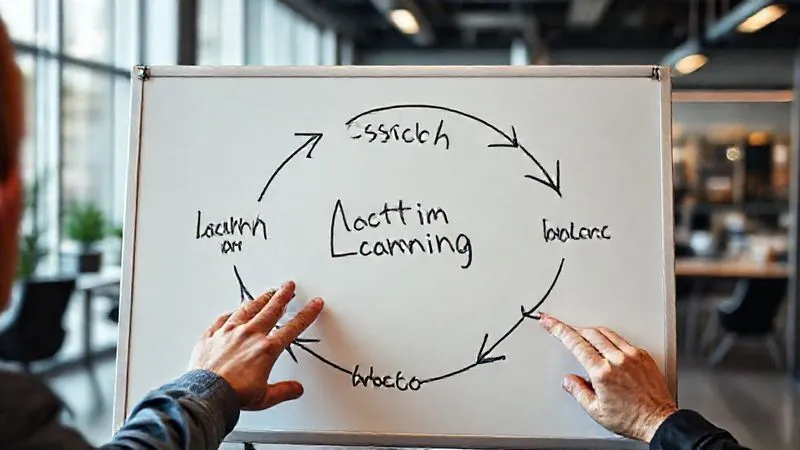
The Continuous Loop: Iterate, Learn, Adapt
Foresight is not a one-off project; it’s an continuous process. Many organizations treat foresight as a periodic exercise, generating a report and then moving on. This 'project' mindset is a significant barrier to actionability.
Building a Feedback Mechanism
To truly embed foresight, you need a continuous feedback loop. This means regularly revisiting past insights, assessing their accuracy, and understanding why some became actionable while others didn't. This learning process is vital for refining your foresight methodology and improving its impact.
Establish channels for feedback from decision-makers and implementation teams. What was useful? What was missing? What could be improved in the presentation or timing of insights? This iterative approach ensures that foresight evolves with the organization's needs and context.
As renowned marketing guru Seth Godin often says, "The only way to fail is to not learn." This sentiment applies perfectly to foresight. Continuous learning and adaptation are key to making your foresight efforts consistently actionable. For more on building adaptive organizations, I recommend exploring resources from leading consultancies like McKinsey & Company, which frequently publish on organizational agility.
Key Frameworks for Actionable Foresight
While the 'why' is crucial, the 'how' often comes down to employing the right tools and frameworks. Here are some proven methodologies that, when applied correctly, significantly enhance the actionability of your foresight insights:
- Horizon Scanning: Systematically monitoring external environments for emerging trends, weak signals, and potential disruptions. The key is not just to identify signals but to assess their potential impact and relevance to your strategic objectives.
- Scenario Planning: Developing plausible alternative futures to understand potential challenges and opportunities. This moves beyond single-point predictions to help organizations build robust strategies that work across a range of possible futures. The output should be 'no-regret' moves or 'robust' strategies.
- Backcasting: Instead of forecasting from the present to the future, backcasting starts with a desired future state and works backward to identify the steps and innovations required to achieve it. This is particularly powerful for vision-driven innovation.
- War Gaming & Simulations: Stress-testing strategies against potential future scenarios or competitor actions. This brings insights to life by creating an experiential understanding of future challenges and helps identify critical vulnerabilities and opportunities.
- Strategic Foresight Workshops: Facilitated sessions designed to bring diverse stakeholders together to co-create future narratives and identify actionable strategic responses. This builds collective ownership and understanding.
These frameworks aren't just academic exercises; they are practical tools designed to translate abstract future possibilities into concrete strategic implications and innovation roadmaps. Integrating them into your operational rhythm is paramount.
| Framework | Primary Goal | Actionability Driver |
|---|---|---|
| Horizon Scanning | Identify weak signals & emerging trends. | Early warning system for strategic pivots. |
| Scenario Planning | Explore multiple plausible futures. | Develop robust strategies for uncertainty. |
| Backcasting | Define steps from desired future to present. | Guides vision-driven innovation & roadmap. |
| War Gaming | Stress-test strategies & anticipate competitor moves. | Reveals vulnerabilities & strategic options. |
| Strategic Foresight Workshops | Co-create future narratives & responses. | Builds collective ownership & consensus. |
Frequently Asked Questions (FAQ)
How do I get leadership buy-in for foresight initiatives? Focus on demonstrating tangible value by linking foresight directly to strategic objectives and potential ROI. Start with a pilot project that addresses a pressing strategic challenge, and showcase early wins. Frame foresight as risk mitigation and opportunity capture, using language that resonates with executive priorities.
What's the difference between foresight and trend analysis? Trend analysis identifies existing patterns and extrapolates them into the near future. Foresight goes deeper, exploring potential discontinuities, weak signals, and alternative futures that might not be evident in current trends. It's about anticipating paradigm shifts, not just extending current trajectories. While trend analysis informs foresight, foresight provides a more holistic and strategic view of potential futures.
How often should we update our foresight insights? Foresight is a continuous process, not a static report. While comprehensive scenario updates might occur annually or bi-annually, horizon scanning should be ongoing. 'Weak signals' and emerging issues should be reviewed and discussed monthly or quarterly. The key is to maintain agility and responsiveness to a constantly evolving external environment.
Can small businesses effectively implement foresight planning? Absolutely. While resource-constrained, small businesses can leverage lean foresight methodologies. Focus on specific, high-impact areas relevant to their niche, utilize open-source tools for scanning, and engage key stakeholders regularly. The principles of strategic alignment, clear communication, and continuous learning are universal, regardless of company size.
What tools are best for foresight collaboration? A blend of tools works best. For horizon scanning, RSS feeds, specialized news aggregators (e.g., Feedly, Inoreader), and AI-driven trend platforms are useful. For collaboration and scenario development, tools like Miro, Mural, or even shared documents (Google Docs, Office 365) can facilitate brainstorming and synthesis. The most important 'tool,' however, remains skilled facilitation and an open mindset.
Key Takeaways and Final Thoughts
The journey from insightful foresight to impactful action is challenging but entirely achievable. It demands more than just brilliant analysis; it requires strategic alignment, compelling communication, cultural shifts, and a commitment to continuous learning.
- Prioritize Strategic Alignment: Ensure foresight addresses core business challenges.
- Master the Art of Storytelling: Translate data into compelling narratives.
- Cultivate a Culture of Action: Foster psychological safety and empower champions.
- Measure What Matters: Track the impact of foresight on strategic decisions and innovation.
- Embrace Continuous Learning: Iterate and adapt your foresight process based on feedback.
Don't let your valuable innovation foresight insights fail to become actionable any longer. By consciously addressing these critical gaps and adopting a proactive, integrated approach, you can transform your organization's future vision into a powerful catalyst for sustained innovation and market leadership. The future isn't just something to predict; it's something to shape, and your foresight insights are the blueprint. Now, go build!
Recommended Reading
- 7 Reasons Why Your Qualified Small Business Sales Leads Aren't Converting
- Blocked by Legacy? 7 Steps to Integrate New Tech & Drive Growth
- Mastering Data Storytelling: 7 Steps to Engage Non-Technical Executives
- 8 Proven Ways to Boost Sagging Revenue When Your Sales Pipeline is Dry
- 5 Steps: Implement Strategic Thinking Despite Daily Overwhelm?





Comments
Leave a comment below. Your email will not be published. Required fields marked with *