


How to Boost Mobile Ad Conversion Rates Without Increasing Budget?
For over 15 years in the dynamic world of digital marketing, I've witnessed countless businesses pour significant capital into mobile advertising, only to be met with underwhelming conversion rates. It's a frustrating cycle: you invest more, hoping for better results, but often, the leak in your funnel just gets bigger, not smaller. The temptation to simply increase your budget is always there, a seemingly quick fix, but it's rarely the sustainable path to profitability.
The core problem isn't usually a lack of spending, but a lack of strategic optimization. Many brands treat mobile ads as a scaled-down version of desktop campaigns, overlooking the unique user behavior, technical constraints, and opportunities inherent to the mobile experience. This oversight leads to wasted ad spend, low engagement, and ultimately, missed revenue potential.
But what if I told you that significant improvements in your mobile ad conversion rates don't require a larger budget? In this definitive guide, I'll share battle-tested frameworks, expert insights, and actionable strategies that my clients and I have successfully deployed to amplify performance without touching the ad spend dial. We'll delve into everything from creative optimization to advanced analytics, providing you with the blueprint to transform your mobile advertising into a lean, conversion-generating machine.
Mastering Mobile Ad Creative: The First Impression That Counts
In the blink-and-you'll-miss-it world of mobile browsing, your ad creative is your first, and often only, chance to capture attention. I've seen campaigns with perfect targeting fail miserably because the creative was generic or poorly adapted for mobile. It's not just about aesthetics; it's about immediate relevance and clear value proposition.
The Power of Visuals: Beyond Just Pretty Pictures
Mobile screens are small, and attention spans are shorter. High-quality, relevant visuals are non-negotiable. Think about what truly stands out in a crowded feed. It’s often bold, clear imagery or short, engaging video that tells a story instantly.
According to a study by Facebook, mobile video ads consistently outperform static images in terms of engagement and conversion metrics. This isn't just about motion; it's about conveying more information in less time, tapping into emotional responses, and demonstrating product benefits dynamically. Consider using dynamic product ads that showcase products the user has previously viewed or similar items, making the visual highly personalized.

Crafting Compelling Copy: Less is More on Mobile
Mobile users are scanning, not reading long paragraphs. Your ad copy must be concise, punchy, and immediately convey value. Focus on benefits, not just features. Use strong verbs and a clear call-to-action (CTA) that leaves no room for ambiguity.
I always advise my clients to front-load their most important message. What’s the single most compelling reason for someone to click? Put that in the first few words. Experiment with different lengths and value propositions in your headlines and primary text to see what resonates most with your audience. Remember, every character counts on mobile.
Actionable Steps: Optimizing Your Creative Assets
- A/B Test Visuals Rigorously: Experiment with different image types (product shots, lifestyle, user-generated content), video formats (short-form, animations, testimonials), and aspect ratios.
- Refine Ad Copy for Brevity: Condense your message. Use bullet points or emojis if appropriate for your brand. Focus on a single, clear benefit.
- Utilize Dynamic Creative Optimization (DCO): Leverage platforms that automatically combine different creative elements (images, headlines, descriptions) to create personalized ads for individual users, maximizing relevance without manual effort.
- Optimize for Speed: Ensure all ad creatives load quickly. Slow-loading ads are instant conversion killers on mobile, where users expect instant gratification.
Strategic Targeting & Audience Segmentation: Finding Your True Customers
It's not enough to have a great ad; it needs to be seen by the right people. One of the most common budget drains I've observed is broad, untargeted advertising. You might reach a lot of eyeballs, but if those eyeballs belong to people who aren't interested in your offering, you're essentially throwing money away. Precision targeting is your secret weapon to boost mobile ad conversion rates without increasing budget.
Leveraging First-Party Data for Precision
Your existing customer data is a goldmine. Use it. Upload your customer lists to ad platforms to create highly specific custom audiences. This allows you to target people who have already interacted with your brand, made a purchase, or visited specific pages on your website. These audiences typically have much higher conversion rates because they already know you.
Furthermore, create lookalike audiences based on your best customers. This allows ad platforms to find new users who share similar characteristics to your most valuable existing customers, expanding your reach with a high degree of relevance. This strategy consistently delivers a better ROI than cold outreach.
Micro-Segmentation: The Key to Relevance
Don't just segment by demographics. Go deeper. Consider psychographics, behavioral data, purchase history, and even device usage patterns. Are your ideal customers more likely to convert on iOS or Android? Do they respond better to ads shown during specific times of day? These granular insights allow you to tailor your message and delivery precisely.
"In marketing, relevance is not just about showing up; it's about showing up with the right message, at the right time, to the right person. On mobile, this becomes exponentially critical." - Industry Specialist Perspective
Actionable Steps: Refining Your Audience
- Analyze Existing Customer Data: Use CRM data, website analytics, and past purchase history to identify common traits and behaviors of your highest-value customers.
- Build Custom Audiences: Upload email lists, phone numbers, or website visitor data to ad platforms to create highly targeted segments.
- Create Lookalike Audiences: Generate lookalike audiences from your best-performing custom audiences to find new, similar prospects.
- Implement Behavioral Targeting: Target users based on their online actions, such as visiting specific product pages, abandoning carts, or engaging with competitor content.
- Geographic and Time-Based Targeting: Refine your reach to specific locations or times when your audience is most active and receptive to your ads.
Landing Page Optimization (LPO): The Conversion Battlefield
Even the most perfectly targeted and creative mobile ad will fail if it leads to a poor landing page. The landing page is where the actual conversion happens, and any friction here will sabotage all your previous efforts. Optimizing your mobile landing pages is one of the most impactful ways to boost mobile ad conversion rates without increasing budget.
Mobile-First Design: Speed and Simplicity are Paramount
A mobile landing page must be designed with the mobile user in mind, not merely be a responsive version of a desktop page. This means prioritizing speed, clear navigation, thumb-friendly elements, and minimal clutter. Mobile users are often on the go, seeking quick information or a fast transaction.
Page load speed is a critical factor. According to Google, 53% of mobile site visitors leave a page that takes longer than three seconds to load. Tools like Google PageSpeed Insights can help you identify and fix performance bottlenecks. Simplify forms, reduce the number of steps to conversion, and ensure all interactive elements are easily tappable.

Clear Calls-to-Action (CTAs): Guiding the User
Your CTA on a mobile landing page needs to be immediately obvious and compelling. Use action-oriented language, contrasting colors, and ensure it's positioned above the fold whenever possible. Test different CTA texts and button designs to see what drives the most clicks and conversions. Ambiguity is the enemy of conversion.
Case Study: Eco-Grow's Landing Page Turnaround
Eco-Grow, an organic gardening supplies e-commerce store, faced a challenge. Their mobile ads had decent click-through rates, but their conversion rate hovered around 0.8%. Upon analysis, I discovered their mobile landing pages were slow, cluttered, and required users to scroll significantly to find the CTA. By implementing a mobile-first redesign focusing on speed, a single clear CTA above the fold, and larger, thumb-friendly buttons, they saw their mobile conversion rate jump to 2.1% within two months. This significant improvement came with zero additional ad spend, purely from optimizing the post-click experience.
A/B Testing & Iteration: The Scientific Approach to Improvement
Guesswork is expensive. A/B testing is your laboratory for optimizing mobile ad conversion rates without increasing budget. It allows you to systematically test different elements of your ads and landing pages to identify what resonates best with your audience. As marketing guru Seth Godin often says, "The market is a conversation." A/B testing helps you listen to that conversation.
What to Test: Beyond the Obvious
Don't just test headlines. Consider testing:
- Ad Creatives: Different images, videos, ad formats (carousel vs. single image).
- Ad Copy: Headlines, primary text, descriptions, different value propositions.
- CTAs: Button text ("Shop Now" vs. "Learn More"), button color, placement.
- Landing Page Elements: Headline, hero image/video, form length, testimonials, social proof, overall layout.
- Audience Segments: Test different ad variations for different audience segments.
The key is to test one variable at a time to accurately attribute changes in performance. Ensure your sample size is statistically significant before drawing conclusions.
Setting Up Effective A/B Tests: Best Practices
Start with a clear hypothesis. What do you expect to happen, and why? Use statistical significance calculators to ensure your tests run long enough and gather enough data to provide reliable results. Don't stop at the first winner; continually iterate and test new ideas. Even small gains compound over time.
Actionable Steps: Implementing a Testing Culture
- Identify Key Metrics: Define what success looks like (e.g., higher CTR, lower CPA, increased conversion rate).
- Formulate Hypotheses: Based on data or intuition, propose specific changes and predict their impact.
- Isolate Variables: Test only one element at a time to ensure clear results.
- Run Tests with Sufficient Data: Ensure your tests reach statistical significance before making decisions.
- Analyze and Implement: Apply learnings from winning variations and continue the testing cycle.
Utilizing Retargeting & Remarketing Strategically
Not every visitor will convert on their first interaction, especially on mobile where distractions are plentiful. Retargeting is a powerful, cost-effective strategy to re-engage users who have previously shown interest in your brand. It's about nurturing leads and bringing them back into your conversion funnel with tailored messages, a crucial tactic to boost mobile ad conversion rates without increasing budget.
Segmenting Retargeting Audiences
Don't just retarget everyone who visited your site. Segment your retargeting audiences based on their behavior:
- Cart Abandoners: Offer a discount or free shipping to encourage completion.
- Product Viewers: Showcase the specific product they viewed, or similar items.
- Blog Readers: Offer a relevant lead magnet or product related to the content they consumed.
- High-Value Page Visitors: Target users who visited pricing pages or demo request forms with a more direct conversion message.
The more specific your retargeting audience, the more personalized and effective your ad creative and offer can be. This hyper-relevance dramatically increases the likelihood of conversion.
Dynamic Creative for Maximum Impact
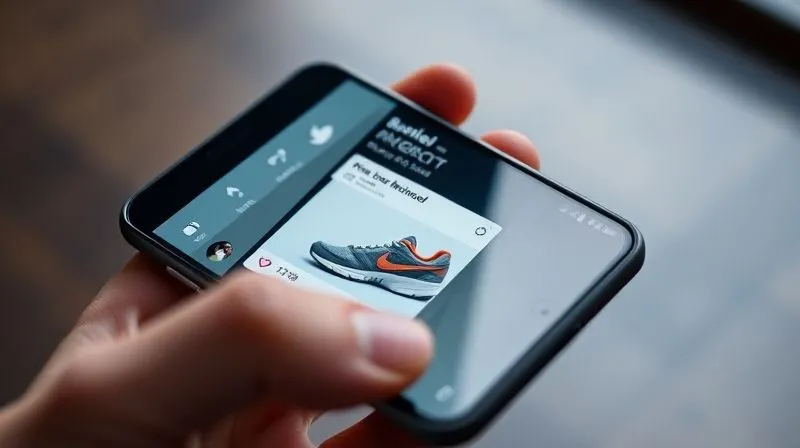
Dynamic retargeting ads automatically display products or services that a user has previously viewed on your website. This level of personalization is incredibly effective in reminding users of their interest and prompting them to return. Platforms like Google Ads and Facebook Ads offer robust dynamic retargeting capabilities.
Actionable Steps: Building a Smart Retargeting Funnel
- Install Tracking Pixels: Ensure your website has the necessary tracking pixels (e.g., Facebook Pixel, Google Ads remarketing tag) correctly installed to capture audience data.
- Create Granular Audience Segments: Define specific audience segments based on user behavior (e.g., "added to cart but didn't purchase," "visited product X page").
- Develop Tailored Ad Creatives: Design unique ad creatives and copy for each retargeting segment, highlighting relevant offers or products.
- Set Up Frequency Caps: Avoid ad fatigue by setting limits on how often users see your retargeting ads.
- Exclude Converted Users: Ensure you're not wasting budget by showing ads to users who have already completed the desired action.
Enhancing User Experience (UX) for Higher Engagement
User experience isn't just a buzzword; it's a fundamental driver of conversion. A seamless, intuitive, and enjoyable mobile journey from ad click to conversion is paramount. Any friction, confusion, or frustration will lead to abandonment. This is an area where investing time, not money, can yield monumental returns to boost mobile ad conversion rates without increasing budget.
Reducing Friction Points: A Seamless Journey
Identify and eliminate any potential roadblocks in the user's path. This includes:
- Streamlined Forms: Only ask for essential information. Use auto-fill, social logins, or guest checkout options.
- Clear Navigation: Ensure users can easily find what they're looking for or navigate back.
- Fast Load Times: As mentioned, speed is king on mobile.
- Minimal Pop-ups: While sometimes effective, intrusive pop-ups can severely detract from the mobile UX.
- Accessibility: Ensure your pages are accessible to users with disabilities.
Think of the entire user journey as a single, interconnected experience. A brilliant ad is only as good as the journey it initiates. Investigate user flow with heatmaps and session recordings to pinpoint exact friction points.
Personalization at Scale: Speaking Directly to the User
Beyond retargeting, consider how you can personalize the initial mobile ad experience. Dynamic text insertion based on location, time of day, or previous interactions can make an ad feel incredibly relevant. When an ad feels like it was made just for them, users are far more likely to engage and convert. This doesn't require more budget; it requires smarter utilization of existing data and ad platform features.
Leveraging Analytics & Data-Driven Insights: Your Compass to Success
Without robust analytics, you're flying blind. To truly boost mobile ad conversion rates without increasing budget, you need to understand what's working, what isn't, and why. Data is your most powerful ally in making informed optimization decisions. As I always tell my team, "Data doesn't lie, but it needs interpretation."
Beyond Basic Metrics: Understanding User Behavior
Don't just look at clicks and impressions. Dive deeper into:
- Conversion Funnel Analysis: Where are users dropping off? At the landing page, the product page, the checkout?
- Bounce Rate: A high bounce rate on mobile often indicates a poor landing page experience or irrelevant ad creative.
- Time on Page: Are users engaging with your content, or quickly leaving?
- Device Performance: Are certain devices or operating systems performing better or worse?
- Attribution Models: Understand which touchpoints are contributing to conversions, not just the last click.
Tools like Google Analytics, Adobe Analytics, and your ad platform's native reporting offer a wealth of information. Integrate these tools and create custom dashboards that highlight your most critical KPIs. For deeper insights into user interaction, consider heatmapping and session recording tools specifically for mobile interfaces.
| Metric | Before Optimization | After Optimization | Potential Gain |
|---|---|---|---|
| Mobile CTR | 1.8% | 3.5% | 94% |
| Mobile CVR | 0.7% | 2.2% | 214% |
| Mobile Bounce Rate | 65% | 38% | 41% |
| Avg. Session Duration (Mobile) | 45s | 1m 30s | 100% |
The table above illustrates potential gains from focused mobile ad and landing page optimization, demonstrating how improved metrics directly contribute to higher conversion rates without increased spend.
Actionable Steps: Implementing a Data-Driven Workflow
- Set Up Comprehensive Tracking: Ensure all conversions, micro-conversions, and key user actions are being accurately tracked across your ad platforms and analytics tools.
- Regularly Review Performance Reports: Dedicate time weekly or bi-weekly to analyze campaign performance and identify trends.
- Conduct Funnel Analysis: Map out your mobile conversion funnel and pinpoint where users are dropping off, then prioritize optimizing those specific steps.
- Segment Data for Deeper Insights: Break down your data by device, audience, ad creative, and time of day to uncover hidden opportunities.
- Test Hypotheses Based on Data: Use your analytical insights to inform your A/B testing strategy, ensuring your experiments are driven by data, not just intuition.
Frequently Asked Questions (FAQ)
Q: Is it really possible to significantly improve mobile ad conversions without increasing my budget at all? A: Absolutely. While a larger budget can amplify results, the core of improved conversion rates lies in efficiency. By optimizing your creative, targeting, landing pages, and user experience, you're making every dollar you spend work harder. Many businesses see 2x-3x improvements in conversion rates purely through optimization, turning existing ad spend into far more valuable outcomes. My experience shows that overlooked optimization points are often the biggest drivers of wasted ad spend.
Q: What's the single most impactful change I can make immediately to boost mobile ad conversion rates without increasing budget? A: If I had to pick just one, it would be optimizing your mobile landing page speed and design. A slow or cluttered landing page is a conversion killer, regardless of how good your ad is. Ensuring your page loads in under 3 seconds and offers a clear, thumb-friendly, and intuitive experience often provides the quickest and most significant lift in conversion rates. It addresses the immediate post-click experience where most users drop off.
Q: How often should I be A/B testing my mobile ad campaigns? A: A/B testing should be an ongoing, continuous process, not a one-off event. I recommend dedicating a portion of your ad spend (e.g., 10-20%) to continuous testing. Once a winning variation is identified and implemented, immediately start testing the next hypothesis. The market, user behavior, and platform algorithms are constantly evolving, so your optimization efforts must evolve with them. Consistent testing ensures you're always adapting and finding new efficiencies.
Q: Should I prioritize video ads over static images for mobile? A: While video ads generally show higher engagement rates on mobile due to their dynamic nature and ability to convey more information quickly, the best approach is to test both. Your audience and product type will dictate the optimal format. Short, engaging videos (under 15 seconds) are often highly effective, but high-quality static images with compelling copy can also perform exceptionally well, especially when combined with dynamic creative optimization. Always test to validate your assumptions for your specific context.
Q: How can I leverage AI tools to help with mobile ad optimization without a large investment? A: Many ad platforms now integrate AI-driven optimization features that you can leverage without additional cost. For instance, dynamic creative optimization within Facebook or Google Ads uses AI to combine different ad elements for personalized delivery. You can also use free or low-cost AI writing assistants to generate multiple ad copy variations for A/B testing. Furthermore, AI-powered analytics tools can help identify patterns and insights from your data that might be missed by manual review, pointing you towards key optimization areas.
Key Takeaways and Final Thoughts
To truly boost mobile ad conversion rates without increasing budget, the secret isn't more spending; it's smarter spending. It’s about a holistic approach to optimization, touching every point of the user journey from the initial ad impression to the final conversion. My years in this industry have taught me that the biggest wins often come from meticulous attention to detail and a commitment to continuous improvement.
- Optimize Creative Relentlessly: Your visuals and copy must be mobile-first, concise, and compelling.
- Target with Precision: Leverage first-party and lookalike data to reach genuinely interested audiences.
- Perfect Your Landing Pages: Ensure speed, simplicity, and a clear path to conversion.
- Embrace A/B Testing: Systematically test and iterate to uncover what truly drives performance.
- Strategic Retargeting: Re-engage interested users with personalized messages.
- Prioritize User Experience: Remove friction and personalize the journey for seamless interactions.
- Become Data-Driven: Use analytics to understand behavior and inform every optimization decision.
Remember, every percentage point increase in your conversion rate directly translates to more leads, more sales, and a healthier ROI from your existing ad spend. It's a continuous journey of refinement, but one that promises significant rewards. Start small, test often, and let the data guide your path to mobile ad mastery. The power to transform your mobile advertising performance is already within your grasp; it simply requires a strategic, expert-guided approach to unlock it. According to Harvard Business Review, focusing on efficiency is paramount for long-term marketing success. Forbes emphasizes the critical role of mobile-first design, while Google's PageSpeed Insights offers indispensable tools for performance enhancement. Statista data continually highlights the growing dominance of mobile usage, making these optimizations more crucial than ever. Gartner's insights into marketing attribution further reinforce the need for deep data analysis.
Recommended Reading
- 7 Ways Startups Can Maximize Accelerator Benefits & Fuel Growth
- From Concept to Cash: 7 Steps to Execute Innovative Ideas Effectively
- 7 Ways to Slash Last-Mile Delivery Costs Without Hurting Service Quality
- 5 Executive-Ready Strategies: Simplifying Complex Data Visualizations
- 7 Proven Strategies: Boost Online Store Customer Retention by 40% Today!





Comments
Leave a comment below. Your email will not be published. Required fields marked with *